-
How to grow a boxwood bonsai? A detailed guide to care management and daily maintenance
Boxwood is a type of wood we often hear about and come into contact with; as the name suggests, it mainly comes from the boxwood tree. The boxwood tree is relatively tall, but it is highly malleable, so it is very suitable for growing as a bonsai. Growing boxwood at home is also...
-

How to Propagate Hydrangeas? A Detailed Guide to Common Propagation Methods
Hydrangea, also known as eight-immortal flower, comes in various colors such as red, pink, blue, and white. The eight-immortal flower is a beautiful indoor ornamental flower, a small shrub of the Saxifragaceae family and the Hydrangea genus, with a plant height of 30 cm to 120 cm. The leaves are opposite, ovate, with serrated leaf margins. The corymb is terminal, forming a spherical shape
-
How to Propagate the Happiness Tree? A Full Guide to Planting and Care Essentials
The Happiness Tree (Radermachera sinica) is an ornamental plant often seen in many home and office environments, but many people do not know how to grow it. The Happiness Tree likes a hot, humid environment with plenty of sunlight. It tolerates high temperatures, fears cold, prefers moisture and dislikes dryness. It grows in valleys or open forests on flat ground.
-
How to grow Phalaenopsis orchids? Detailed guide to cultivation methods and planting techniques
Phalaenopsis is a plant suited to indoor cultivation, with flowers shaped like butterflies. Elegant and refined. It has the reputation of being the "queen of orchids." The flowers are the most ornamental part of the Phalaenopsis. Since most Phalaenopsis orchids originate from humid Asia, this determines their growth characteristics: ventilation, breathability, and moderate temperatures.
-
Detailed Guide to Bowl Lotus Planting Methods and Care Management Key Points
Bowl lotus, also known as bowl lotus and pot lotus, as the name suggests, is a lotus planted in a bowl, specifically for display on indoor tables to beautify the living environment. Bowl lotus originated in Jiangsu, with Suzhou's being the most famous. There are many records in ancient Chinese texts. Now it is mostly used as an ornamental plant on office desks, which can beautify the work environment
-
A Detailed Guide to Cycad Propagation and Seedling Techniques and Potted Cultivation Methods
Cycads (sago palms) prefer a warm, hot and humid environment, are not cold-tolerant, grow very slowly, and have a lifespan of about 200 years. In the tropical and southern subtropical regions of southern China, trees over 10 years old bloom and set seed almost every year, while cycads cultivated in the Yangtze River basin and various northern regions often never bloom in their lifetime, or occasionally bloom and set seed. Cycads love light
-
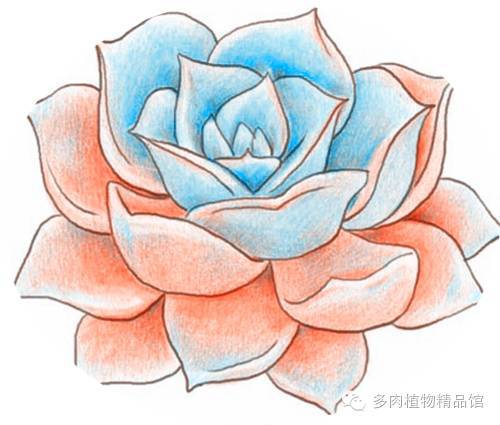
A Detailed Guide to Coloring Succulents: Make the Leaf Colors More Vivid
Text and images: Internet. There is not much time left before the annual succulent coloring season, and a few days ago some beginners who had just gotten into the hobby asked me about the issue of succulent coloring, so today I am going to briefly introduce it for everyone...
-
A Detailed Guide to Carnation Planting Techniques and Growing Methods
Carnations belong to the family Caryophyllaceae and the genus Dianthus. Carnations include many varieties and hybrids and can bloom almost continuously in a greenhouse. They usually produce double flowers, with diverse and vivid colors and a fragrant scent. Carnations are one of the most popular cut flowers, representing health and good wishes, and can be used for flower arrangements, corsages, and more.
-
Detailed Guide to Gladiolus Planting Methods and Cultivation Management Points
Gladiolus is a light-loving long-day plant that cannot tolerate freezing cold; in summer it prefers a cool climate and cannot withstand excessive heat. The corms begin to sprout at 4-5°C and grow best at 20-25°C. It likes fertile, deep sandy soil and requires good drainage; it should not be planted in heavy clay soil where waterlogging is likely.
-
How to Mix Nutrient Solution for Hydroponic Plants? A Detailed Guide to Several Common Formulas
Hydroponic plants have many advantages compared with soil-grown plants. Hydroponic plants are of good quality. Since the nutrient solution for flowers is formulated according to the growth needs of the flowers, the flowers produced are large and numerous, with a strong fragrance, vivid colors, and a long blooming period. Hydroponic plants save nutrients, water, and labor.
条件筛选