-

How to source materials and cultivate Chinese juniper bonsai? A detailed guide to practical methods
Chinese juniper (Juniperus chinensis), native to China, has a slender, pointed tree form, cylindrical in shape, rising straight upward, with new branches growing around the trunk, resembling a green dragon coiled around a pillar, hence the name "dragon juniper." Its leaves are small and dense, emerald green, scale-like and alternately arranged, with spherical blue fruits that remain unchanged through the four seasons. It is a relatively superior and high-quality ornamental tree for parks and courtyards.
-
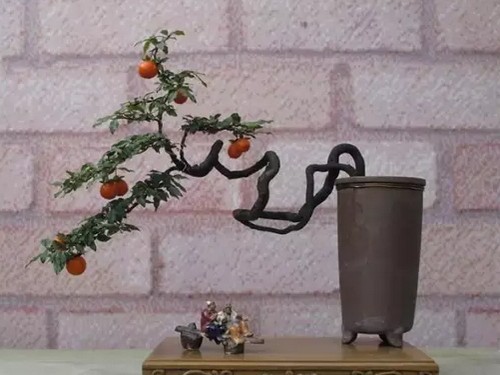
Detailed Guide to Sourcing and Cultivating Diospyros cathayensis Bonsai
As a fruit-bearing bonsai species, Diospyros cathayensis is cherished by bonsai enthusiasts everywhere. It is widely admired not only for its small, glossy dark-green leaves, fragrant flowers, fine fruit and black bark, but also because it is easy to grow and highly tolerant, and above all because it is long-lived and can be passed down through generations.
-
A Detailed Guide to Sourcing Methods and Cultivation Techniques for Tamarisk Bonsai
Tamarisk, also known as Sanchun willow, red willow, or sand willow, is a shrub or small tree of the genus Tamarix in the family Tamaricaceae. It is one of the main representative tree species of Zhongzhou bonsai. It grows well under almost any conditions, has exceptionally strong sprouting ability, roots as soon as it is planted, and takes shape quickly. Its leaf form is novel, its flowers are beautiful, and its flowering period is long; it has the reputation of flowers that do not fall.
-
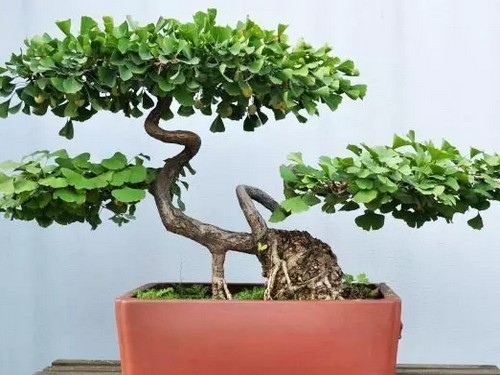
A Detailed Guide to Material Selection and Cultivation Methods for Ginkgo Bonsai
Ginkgo is a tree species with a remarkably long history of survival. Since ancient times in China, it has been regarded as an excellent material for bonsai. Ginkgo bonsai types can be divided into three kinds: foliage-appreciation, fruit-appreciation, and trunk-appreciation. To make ginkgo bonsai, one should select root-sucker seedlings from beneath large ginkgo trees and stalactite branches of ginkgo trees.
-
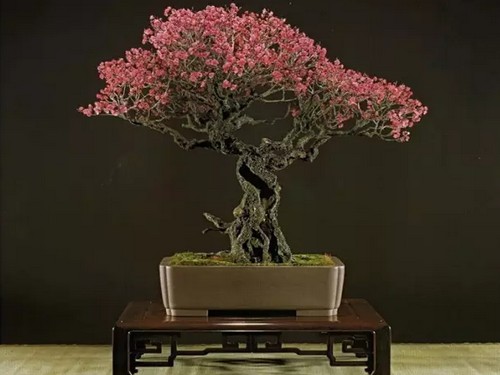
A Detailed Guide to Sourcing and Cultivating Deciduous Bonsai
In bonsai study, the deciduous category refers to using ancient mountain trees in nature as models, subjecting bonsai to artistic processing and shaping so as to achieve the goal of condensing a dragon into an inch, cultivating them into artworks that originate from nature yet surpass nature; they are a non-renewable resource. Below, let us introduce the sourcing and cultivation methods for deciduous bonsai.
-
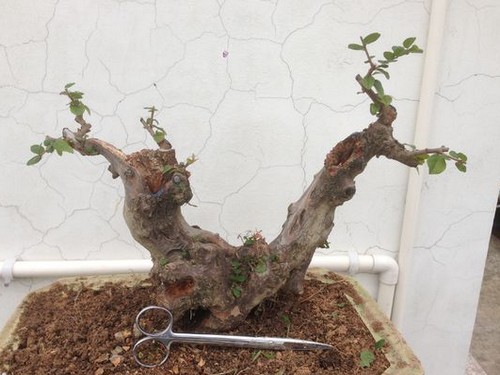
A Detailed Guide to the Timing and Methods of Collecting Chinese Sweet Plum (Sageretia thea) Old Stump Bonsai
The climate in the south is warm, the plant dormancy period is short, and buds sprout early. The best stump collection period is during Minor Cold to Major Cold. After dormancy, the tree - Chinese sweet plum (Sageretia thea) - has accumulated a large amount of nutrients, which is beneficial for sprouting and rooting. Roots and buds complement each other. Good development and growth of both is the guarantee for the stump's survival
-
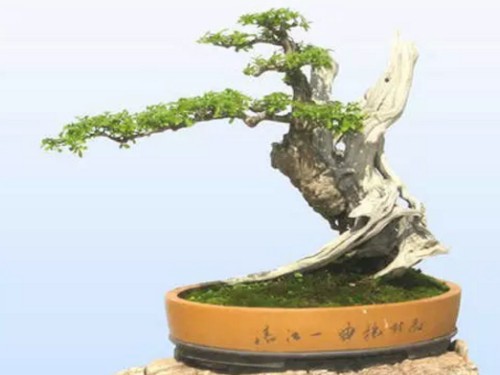
Detailed Guide to Sourcing Methods and Cultivation Techniques for Ash Bonsai
Ash trees belong to the genus Fraxinus in the family Oleaceae. They are deciduous trees widely planted in China. They prefer sunlight and tolerate slight shade. They can be propagated by sowing seeds, as well as by cuttings, division and layering. Ash trees have strong sprouting ability, a high survival rate and fast growth, making them excellent material for making bonsai with grafted osmanthus. Discarded ash stumps can be used
-
-
How to prevent and control basal rot in edible fungi? A detailed guide to disease identification methods
How to prevent and control basal rot in edible fungi
-
Detailed Guide to Edible Mushroom Pest and Disease Control and Small-Package Fresh-Keeping Technology
Small-Package Fresh-Keeping of Edible Mushrooms
条件筛选