-

This vegetable is easy to grow and grows fast; it is my first time seeing it.
Speaking of purple bok choy, it is likely that city people really do not know it; after all, the author Wan'er is also seeing purple bok choy for the first time. It is said that its taste is more tender than ordinary bok choy, and its nutrit...
-
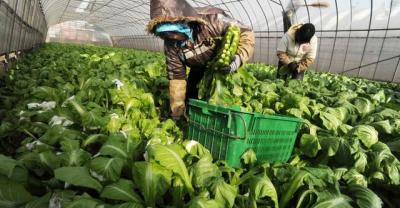
To control blood sugar, first reduce belly fat - these five vegetables should be eaten regularly
For more sources or to interact, follow the WeChat public account tnbtbzc (Diabetes Peer Support) Dietary control is crucial for diabetes patients. Besides...
-

Forecast for the occurrence trend of the first generation of the striped stem borer in rice is released
1. Occurrence level: The first generation of the striped stem borer, the main rice pest in our city, is expected to occur at a moderate-to-severe level, with the affected area in the city reaching more than 250,000 mu, of which more than 50,000 mu are early-planted idle fields. 2. Occurrence period: Moths seen under light on April 11, the beginning of the peak moth emergence period 5/9-12, the peak moth emergence period 5/20-24; the peak egg hatching period 5/27-5/30, the peak period of first and second instar larvae 6/4-6/10, the occurrence period is 3 days later than the average of the past three years. 3. Forecast basis 1. Development progress: This year 4/2
-
The 10th Regiment of the First Agricultural Division pioneers a new water-saving technique for dryland rice cultivation with drip irrigation under plastic film
In 2010, the 10th Regiment of the First Agricultural Division of the **Production and Construction Corps used new science and new technology to transform traditional agriculture. Faced with a severe shortage of water resources and its disadvantaged position as a unit downstream of the First Division's water supply, it independently developed new machinery for sowing rice on dryland with drip irrigation under plastic film, which was put into rice production and vigorously promoted by Aral City of the First Division. According to Kong Jun, the First Division's deputy division commander in charge of agriculture, this cultivation model not only saves labor in rice planting but also conserves water resources and farmland costs, helping to increase rice yields and efficiency, and it has opened a new chapter for the Corps' agriculture and livestock farms.
-
Scientific control methods for the first-generation Asiatic rice borer (Chilo suppressalis) in rice
According to surveys conducted across Hubei Province, the overwintering mortality rate of the Asiatic rice borer this year was higher than last year, and the post-winter population base was lower than last year but still relatively high. In addition, suitable climate conditions and the expansion of high-quality rice varieties are both favorable to the occurrence and damage of rice stem borers, and the first-generation Asiatic rice borer will show a major outbreak trend in the rice-growing areas of our province, making the control situation still severe. In response to this severe situation, all localities should strengthen leadership, raise awareness, actively organize control efforts, and quickly launch a campaign to wrest grain from the pests to ensure the safety of grain production. 1. Recognize the situation clearly and strengthen organizational leadership. Last winter, our province suffered freezing ice and
-
Insect-resistant potato bred first by Belarusian scientists
Scientists from the National Academy of Sciences of Belarus have announced a new research achievement: they have bred the world's first potato that can automatically kill pests. According to a report by Russia's Interfax news agency on August 7, to date, a pest known by the scientific name Colorado potato beetle has been the biggest headache for farmers, because it destroys large areas of potato fields every year and causes huge economic losses to agriculture. A new type of genetically modified potato recently bred by Belarusian scientists can specifically poison this beetle to death. A
-
16% Exianqing is the first choice for controlling rice "small panicle head"
For many years, in some major rice-producing areas such as Jiangsu, the phenomenon of "small panicle head" (also called small-grain distorted panicle) has appeared continuously over many years under multiple varieties, multiple planting levels, and multiple ecological conditions in large-scale production. Its characteristics are: small panicles, small glumes, cracking of the inner and outer husks after grain filling, partial exposure of rice grains, and small grains with dark brown color. It is especially severe in the Lixiahe area, coastal areas, along the Huai River, along the Yangtze River, and hilly areas of Jiangsu Province. It is estimated that in recent years the affected area in Jiangsu Province alone has been about 100,000 hectares each year, reducing rice output by more than 100 million kg, and cumulatively causing about 500 million kg of rice yield loss.
-
How to scientifically control the first generation of the second-brood striped stem borer in single-season rice
Control recommendations 1. For early-sown and early-transplanted single-season rice fields, carry out a full control treatment once from June 20-25, targeting mainly stem borers and small brown planthoppers, and also controlling early-occurring leaf folders and rice thrips. Use 5% fipronil (Regent) suspension concentrate at 40-50 ml/mu, diluted in 30 kg of water for spraying. 2. For fields where rice stripe disease has occurred, on the basis of pulling out and removing diseased plants, promptly apply chemicals to control small brown planthoppers. Use 40% chlorpyrifos (Xinnongbao, Saiben) at 100 ml/mu, diluted in 30 kg of water for spraying, and repeat the treatment after an interval of 5-7 days.
-
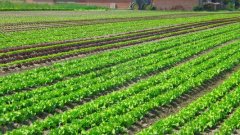
A Detailed Guide to Vegetable Growing Techniques and Practical Methods
If you are a first-time vegetable grower, it is best to grow wild vegetables. So-called wild vegetables include such plants as Madeira vine, Gynura bicolor, sweet potato leaves, ginseng herb, aloe, Taiwan angelica, and shungiku. Wild vegetables are easy to grow and high in energy, but they have a distinctive taste of their own, so insects dislike coming near them, and they can grow well without pesticides
-
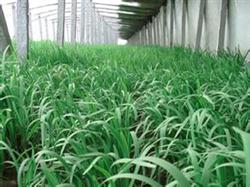
Chives have the most pesticide residue at the roots; remove half an inch of the root and first soak them in lightly salted water.
1. Temperature management. Chives like cool conditions, with an optimum growing temperature of 15-24°C, and should be ventilated appropriately during the day. To promote sprouting, after covering with a plastic tunnel the daytime temperature should be kept at 18-25°C, and after sprouting the daytime temperature should be controlled at 17-23°C. Before harvesting the first cut of chives, the daytime temperature should be 15-22°C and the nighttime temperature 10-12°C. After that, with each cut...
条件筛选