-
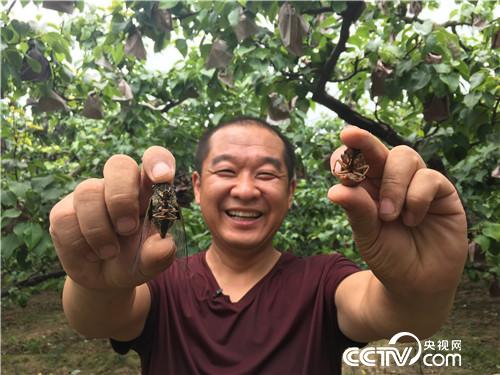
How to sell 100,000 yuan worth of farmed insects for 60 million
How 100,000 yuan worth of "planted" insects sells for 60 million
-

Grain prices are falling and land transfer is hitting a cold spell. How exactly should the land be farmed?
Grain prices are falling and land transfer is hitting a cold spell. How exactly should the land be farmed?
-
Beyond substituting machinery for grain, how else can the land be farmed?
Beyond "substituting machinery for grain," how else can the land be farmed?
-
Bama Fragrant Pigs Farmed in Rudong, Jiangsu, Their Fragrance Spreads Far and Wide
Bama Fragrant Pigs from Rudong, Jiangsu, Their Fragrance Spreads Far and Wide
-

Can squid be artificially farmed? You'll understand after reading this
Can squid be artificially farmed
-
The Chinese pond turtle is one of the species farmed in Shunde's turtle industry.
The Chinese pond turtle, commonly known as the turtle, is the most widely distributed and most numerous turtle species in our country. Whether you stop by a flower, bird, fish and insect market, linger beside a park pond, or pass by a restaurant or hotel, it is very easy to spot a Chinese pond turtle. However, even if you have seen quite a few Chinese pond turtles, you may not necessarily understand this turtle's living habits or how to raise it. In response, this article introduces the Chinese pond turtle's characteristics in detail from the aspects of its morphological features, living habits, key points of feeding and management, and farming models, for your reference. 1.
-
What are the comprehensive prevention and control measures for hemorrhagic disease of farmed fish?
I. Affected species: grass carp, crucian carp, mud carp, common carp, and even silver carp. II. Symptoms: punctate or patchy hemorrhages on the head, orbit, fin base, and abdomen of the fish body, gill filaments bleeding or pale, sometimes ascites, and rotting at the ends of fin rays. III. Causes: 1. Fish diseases caused by bacteria are mostly caused by conditional pathogenic bacteria, and will not occur before the water environment has deteriorated. Only when various factors in the substrate and water body become unsuitable for the survival of fish, reducing the fish body's resistance, and at the same time water
-
Two Simple Tricks to Quickly Get Farmed Fish to Come to the Feeding Table
In recent years, with the continuous development of fish farming technology, the method of raising fish with complete granular feed has been gradually promoted and applied. However, because many fish farmers are not skilled at feeding and conditioning, the fish being trained are slow to come to the feeding table, which not only affects feed intake and delays growth, but also increases costs and affects farming efficiency. Below, we introduce two simple and easy successful conditioning methods that we have summarized in production practice for the reference of users. 1. Feed hanging-bag conditioning method: Use large-mesh window screen (with mesh fine enough not to let feed through) to make a hanging bag that can hold 1.5-2 kg of feed.
-
Prevention and Treatment Methods for Bacterial Diseases in Conventional Farmed Fish
In recent years, because the problem of drug residues has dealt a blow to China's aquatic product exports, the government has carried out a large-scale rectification of the entire fishery drug market, successively announcing a large number of banned drugs for aquaculture, such as chloramphenicol, furazolidone, malachite green, sodium pentachlorophenate, etc. Because special aquatic products have high economic value and a relatively large export market, through the joint efforts of all parties, the use of banned drugs has been well controlled. In the process of conventional fish farming, bacterial diseases occur relatively frequently,
-
Analysis of the Causes of Hypoxia in Farmed Fish and Countermeasures
Hypoxia refers to a state in which the internal tissues and cells of a fish cannot obtain sufficient oxygen to maintain their normal functions. To distinguish it from oxygen deficiency in the water, it may be called "biological hypoxia" or "tissue hypoxia." Asphyxia (difficulty breathing) is a phenomenon that occurs during biological hypoxia, and "floating head" (gasping at the surface) is the manifestation of the difficulty breathing or asphyxia commonly seen in aquaculture production. There are two situations in which fish experience hypoxic asphyxia: one is when dissolved oxygen in the water is insufficient and air pressure is too low, so that even if the fish's respiratory function is normal, the tissue cells in its body cannot obtain sufficient oxygen, resulting in "anoxic hypoxia"; the other
条件筛选