-
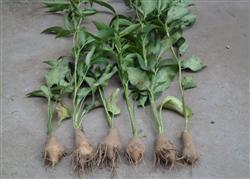
How to prevent diseases and apply fertilizer during Atractylodes macrocephala cultivation?
How to prevent diseases and apply fertilizer for Atractylodes macrocephala? Please provide an introduction to the methods. The common diseases of Atractylodes macrocephala are root rot and southern blight, and the control methods are as follows: Carefully select seedlings: they should be free of pests and diseases, with plump apical buds, slender upper parts, round and large lower ends, fine and tender skin, and dense soft fine roots. Seed soaking disinfection and soil sterilization: the planting material and soil are...
-

What pests are there during Salvia miltiorrhiza cultivation?
What pests affect Salvia miltiorrhiza? What control methods are there? Please give an introduction. The main pests of Salvia miltiorrhiza are: silver-marked noctuid, cotton bollworm, aphids, white grubs, etc. The control methods are as follows: 1. Salvia miltiorrhiza pest - silver-marked noctuid control methods: 1. Hang black light traps to kill adult moths. 2. Spray 90% trichlorfon 800...
-

How should Salvia miltiorrhiza be raised from seedlings during cultivation?
How do you raise Salvia miltiorrhiza seedlings? What method is best for raising Salvia miltiorrhiza seedlings? Please describe the method. After the "seed roots" of Salvia miltiorrhiza are planted, it takes 25-30 days for seedlings to emerge, and the field emergence rate is only about 60%. Especially when soil moisture is poor, the emergence rate is even lower, which easily causes missing plants and broken rows, thereby affecting yield...
-

What should be noted during the process of growing Gastrodia elata?
What should be noted when growing Gastrodia elata? We ask netizens to help explain. Zhongdi Web has compiled the points to note when growing Gastrodia elata, listed below for netizens' reference. 1. Suitable cultivation time for Gastrodia elata: Gastrodia elata cultivation is generally from late October of the current year to April of the following year. From late October to early December, the soil freezes...
-
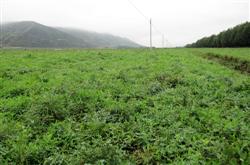
How can Scutellaria baicalensis be managed effectively during cultivation?
How should Scutellaria baicalensis be managed well during cultivation? Please provide guidance. For growing Scutellaria baicalensis, you can refer to the following methods for management: 1. Management before emergence: Regardless of the propagation method, the soil should be kept moist from planting until emergence to promote seedling emergence. 2. Thinning and final thinning: Combined with intertillage and weeding, Scutellaria baicalensis should be thinned, replanted, and finally thinned in a timely manner...
-
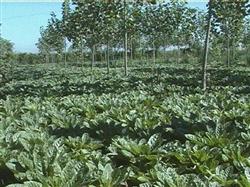
What are the management key points during Rehmannia cultivation?
What are the management key points for Rehmannia cultivation? Please share an introduction. There are several key points for Rehmannia cultivation management for reference: 1. Straw mulching: After sowing Rehmannia and covering with soil, cover the ridge surface with thatch or other crop straw. Mulching with straw can suppress weed growth and keep the soil loose. 2. Thinning: 20-30 days after emergence, remove excess seedlings during cultivating and weeding. The principle is to remove the inferior and keep the superior, leaving 1-2 seedlings per spot.
-
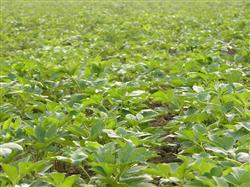
What pests and diseases need to be controlled during the cultivation of Angelica dahurica?
What pests and diseases need to be controlled when growing Angelica dahurica? Please explain the control methods. The following pests and diseases need to be controlled in Angelica dahurica cultivation: 1. Diseases: Diseases occur relatively rarely in Angelica dahurica production, but gray leaf spot and leaf spot sometimes occur. This disease is caused by a type of imperfect fungus among the fungi, and mainly harms the leaves. The lesions are initially dark green...
-

What issues need attention during the process of growing Gastrodia elata
What issues need attention when growing Gastrodia elata
-
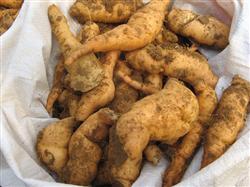
How to harvest and process Rehmannia (Chinese foxglove) during cultivation? A detailed guide to the methods
How is Rehmannia harvested and processed? Please introduce the methods. Rehmannia harvesting and processing can be carried out with reference to the following methods: 1. Harvesting Rehmannia: the leaves, flowers, and rhizomes of Rehmannia can all be used as medicine. For Rehmannia leaves, in the late growth stage of Rehmannia, select robust, disease-free plants, pick some leaves appropriately, and dry them in a cool place...
-
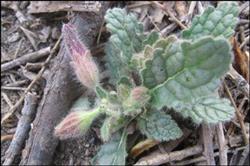
How to manage Rehmannia glutinosa during the seedling stage? These planting techniques must be mastered
How should Rehmannia glutinosa be managed during the seedling stage? What should be noted? Please provide methods. For managing Rehmannia glutinosa during the seedling stage, you can refer to the following methods: 1. Cultivation and weeding: From the end of April to the beginning of May, management should focus mainly on cultivation and weeding. During the period when Rehmannia glutinosa seedlings emerge, weeds in the field must be removed promptly to prevent weeds...
条件筛选