-

A Detailed Guide to the Classification Methods and Variety Characteristics of Chinese Cymbidiums
Terrestrial Orchids Terrestrial orchids are suited to growing in the loose soil layer on the ground surface. The terrestrial orchids native to our country are also called "Chinese cymbidiums," and they have high ornamental value and economic value. This article focuses on Chinese cymbidiums. Terrestrial orchids have poor seed propagation ability, and tissue culture is difficult; there are currently no successful reports. Therefore, although there are many types of terrestrial orchids...
-
How Are Chinese Orchids Classified? A Guide to the Variety Types of Chinese Orchids
Orchids of the genus Cymbidium in the family Orchidaceae are what we commonly call Chinese orchids, and they can be roughly divided into Chunlan (spring orchid), Huilan (Huilan orchid), Jianlan (Jianlan orchid), Molan (Molan orchid), Hanlan (Hanlan orchid), Chunjian (Chunjian orchid), and Lianban (Lianban orchid). Chunlan Cymbidium goeringii (Rchb. f.) Rchb. f. 1. Blooming period: February to March. 2. Inflorescence: 1-2, solitary or paired....
-

Slope farmland suitable for farming and grazing reclassified as farmland draws environmental groups' criticism of flexible loosening to replace county and city allocation quotas
Slope farmland suitable for farming and grazing reclassified as farmland to replace county and city farmland allocation quotas? Environmental groups question flexible loosening
-
How Are Orchid Fragrances Classified? A Full Analysis of Common Fragrance Types
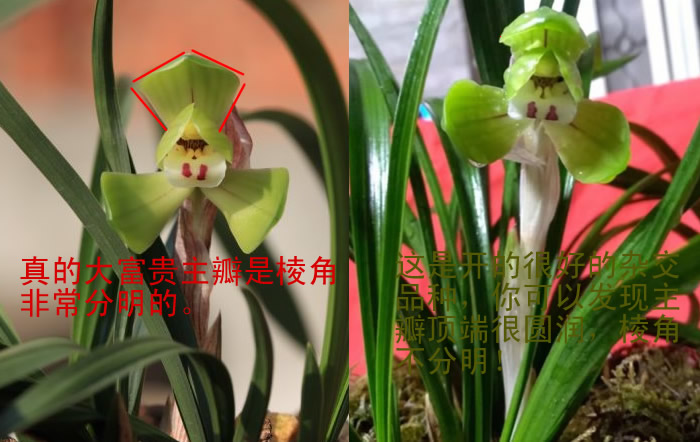
Because Moon Sand Da Fugui is extremely popular among orchid enthusiasts for its flowers, large biological companies have produced a great many hybrids using it as the mother plant. Some of the new hybrids look very similar to Da Fugui in both flower and leaf shape, making them hard for many novice orchid growers to distinguish, and unscrupulous merchants will pass off such hybrids (for example, Da Tuan Yuan and others) as the...
-
How to grow orchids? A complete analysis of classic orchid-growing methods from ancient and modern times
Classic Orchid Growing from Ancient and Modern Times
-
-
Golden Sedum Cultivation and Care Methods: Grow the Classic Desktop Potted Plant
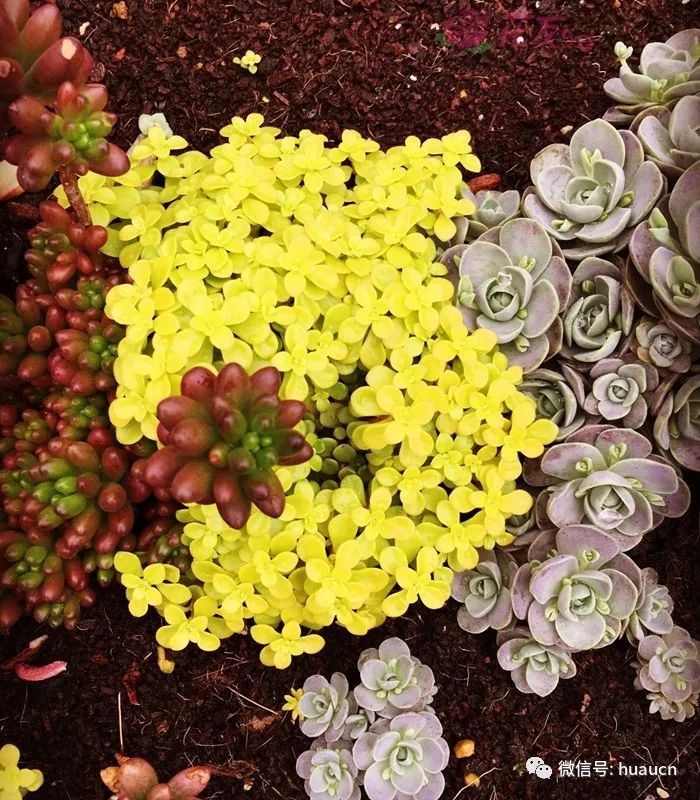
4. Light: Golden Sedum's growing environment requires ample sunlight, which is what ensures the golden-yellow color of its leaves. So in summer, placing it outdoors in a spot with plenty of light is fine even if it gets sun exposure; as long as the light is good, the stems and leaves will be more compact and dense. On the contrary, if...
-
Er Hong Su Orchid: A Classic Variety Like a Fair Maiden from a Humble Home
Xiao Jia Bi Yu Er Hong Su
-
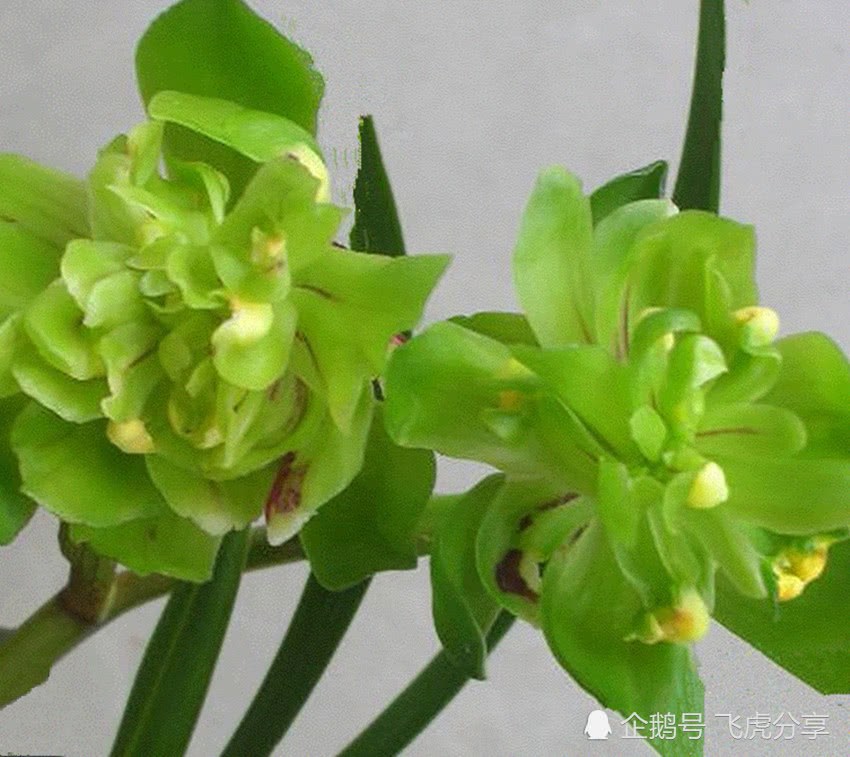
The easiest-to-grow Chunlan (Cymbidium goeringii) with intense fragrance, a rare flower and a celebrated classic variety: beautiful blooms with a captivating fragrance
This is one of the four great rare flowers among Chunlan orchids, named Jiuxian Mudan (Nine Immortals Peony). A lotus-petal rare flower with oily green color; each flower has as many as several dozen petals, and the leaves are emerald green. It once won a gold award at an orchid exposition. This flower is very beautiful and elegant, with blooms...
-
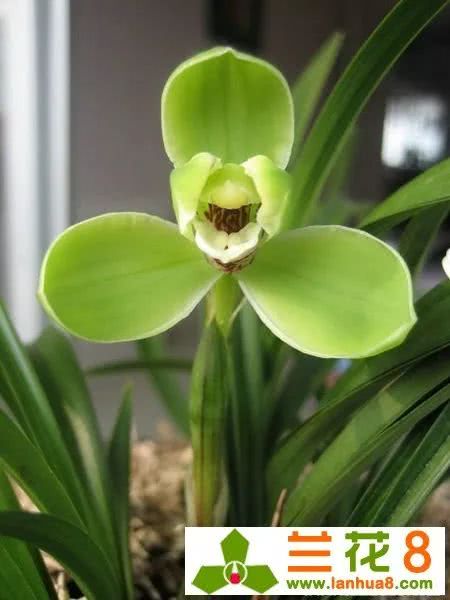
Orchid Petal Type Analysis: Detailed Explanation of Common Petal Type Classifications and Characteristics
Promote Chinese orchid culture, spread orchid knowledge. I. Plum Petal. Plum petal: the three outer petals have tight edges and rounded tips, the central column is strongly masculinized with a cupped shape and white tip; if the lip is relaxed and not curled, it is a plum petal. When the plum petal is about to bloom, due to masculinization, the three outer petals have white edges and the petals have white tips. The entire flower shape looks quite like a plum blossom in snow; the ancients' metaphor is indeed apt and vivid. Plum petals are further divided according to the degree of masculinization into hard-cupped plum petals and soft-cupped plum petals. Among hard-cupped ones, there are extremely hard-cupped and hard-cupped plum petals. Extremely hard-cupped plum petals, due to extremely strong masculinization, often have the petals adhering to the column, with a very small hard lip or with cheek-like structures and no lip; such flowers' outer petals are mostly flared and upturned, and the flower shape is extremely inelegant! We know that the strength of masculinization is greatly related to flower quality. The stronger the masculinization, the tighter and harder the central column, and the worse the flower quality! If such a flower shape has tender color and broad outer petals, it also has ornamental value, but most outer petals are flared and upturned, and have traditionally not been valued by orchid growers! The masculinization of hard-cupped plum petals is slightly weaker than that of extremely hard-cupped ones, mostly split-head closed-back or joined-shoulder closed-back hard silkworm-moth petals, and the lip is mostly a dragon-swallowing lip, small round lip, etc.; some flowers have slightly flared outer petals! The masculinization of soft-cupped plum petals is relatively moderate, mostly five-petal separated soft silkworm-moth petals, with the three outer petals rounded and tight, and the lip mostly able to spread broadly, mostly a Liu Hai lip or Ruyi lip; the central column is rounded and neat, making it a fine among plum petals! The overall form of a superior plum petal should closely resemble a plum blossom, and reaching such a standard is very rare! The leaves of plum petals feel relatively thick and hard, with strong uprightness or bow-like form, looking rather vigorous; the basal leaves are slightly spreading, the sheath is hard and extends obliquely at about 15 degrees, feeling prickly to the touch; when the sheath is not yet withered, one can see a white pointed tip at the sheath tip, about the size of a millet grain, crystal clear, greatly different from the leaf tip of ordinary flowers. When selecting wild-collected orchids, if you encounter sheath color bright and smooth, veins fine and sparse reaching the top, heavy sand and dense halo, color lighter below and darker above, with a green tip at the apex, large empty head, lower part of the flower bud tightly contracted, and the middle round and bulging like a peanut or soybean, it is mostly a plum petal! This requires everyone to observe more usually in order to judge quickly and accurately!
条件筛选