-
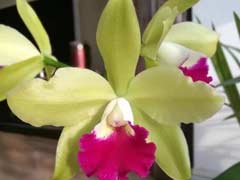
Phalaenopsis, Chinese orchids, and tropical orchids: care tips for beginners
For beginner flower enthusiasts, growing orchids may involve quite a few detours. Whether it is Chinese orchids, tropical orchids, or even Phalaenopsis, although you give it your all, it is hard to avoid going astray. This article is a flower enthusiast's experience of growing orchids, and is especially suitable for beginner flower enthusiasts to refer to, from nothing to something, from few to many....
-
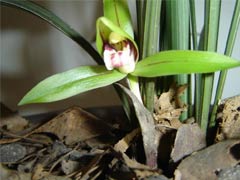
How to grow Chinese orchids? These experiences are worth referencing
There are flower enthusiasts new to growing Chinese orchids who do not know how to grow them. The Quancheng Chinese Orchid Farm, located in Yuemei Village, Shanlin Township, Kaohsiung County, Taiwan, China, is jointly run by Su Wuxiong and Su Liqiang, father and son. It covers an area of more than six hectares and grows various varieties of Chinese orchids such as cymbidium, Cymbidium sinense, four-season orchid, and Cymbidium goeringii...
-
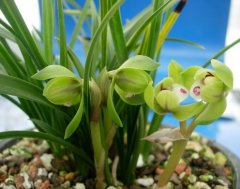
What three issues should be noted in the vernalization of Chinese orchids?
The period from the Winter Solstice to Major Cold is the season with the lowest temperatures across China, commonly known as deep winter. When it comes to cultivating orchids in deep winter, we must not forget the vernalization of orchids....
-

The ten likes and ten fears of Chinese orchid growing: master their habits to grow orchids well
By carefully reading and studying classic orchid monographs such as A Brief History of Orchids and Thoroughworts, and combining them with my own experience in growing orchids, I have summarized the key points of Chinese orchid cultivation as the "ten likes and ten fears," in order to seek advice from orchid experts and fellow orchid growers....
-
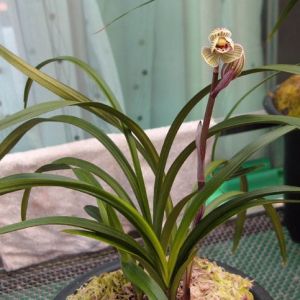
Interpretation of the Latest Research Findings on the Evolution of Line Art in Chinese Orchids
Zhenhe, a dwarf lotus-petal variety among the lotus-petal orchids, a thick-skinned broad-leaf lotus-petal orchid from Baoshan, Yunnan. The first time I saw this flower was from exactly this angle in the photo, at exactly this position. It seemed I was subdued by its aura, a strong sense of suffocation, unable to feel my heartbeat. From a distance of two meters, I examined it with reverence and solemnity. Yunnan's rich...
-
How Are Chinese Orchids Appreciated? A Detailed Explanation of Orchid Appreciation Standards
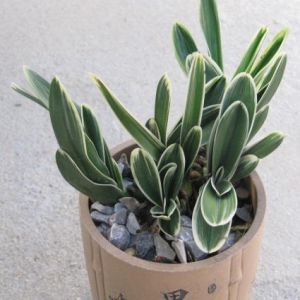
The Phoenix Crown is a hybrid orchid, a dwarf variety with line variegation, priced at around 5 to 10 yuan per seedling. It almost never blooms.
-

How to appreciate plain-colored Chinese orchids? Master these key appraisal points
Plain-colored flowers have only a single pure color (whether white, yellow, pinkish green, peach red, or even entirely black), with no purplish-red stripes or spots. Those with a plain-colored lip are called plain-heart orchids. If color appears at the base of the lip, they belong to the peach-cheek plain type. Plain-colored flowers and plain-heart flowers have the modest, elegant bearing of a gentleman, matching the traditional Eastern cultural value of "prizing the plain." Fragrance...
-
A Practical Guide to the Appreciation and Exploration of Chinese Cold Orchids
In the large family of Chinese orchids, the cold orchid (Cymbidium kanran) is the strain that was systematically developed latest as an ornamental variety. To explore the appreciation theory of Chinese cold orchids, one must understand when China began to enjoy cold orchids as ornamental plants. Although Professor Liu Qingyong also cites "Chen Mengliang" in the Jinzhang Lanpu (Golden Zhang Orchid Manual) as a suspected cold orchid, from the text...
-
How Are Chinese Orchids Classified? A Guide to the Variety Types of Chinese Orchids
Orchids of the genus Cymbidium in the family Orchidaceae are what we commonly call Chinese orchids, and they can be roughly divided into Chunlan (spring orchid), Huilan (Huilan orchid), Jianlan (Jianlan orchid), Molan (Molan orchid), Hanlan (Hanlan orchid), Chunjian (Chunjian orchid), and Lianban (Lianban orchid). Chunlan Cymbidium goeringii (Rchb. f.) Rchb. f. 1. Blooming period: February to March. 2. Inflorescence: 1-2, solitary or paired....
-
条件筛选