What growing medium is best for Chinese orchids
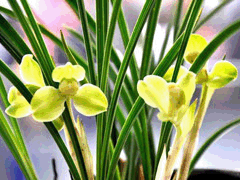 Chinese orchidcultivationmedia
In the Shunde area of Guangdong, Chinese orchid cultivation is dominated byCymbidium sinenseandCymbidium ensifolium(Four SeasonsOrchid), both of which are terrestrial orchids with fairly well-developed root systems; the medium used must have good drainage and excellent air permeability, so as to favour the development of the fleshy roots and the growth of the plants.
The traditional growing medium for Shunde Chinese orchids is high-quality pond mud, composed mainly of clay and humus, which is sun-dried and broken into clods; the clods do not disintegrate for 3 to 5 years, ensuring good drainage along with a certain amount of nutrients. However, because growing orchids in mud easily leads to the occurrence of some diseases, and because after a period of sun and rain it readily compacts, which is unfavourable for the orchid roots to breathe, it is now rarely used in commercial cultivation, and only some home orchid gardens still use it.
The Chinese orchid growing media widely used at present include gravel, tree bark, peanut shells, rice husks, peat soil, perlite and so on. Growing orchids in gravel gives good air permeability, and its many pores favour orchid root growth, but it lacks nutrients, and water and fertiliser are easily lost after application. Tree bark has both good water absorption and good drainage, and is rich in organic nutrients, which is extremely beneficial to the growth oforchids. Fresh bark mostly contains resin, so before use it should be soaked in water for a week to break down the resin, then sun-dried for later use. Peanut shells and rice husks act in the same way as tree bark, with fairly good water absorption and drainage, and are rich in organic nutrients. But before use they need to be composted first; generally they are watered thoroughly and then covered with plastic film to ferment for about one month. Peat soil is rich in organic matter and has better drainage and air permeability than pond mud, and is often mixed with perlite for use.
An ideal Chinese orchid growing medium should have good drainage and air permeability and contain sufficient nutrients, and should not readily rot or compact, and no single one of the above media can meet these requirements, so several media need to be mixed before use. The growing media used in the Shunde area are generally hard media mixed with soft media. For hard media, media with better drainage such as gravel are generally used, while for soft media, tree bark, peanut shells, rice husks and the like, which have better water absorption and are rich in nutrients, are generally used. There is currently no fixed standard for the mixing ratio of the media; it is often adjusted by growers themselves according to their own needs. The Cen family orchid garden in Shunde mainly uses two growing media, one being gravel + rice husks and the other gravel + peanut shells, with the ratio of hard medium to soft medium being about (5 to 6):(5 to 4). The Hongye orchid garden in Shunde mainly uses granite mixed with tree bark, in a ratio of 5:5.
Figure 1 Gravel + rice husks
Figure 2 Gravel + peanut shells
Besides the hard medium + soft medium approach, other areas of Guangdong Province also have a variety of orchid growing media; for example, the Taohong orchid farm in Shawan Town, Panyu, Guangzhou, uses only soft media, mainly sawdust mixed with a small amount of rice husks; the Xianhe flower planting base in Wengyuan uses peat soil + tree bark + perlite, in a ratio of about 2:3:1, or gravel + peanut shells + perlite, in a ratio of about 3:3:1.
Figure 3 Peat soil + tree bark + perlite
Figure 4 Gravel + peanut shells + perlite
Different growing media have different advantages; in actual production, the growing medium should be chosen according to the physiological characteristics of the orchids themselves, the environment in which the orchids are grown, and one's own experience.