What three issues should be noted in the vernalization of Chinese orchids?
The period from the Winter Solstice to Major Cold is the season with the lowest temperatures across China, commonly known as deep winter. When it comes to cultivating orchids in deep winter, we must not forget the vernalization of orchids.
The so-called vernalization of Chinese orchids refers to the low-temperature stage that orchids must go through during their reproductive growth, and it plays an indispensable role in promoting the growth of flower buds. The degree of vernalization determines how well the orchids bloom, and it should not be taken lightly. Three issues must be noted.
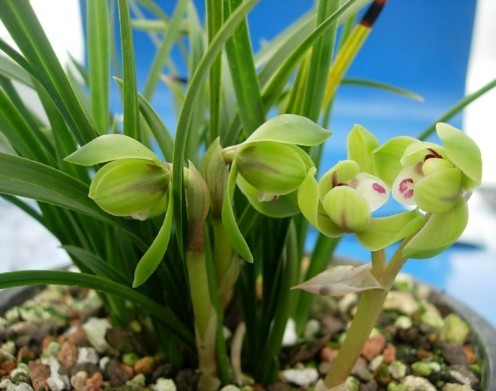
First, vernalization must be sufficient。
Generally speaking, the period from Minor Snow to Major Cold is the best time for orchid vernalization, and the temperature during this period is best kept at 0°C to 12°C. The vernalization period generally should not be less than one month, and the period from the Winter Solstice to Major Cold is especially important.
Second, avoid excessively high or low temperatures during vernalization.
During the vernalization stage, the temperature must by no means fluctuate too greatly. Both low temperatures below minus 5°C and temperatures above 15°C are unfavorable to the normal growth of flower buds, and can easily cause orchid buds to become stunted, affecting the elongation of the flower scape. Cymbidium goeringii often exhibits the phenomenon of “borrowing spring to bloom,” greatly reducing the quality of the flowers.
Third, avoid excessively high humidity during vernalization.
For orchids in nature, the vernalization period is the time when air humidity and soil humidity are at their lowest. The ecological environment conditions of orchids in nature are the direction that growers cultivating orchids in orchid rooms must strive to recreate. Therefore, neither the air humidity nor the potting soil humidity during the vernalization stage should be too high, otherwise it can easily cause bud rot and root rot, which is very unfavorable to the growth of orchids and cymbidiums in the coming year.
Practice has repeatedly proven that low-temperature vernalization is an insurmountable stage in the reproductive growth of orchids and cymbidiums, and growers cannot violate natural laws by artificially changing it. In order for orchids to bloom better, they must be fully vernalized.