-

A look at today's latest Chinese torreya prices
Chinese torreya is a unique economic crop in our country, also known as the concubine tree. It contains rich nutrients and domestic substances, has an excellent taste and is very distinctive, and at the same time has high health and medicinal value, and can be used for killing insects, constipation, hemorrhoids, as well as moistening the lungs
-
How much does a Chinese torreya seedling cost? A detailed guide to growing techniques
The Chinese torreya tree is a relatively rare plant, also known as the Chinese nutmeg yew and commonly called the concubine tree. The Chinese torreya has relatively high requirements for its growing environment, and its production areas are very limited. An ideal Chinese torreya planting site requires cool, shady conditions, high air humidity, not-too-strong light and well-drained mountainous hills.
-
What are the cultivation techniques for Torreya grandis? Read this one article to understand the key planting points
Torreya grandis, also known as Chinese torreya, torreya tree, Yu torreya, and wild Chinese yew seed, is a rare economic tree species native to China. It is planted in yellow soil, red soil, and yellow-brown soil areas. Below is an introduction to the cultivation techniques for Torreya grandis. What are the cultivation techniques for Torreya grandis? 1. Variety selection
-
When Do Chinese Torreya Nuts Ripen? A Detailed Guide to the Ripening Period and Harvest Time
Chinese torreya, also known as the concubine tree, Chinese torreya, torreya tree, jade torreya and wild Chinese fir seed, is a rare economic tree species whose fruit is edible. So when does it ripen? What are its values? When does Chinese torreya ripen? Chinese torreya generally ripens in September-October, but unlike other fruits
-
How to Grow Chinese Torreya? A Detailed Guide to Chinese Torreya Cultivation Techniques
Chinese Torreya is a tree species native to China, also known as Chinese Torreya, Torreya tree, Yu Torreya, wild Chinese Torreya seed, and Concubine's tree. It is currently cultivated in southern regions. So what are its cultivation techniques? Introduction to Chinese Torreya cultivation techniques 1. Site selection and land preparation Choose soft, breathable soil rich in organic matter
-
How Many Years Does a Chinese Torreya Tree Take to Bear Fruit, and in Which Month Does It Ripen and Hit the Market?
Abstract: The Chinese torreya tree takes about 3 years from flowering to bearing fruit, but the tree can live for several hundred years, so compared with its lifespan, its fruit's growth period is not really that long. Many people among the folk call the Chinese torreya tree a centenarian. When Chinese torreya is mentioned, many people think of roasted
-
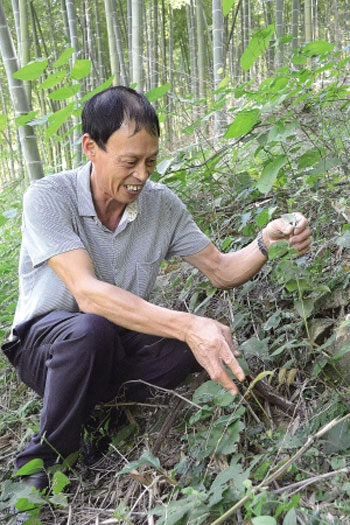
Growing Polygonatum under Chinese torreya forests; intercropping in bamboo forests works just as well
Growing Polygonatum under Chinese torreya forests; intercropping in bamboo forests works just as well
-

-
A Complete Guide to High-Quality, High-Yield Cultivation Techniques for Chinese Torreya
High-Quality, High-Yield Cultivation Techniques for Chinese Torreya
条件筛选