-

How to treat cotton cancer? Timely prevention and control is key
Fusarium wilt and Verticillium wilt are called "cotton cancer" by cotton farmers. At present, continuous high temperature and rain for many days make the cotton field look like "the situation is excellent"; but during field investigation, the author found that plants with Fusarium wilt and Verticillium wilt still exist in the cotton field, with dry edges on the lower leaves extending inward and showing chlorosis and yellowing, and the whole plant growing poorly and being relatively short. Cotton farmers are especially reminded not to take it lightly. 1. Disease characteristics. Fusarium wilt and Verticillium wilt mainly occur due to factors such as soil-borne bacteria (Fusarium wilt pathogen can survive in soil for 7-10 years, Verticillium wilt pathogen
-
Success in Extracting Highly Effective Anti-Cancer Substance from Cloned Yew
Sichuan University professor demonstrates unique plant transgenic cloning technology, with the next step focused on anti-cancer plants. "We have already used transgenic cloning technology to successfully clone two plants with different genes, and the next step is to apply this technology to cloning the anti-cancer drug paclitaxel." Recently, Professor Wang Li from the Plant Research Laboratory of the College of Life Sciences at Sichuan University showed reporters a transgenic cloning technology little known to outsiders. A plant cloned from a leaf. In the laboratory, Professor Wang pointed to a green plant about 20 cm tall and said: "
-
Detailed Explanation of Rapid Propagation Technology for the Anti-Cancer Plant Hybrid Yew
Hybrid yew 8502 is one of more than ten cultivated lines of Taxus media (Taxus media), and its fast-growing nature and wide adaptability are superior to other lines, allowing it to be planted in most regions of China. Taxus media is one of the yews approved by the U.S. FDA for use in extracting the anti-cancer drug "paclitaxel." The paclitaxel content in the branches and leaves of 4- to 5-year-old Taxus media is higher than the "paclitaxel" content in the bark of natural yew trees grown for 70 to 80 years. Wild yews, including domestic varieties of yew,
-
Rice cancer has met its nemesis: breeding of a disease-resistant new variety succeeds
Since the beginning of this century, rice stripe virus disease has continued to break out over large areas, in severe cases even causing rice farmers to lose their entire harvest. Rice stripe virus disease has been regarded as the "cancer" of rice. "Wuyujing 3", long recognized by the market as the main rice variety with the best taste and quality in Jiangsu Province and surrounding areas, has seen its planting area plummet in recent years because it is highly susceptible to rice stripe virus disease. Some stripe virus-resistant varieties either have shortcomings in yield and yield stability, or have not been fully recognized by the market for their rice quality. Rice farmers
-
What are the control methods for cherry root cancer?
How to control cherry root cancer? The tumor at the root crown of cherry is caused by a bacterium of the genus Agrobacterium, known as cherry root cancer. The most obvious symptom of this disease is the formation of spherical or hemispherical tumors at the root crown. In the early stage, the tumors are white and soft, then gradually enlarge and become lignified. The surface of the diseased tumors is rough, brown or dark brown. Cherry root cancer often causes poor growth of the aboveground part of the plant, yellowing of leaves, and in severe cases, plant death. The pathogenic bacteria of cherry root cancer survive and overwinter in the surface layer of the tumors of diseased plants and in the soil. When the surface layer of the tumors is decomposed
-
Wild mushrooms may be developed into anti-cancer drugs
Seemingly ordinary macrofungi, that is, wild mushrooms commonly parasitic on tree trunks, may actually be developed into antibacterial and even anti-cancer drugs. A research team composed of four lecturers and their students from the School of Chemical and Life Sciences at Nanyang Polytechnic in Singapore has, over the past two years, classified and studied more than 400 species of local wild mushrooms, and found that two of them contain anti-cancer compounds and 30 contain antibacterial compounds. At present, they have successfully identified the chemical structure of one wild mushroom with anti-cancer properties, and confirmed
-

Liu Sanrun, a village Party secretary with cancer in Jingxing, Hebei, returned to the village just five days after surgery to direct disaster relief
Liu Sanrun, a village Party secretary with cancer in Jingxing, Hebei, returned to the village five days after surgery to direct disaster relief
-
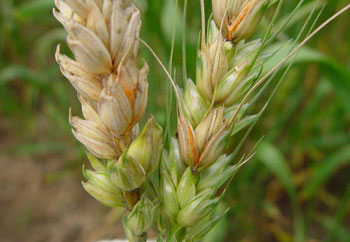
New Products for Wheat "Cancer" Control Lack Clear Efficacy Due to Drug Shortage
Wheat "Cancer" Drug Shortage: New Products' Efficacy Unclear
-
Mosquito coils are a type of pesticide; poor-quality mosquito coils can even cause cancer, so physical mosquito control is healthier
Many people don't know: besides a production license, manufacturers that make mosquito coils must also have a "Pesticide Registration Certificate" and a "Pesticide Production License". Because...
-
Japan's latest anti-cancer vegetable ranking is released
Many people know that vegetables can supplement the nutrients the human body needs, but they know very little about the anti-cancer effects of vegetables. Recently, scientific research in the United States, Japan and other countries...
条件筛选