New Products for Wheat "Cancer" Control Lack Clear Efficacy Due to Drug Shortage
Original title: Scarce Drugs for Wheat Fusarium Head Blight, New Drug Development Urgent
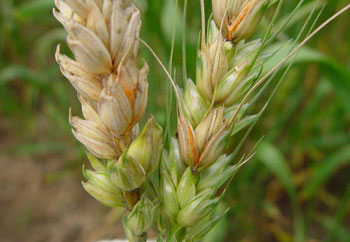
As temperatures gradually rise, wheat in various provinces and regions of China has successively entered the heading and flowering stage. This period is critical for wheat grain formation and is also the most crucial time for controlling wheat fusarium head blight. Recently, the National Agricultural Technology Extension Service Center released the 2016 wheat fusarium head blight occurrence trend forecast, using three key phrases in the report - "high field pathogen carrying rate," "poor variety resistance," and "frequent rainfall" - to predict that wheat fusarium head blight would occur at a relatively severe level in China in 2016.
Wheat fusarium head blight is one of the more serious diseases among the "three diseases and three pests" at the wheat ear stage. This disease occurs commonly worldwide and has always been one of the most serious diseases in the wheat-growing areas south of the Huaihe River and the middle and lower reaches of the Yangtze River in China. The frightening aspect of wheat fusarium head blight lies not only in its ability to cause severe yield reduction or even total crop failure, but more importantly, after infecting wheat, it can produce various mycotoxins, especially deoxynivalenol (DON), affecting human and animal health, deteriorating grain quality, and reducing seed value. China stipulates that diseased wheat grains from fusarium head blight must not exceed 4%, and wheat grains with DON content exceeding 1mg/kg cannot be consumed.
At present, China actively adopts a comprehensive control strategy for wheat fusarium head blight based on agricultural control, combined with resistant varieties, and chemical protection at critical periods. In recent years, with changes in domestic farming systems, continuous rice-wheat and corn-wheat cropping year after year, and the gradual expansion of no-till, fallow fields, and straw return areas, these have all provided favorable conditions for the survival and accumulation of field pathogen sources, also increasing the probability of wheat fusarium head blight occurrence year by year. Currently, the most economical, effective, and fundamental measure for controlling wheat fusarium head blight is the selection of resistant varieties. In recent decades, domestic breeders have done extensive work in selecting and promoting resistant varieties, and have bred a number of relatively resistant varieties such as Yangmai, Ningmai, and Zhenmai, but overall their disease resistance and high-yield performance are still not ideal.
Although wheat fusarium head blight is known as the "cancer" of wheat, it can be prevented and controlled but not cured. However, given the generally poor disease resistance of current varieties, chemical control remains the key to reducing the severity of fusarium head blight. It is understood that currently China has registered a total of 211 formulation products for controlling wheat fusarium head blight, involving 21 active ingredients, among which the single agents and mixed formulations of four ingredients - carbendazim, thiophanate-methyl, triadimefon, and thiram - are the most numerous, accounting for 86.26% of all registered products.
Products remain concentrated in benzimidazole and triazole classes, with carbendazim having the highest number of registrations. As the most important and commonly used chemical agent for controlling wheat fusarium head blight in China, carbendazim has played a very important role in controlling the disease. However, since the 1970s, carbendazim has been used in wheat fusarium head blight control for over 40 years, and long-term single or repeated use of carbendazim has led to the development of resistance in the fusarium pathogen. The reality of resistance development has made the already scarce control agents for wheat fusarium head blight even more stretched.
Therefore, seeking and developing new agents to control wheat fusarium head blight is urgent. Currently, the more popular and common options on the market are mixtures of tebuconazole and prochloraz, as well as related mixture products of phenamacril. Compared with agents for controlling other diseases, pesticides specifically for controlling wheat fusarium head blight still appear insufficient.
Do multinational companies have good products? Among the 211 pesticide products registered in China, only ADAMA, a multinational company, has registered a mixture of prochloraz and tebuconazole, while the Top6 companies led by Syngenta are collectively absent, having not registered any product specifically for controlling wheat fusarium head blight.
It is worth noting that among the 282 products currently in the field trial stage, we found the presence of multinational companies, mainly Bayer's 430g/L tebuconazole suspension concentrate and 18.2% tebuconazole + 9.1% trifloxystrobin suspension concentrate, BASF's 12.5% pyraclostrobin + 4.7% epoxiconazole suspension concentrate, and Syngenta's 200 g/L pydiflumetofen suspension concentrate.
Therefore, overall, pesticides for controlling wheat fusarium head blight are gradually increasing, but the variety is relatively limited, and efficacy still needs to be verified. Pesticide enterprises should accelerate the development of new agents for controlling wheat fusarium head blight to meet actual production needs. (Zheng Min)