-

What Are the Common Pests and Diseases of Calla Lilies? Detailed Solutions
Soft rot: You can remove its diseased spots, and when planting, do not plant it too deep. Leaf spot: It should be cleaned up thoroughly at the early stage, then spray with emulsifiable concentrate once a week. Mosaic virus: Diseased leaves should be burned promptly. Seed fly infestation: Use insecticidal powder to prevent it, or treat the soil and seeds with a chemical agent.
-

What kind of growing environment suits calla lilies?
Calla lily (Zantedeschia aethiopica) originated in Egypt and is a perennial aquatic herb, now developed into an amphibious plant. The flowers are highly toxic and can cause coma if eaten by mistake, yet they are extremely ornamental. Potted dwarf or small varieties placed on windowsills or in front of mirrors are full of exotic flavor, especially lively and lovely.
-
Did you know calla lilies have these other names too?
Calla lilies originate from Egypt and are a perennial aquatic herb, now developed into an amphibious plant. The flowers are highly toxic, and eating them by mistake can cause coma, yet they have great ornamental value. Potted dwarf or small varieties placed on windowsills or in front of mirrors are full of exotic charm, especially lively and lovely.
-
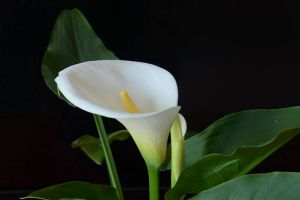
How to water calla lilies? Master the correct watering method
Adjust the amount of water according to the growth stage. During the growing period, follow the principle of "keep it moist rather than dry", because calla lilies like moisture and a dry environment is not good for their growth, but too much water is also not suitable, as long-term waterlogging can lead to problems such as root rot. To delay the dormant period, you can spray water once or twice every day at noon, and with proper care they can even bloom.
-

A Detailed Guide to Growing Calla Lilies in Water and Key Precautions
Pruning: Regularly clean up the leaves that have rotted in the water. Light: Keep the light adequate; it can be placed on a balcony for care, with frequent ventilation to help air circulate. Water: Ensure the nutrient solution is free of pathogens, and especially avoid water contamination. Fertilizer: Choose a suitable fertilizer, and make sure the pH is around 5.5-6.5.
-
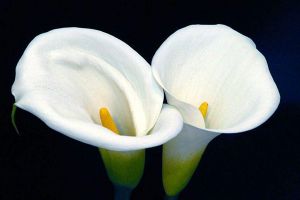
How to deal with root rot in calla lilies? Practical solutions shared
Root rot caused by root rot disease: in the early stage the leaves change color, then slowly rot, and the top of the flower also changes color and spreads to the petiole and stem; this is caused by mold in the soil. The diseased spots on its roots should be removed, then the plant should be soaked in hot water or acetic acid and replanted.
-

Detailed Explanation of Hydroponic Methods and Care Management Key Points for Calla Lily
1. Hydroponic varieties. Hydroponic calla lilies usually use the relatively short and compact white-stem type, red-flowered calla lily, and silver-flowered calla lily. Calla lily: calla lily bonsai care management. 2. Hydroponic solution. The hydroponic nutrient solution for calla lily can use the following nutri...
-
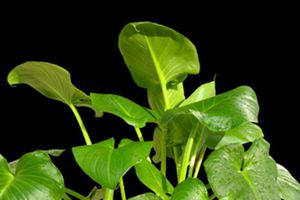
What to do if you accidentally eat a calla lily? Learn the correct way to handle it
It is a plant in the Araceae family and can be used as medicine to clear heat and dissipate toxicity, but it is toxic and must not be taken internally without proper guidance. If you eat it by mistake, first of all do not panic; it is recommended to see a doctor immediately, or drink plenty of plain water and repeatedly rinse your mouth with cold water.
-
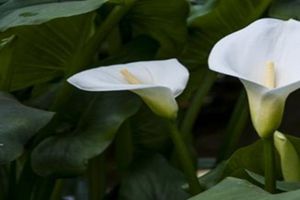
Is calla lily toxic? Learn about its toxicity before growing it
Calla lily contains toxic substances. If you accidentally eat it, your tongue will swell up. If there is a pregnant person, a small child, or pets in the home, it is best not to grow this plant. Although it looks very beautiful, its roots, leaves, and flowers are all toxic. If it is accidentally ingested, see a doctor immediately.
-
How to propagate calla lilies? These methods you need to master
We can propagate it by dividing the bulbs, dividing the offsets, or sowing seeds. Dividing the bulbs requires us to cut off the small bulb-like plants around its tuber when it enters dormancy and plant them separately; sowing requires us to wait until its seeds mature, collect them, and then plant them in pots; dividing the offsets requires us to cut off the small stems around it in around September and plant them separately.
条件筛选