-

Can calla lilies be kept in the bedroom?
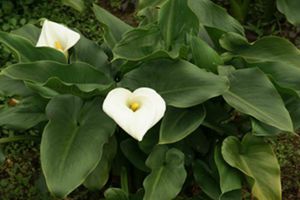
Calla lily is a perennial herbaceous plant of the genus Zantedeschia in the family Araceae. Its leaves are emerald green and thick, shaped like a heart-shaped arrow or arrow, and its spathe comes in white, red, yellow, silver-star, purple-spotted and other colors, shaped like a horse's hoof, which is why it is vividly called calla lily. It is a common ornamental flower
-
When Does the Calla Lily Bloom? The Latest Detailed Guide to Its Blooming Period
The calla lily is also known as cigu flower, water taro, wild taro, arrowhead flower, calla lily, flower taro, and so on. It is a perennial robust herbaceous plant of the genus Zantedeschia in the Araceae family. In European and American countries it is a commonly used flower in bridal bouquets. Its blooming period is generally March to April, but if the environment is suitable,
-
What to Do When Calla Lily Leaves Turn Yellow? The Latest Causes and Solutions
The calla lily is elegant and graceful, with pure white spathes shaped like horse hooves and emerald green leaves dotted with white spots, making it a masterpiece of both flower and foliage. It has become one of the important cut flower species on the international flower market, but during cultivation, poor management can quite easily lead to yellowing leaves.
-
What is the flower meaning of calla lily? Let us take you through its legend and story
Calla lily is a perennial robust herbaceous plant of the genus Zantedeschia in the family Araceae, suitable as a bridal bouquet, small white varieties are suitable for giving to young friends, do not give orange-red varieties to ordinary friends of the opposite sex, and give an even number rather than an odd number, now let us take a look together
-
Is calla lily toxic? The latest answer is here
Is calla lily toxic? The calla lily is toxic. Calla lilies contain large amounts of calcium oxalate crystals and alkaloids, and accidental ingestion can cause symptoms such as drowsiness and other poisoning symptoms. This species is a toxic plant recorded in the Chinese plant atlas database, and its toxicity is that the tubers, spathe and spadix are toxic.
-
A Complete Guide to the Latest Cultivation Methods for Calla Lilies
In the cultivation methods for calla lilies, two approaches are usually adopted: pot cultivation and trough cultivation. For pot cultivation, the short, compact white-stemmed type, red calla lily and silver calla lily are generally chosen; if large plants are the goal, the tall green-stemmed type or yellow calla lily can be selected. With
-
How to Grow Calla Lilies
Soil selection: it is best to choose loose, breathable soil rich in humus. Temperature control: calla lily is a warmth-loving plant, and during growing it should be kept at a temperature between 20-28°C. Proper moisture: keep its soil and leaf surfaces moist. Light adjustment: when it reaches the flowering
-
How to Grow Calla Lily (Zantedeschia, Araceae): Toxicity, Reasons for Not Blooming, and Precautions
The calla lily is also known as arrowleaf elephant ear flower, water taro, wild taro, arrowhead flower, calla lily, and flower taro. It is native to southern Africa and is a perennial bulbous flower of the Araceae family. So what are the cultivation methods and precautions for calla lily? The calla lily is native to southern Africa and belongs to the Araceae
-

How to grow colored calla lilies? Growing methods and precautions
To grow this plant, use sandy soil with very good aeration and drainage, and the pot should be relatively shallow. The suitable temperature for its growth is 22-30 degrees; if it is below 20 degrees, its growth rate will slow down. Water according to how dry the soil is, the fertilizer dose does not need to be large, and during the growing period give it strong light.
-
What is the difference between calla lily and giant taro? A quick guide to tell them apart
Both belong to the same family and are perennial, staying green all year round. The former's petals curve away from the spadix, while the latter's flower resembles an eagle's beak and curves along the spadix. The latter's spadix is thicker and sturdier than the former's, and the latter can produce fruit, while the former rarely sets fruit.
条件筛选