-

A Detailed Guide to Propagating Lilies from Bulbils: Easily Grow More Lilies
Lily seeds have an extremely short lifespan; after half a year in storage they lose their ability to germinate, and seedlings grown from seed must be cultivated for many years before they can bloom. After sowing, lilies must be grown for several years before commercial bulbs can be obtained. Therefore, vegetative propagation is generally used first to obtain planting bulbs, which are then planted in the field to grow into commercial lilies. Planting bulbs are small bulbs of 50 g to 100 g first produced from various propagation materials; the number of years required varies depending on the propagation organ used. The following is a brief introduction to the bulbil cultivation method. The bulbil cultivation method is suitable for varieties that produce bulbils
-
A Detailed Guide to Harvesting and Storing Garlic Bulbs
The harvest time for garlic bulbs should be determined by their maturity. If harvested too early, the bulb tissue will be underdeveloped, with high water content; after drying it tends to shrivel, stores poorly, and yields are low. If harvested too late, the skin turns black, the cloves separate easily, and market quality is poor. Based on the experience of garlic farmers in my area: the suitable harvest time is when most of the garlic leaves have dried up, the upper leaves have faded and their tips have dried and gradually drooped, the plant is in a soft state, and the stalk does not break easily. After harvest, dry the garlic bulbs in the field, turning them frequently. When turning them, lay the leaves of the back row over the bulbs of the front row, arranging them in order, drying only the leaves and not the bulbs, and sun-dry them
-
Differences Between Pleione bulbocodioides and Aspidistra elatior and Their Care Methods
Scientific name: Pleione bulbocodioides. Aliases: Aspidistra elatior, one-leaf orchid. Family and genus: Orchidaceae, perennial herb. Morphological characteristics: When Pleione bulbocodioides blooms, a leaf grows beside the flower, which is why it is also called Aspidistra elatior, while the name Pleione bulbocodioides comes from its garlic-shaped pseudobulb. Terrestrial or epiphytic; pseudobulb oval or conical, 2 cm to 3 cm long; flowering period April to June; erect inflorescence 15 cm to 25 cm tall.
-
What are the methods for preserving garlic bulbs? Practical storage tips to teach you a few tricks
Garlic bulbs do not store well. Even in a dry, ventilated environment, after 100 days of storage they will sprout, shrivel and become moldy, affecting the planting quality for the following year. Therefore, mastering the storage techniques for garlic after harvest is extremely important. Here four garlic bulb storage and preservation techniques are specially introduced: 1. Hanging storage method. After harvest, the fresh garlic bulbs are first sun-dried for 2-3 days; when the leaves become soft, tie the garlic into bunches of 8-10 bulbs each, then hang them neatly under a shade shed or eaves to air-dry naturally. During the hanging storage period, exposure to the sun should be avoided in summer and autumn, and in winter the garlic bulbs should be moved into a ventilated room for storage to avoid moisture and freezing.
-
Key Technical Points for Harvesting and Preserving Zephyr Lily Bulbs
[Other Chinese Names] Baiyu Lian, Changpu Lian, Cong Lan, Fengyu Hua [Family and Genus] Amaryllidaceae, Zephyranthes [Place of Origin] South America [Plant Characteristics] Zephyr lily is a perennial herbaceous plant. Plant height 20-30 cm. It has underground bulbs, ovate, covered with a dark brown membranous tunic. [Bulb Harvesting] The harvested part is the tunicated bulb of zephyr lily. After early autumn, when the aboveground part of the plant turns yellow and withered, it can be harvested. First carefully dig the bulbs out of the soil with a spade, then sieve them. Spread out the harvested bulbs to dry for 5
-
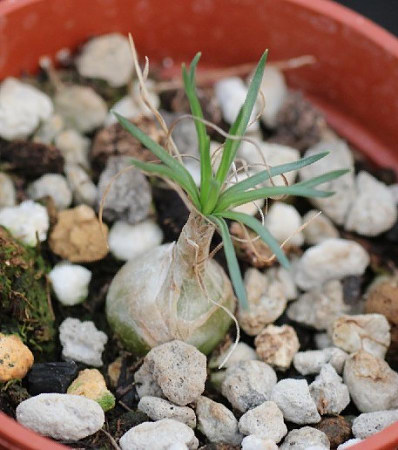
Want bulb flowers to bloom again? First, the key is nurturing the bulb
The flower bud formation of most bulbous flowers is stimulated by temperature differences. Most regions of our country have a climate with four distinct seasons, so without any stimulation, bulbous flowers can bloom again. That is to say, as long as you nurture the bulb well, reblooming is only a matter of time, and many kinds of bulbous flowers can bloom again. So it comes down to one point: you must nurture the bulb well.
-

A Detailed Guide to Carving and Shaping Zhangzhou Narcissus Bulbs
This is aimed at masters who have already mastered the art of narcissus carving. For example, to create a flower basket shape, you must choose a bulb with symmetrical offset buds; to create the "mandarin ducks playing in water" shape, you need to select one with a small spherical offset bud of appropriate size; for the "peach and plum vying for spring" shape, you need to choose a large and a small bulb growing together on a single basal plate
-
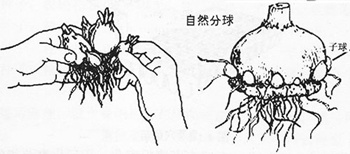
A Detailed Guide to Propagating Hyacinths by Bulb Division, Easily Getting More Bulbs
Propagating hyacinths by bulb division is actually a sign of an advanced grower, because hyacinths generally do not rebloom well in the second year, especially for beginner flower lovers. However, hyacinth bulb division is not impossible to carry out. Below is a look at how to propagate hyacinths by bulb division. Hyacinth bulb division is actually very simple: just twist off the daughter bulbs.
-
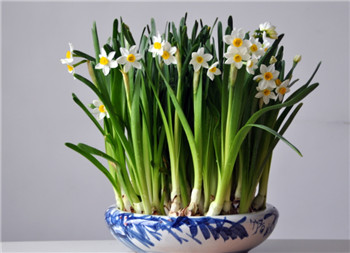
Narcissus bulb selection methods and tips
To grow narcissus well, you must choose good narcissus bulbs. The quality of the narcissus bulb determines how many flowers bloom and whether the fragrance is rich. When choosing narcissus bulbs, you can do it from four aspects: looking at the shape, observing the color, pressing, and asking about the "zhuang" (packing grade). (1) Looking at the shape: High-quality narcissus bulbs are generally large, flat in shape, and hard in texture
-

Do hyacinth side bulbs need to be removed after they grow?
Hyacinth bulbs sometimes come with side bulbs attached at the base. Some gardening friends ask whether hyacinth side bulbs should be removed. Based on the author's experience and the cases of other gardening friends, we can tell you that they can be removed or left in place; it mainly depends on the situation. Situation 1: If you plan to grow them in water, it is recommended to remove all the side bulbs.
条件筛选