-

How to make a pigeon nest properly? Building methods and key points
How to make a pigeon nest properly?
-

What are the site selection methods for building a pig farm?
Site selection methods for building a pig farm
-

Is a wasp building a nest at home an ill omen or a blessing?
Is a wasp building a nest at home an ill omen or a blessing?
-

-

Methods and Technical Points for Building Locust Breeding Greenhouses
Building Locust Breeding Greenhouses
-
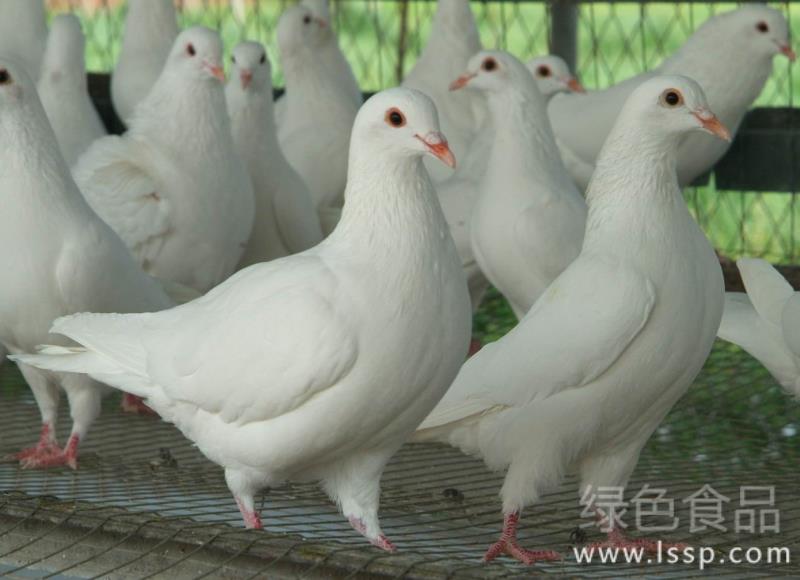
Key measures for raising young pigeons, building a new force of reserve breeding pigeons
Young pigeons: a new force of reserve breeding pigeons, and the key measures for raising young pigeons
-

Key Technical Points for Building a Pig-Raising Greenhouse on a Pig Farm
Building a Pig-Raising Greenhouse on a Pig Farm
-

What are the main equipment and facilities in a deer barn building?
1. Feeding and watering equipment (1) Water supply equipment: water source, submersible pump, water tank, water pipes, drinking troughs, etc. (2) Drinking troughs: to allow deer to drink warm water in winter, a rectangular trough welded from iron plate or a large iron pot can be fixed on a stove base so it can be heated. The trough or water pot is best placed below the front wall, or at the lower end of the feed trough in the middle of the exercise yard; some also extend a small part into the corridor, so water can be added and heated directly from the corridor, saving time and labor and being safer. The trough is 2 m long (passing through the wall, for two pens), 0.6 m wide, and 0.35 m deep. The stove base must be solid, and the chimney 1.2-1.5 m high. Where conditions permit, it is best to use gravity-fed watering, with a tap water pipe and automatic switch installed above the trough or between the stove base and the edge of the water pot. (3) Feed troughs: generally wider and deeper cement troughs, wooden troughs, etc. are commonly used, with cement troughs being the most durable. Feed troughs are best placed below the iron-bar railing of the front wall, or fixed lengthwise in the middle of the exercise yard; some are placed inside the shed. When wooden feed troughs are used, they must be installed securely. General feed trough specifications: 4-5 m long, 0.6-0.8 m wide at the top, with a rounded bottom, 0.25-0.30 m deep, and the bottom of the trough 0.3-0.4 m above the ground. It can feed 10-15 adult deer or 20-30 young deer. Generally, at least two such feed troughs should be set up in each pen. The surface of the feed trough must be smooth and free of sharp edges.
-
Detailed explanation of the method for building a banded krait (Bungarus fasciatus) snake house
For artificial rearing of banded kraits, a snake garden or snake house can be used; for small-scale rearing, a snake box can be used. The snake garden and snake house for banded kraits should be built in a place that is sheltered from the wind and facing the sun, on high and dry ground, with dense soil, relatively close to a water source yet far from residential areas, and quiet. The snake garden should simulate the wild environmental conditions of the banded krait. The surrounding wall of the snake garden should be 2.5 m high, the inner surface of the wall should be smoothed with cement, the corners of the wall should be built into an arc shape, the wall foundation should extend 1.5 m underground, and at a depth of 1.5 m in the soil layer, lime-sand-clay mixture should be tamped solid to prevent rodents from burrowing and the snakes from escaping.
-
Key points and precautions for building a rooftop rice field eel pond
What should be noted when building a rooftop rice field eel pond? Considering the load-bearing capacity of the rooftop, it is recommended that all rooftop ponds be built with bricks laid upright (wall thickness 6 cm); except for breeding ponds, all should use soil-free culture. From the perspective of cooling, the wall that is often exposed to the sun should be built higher than the height of the culture pond, and then the pond should be started about 10 cm back from it, to prevent prolonged sunlight on that pond wall from causing the water temperature in that pond to rise abnormally compared with other ponds, resulting in an undetected high water temperature that causes the death of rice field eels.
条件筛选