Key measures for raising young pigeons, building a new force of reserve breeding pigeons
Young pigeons are pigeons kept for breeding from the time they leave the nest and live independently until they reach sexual maturity and are paired. To obtain ideal reserve breeding pigeons, the following "six checkpoints" must be well managed when raising young pigeons.
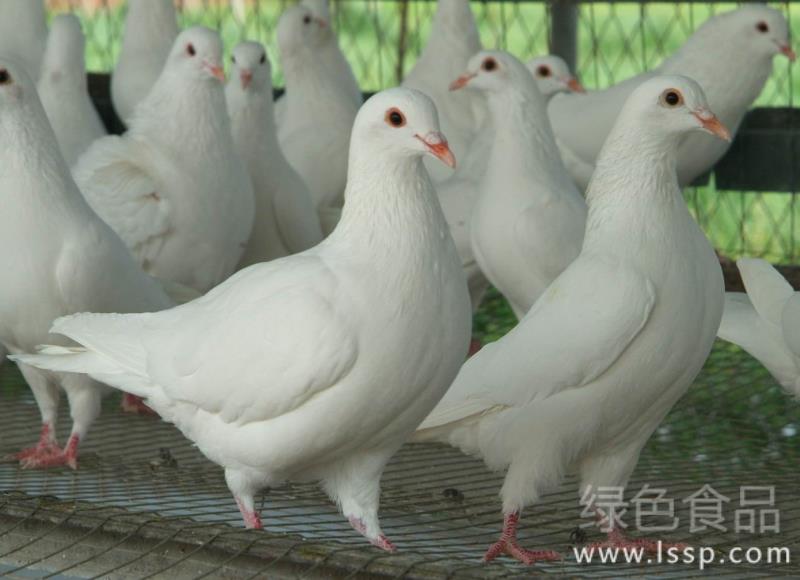
Pigeons
1. Transferring to a new group. After about one month of independent living, squab pigeons can adapt to the external environment, and their activity and feeding abilities are enhanced; their primary wing feathers begin to molt. This stage is the turning point for transferring them to the young pigeon stage, and they should be moved into a young pigeon house. In a young pigeon shed, each group is about 250 birds, the activity space is about 30 sq m, and the stocking density is about 8 pigeons per sq m. The transfer should be carried out at night; if transferred during the day, the pigeons are prone to fighting. Before transferring, the pigeon shed should be cleaned and disinfected first.
2. Restricting the feeding amount. Young pigeons grow quickly and have a vigorous metabolism. If they are fed freely, they will become too fat from overeating, which affects the reproductive performance of meat pigeons, and some pigeons may even fail to lay eggs because fat infiltrates the ovaries. Within 3-5 days after the pigeons enter the young pigeon shed, their feed intake will decrease. After normal feed intake resumes, the feeding amount should be reduced. Starting from 60 days of age, each meat pigeon should be fed 35-40 grams per day, divided into 3 feedings per day. After that, every 5 days, the feeding amount should decrease by 5%, finally stabilizing at about 30 grams, until the pigeons begin to lay eggs, when the feeding amount is restored to 35-40 grams. With restricted feeding, there is no need to worry that the meat pigeons will be too thin; thinner meat pigeons have better egg-laying and reproductive performance later.
3. Ensuring the protein level. For young pigeons at 55-60 days of age, the first primary wing feather begins to molt, and about one feather is replaced every 10 days. By 6 months of age, the molt is basically complete, and the birds enter body maturity. Along with the replacement of the primary wing feathers and the development and maturation of various organs in young pigeons, in addition to restricting the feeding amount, the proportion of energy in the daily ration should also be appropriately reduced and protein increased, with protein feed accounting for more than 25%. Each meat pigeon should be supplied with 6-8 grams of health grit regularly every day, and the content of calcium and phosphorus should be appropriately increased.
4. Raising males and females separately. At 3 months of age, young pigeons have enhanced activity ability and adaptability, and many pigeons successively come into estrus. The male pigeon's neck air sac expands, the neck feathers and back feathers stand up, the tail feathers loosen into a fan shape, and the head nods up and down frequently while chasing the female pigeon, marking sexual maturity. At this time, if male and female pigeons are in the same group, early mating occurs, and then early laying follows. Early mating and early laying are both unfavorable to meat breeding pigeons. To avoid early mating, male and female pigeons should be raised in separate groups, and this should continue until they are paired and caged.
5. Increasing exercise. Young pigeons are lively and active, and can be raised flat on the ground or on wire netting to increase exercise. Set up perches on the ground and on the netting so they can fly up and down, strengthening exercise, enhancing physique, and preventing excessive fatness.
6. The third selection. At about 6 months of age, the preparatory work before breeding pigeons are caged should be done well, and a second Newcastle disease vaccination should be carried out. During the process of artificial pairing, based on the growth and development status and appearance characteristics of the young pigeons, another selection should be carried out. Meat pigeons that do not meet the requirements, are too fat, have diseases, or have limb deformities should be culled and sent to market. Meat pigeons that meet the breeding standards should be paired and caged for rearing.