-

How to Carry Out Selective Breeding and Breed Conservation in Jian Carp Farming
Any superior breed, if selective breeding and breed conservation are neglected, will often lead to breed degradation, reduced yield and deterioration of other traits. Jian carp has stable genetic traits and can, through within-breed reproduction, pass the superior traits of this breed on to its offspring. However, different carp breeds easily interbreed and become mixed, individuals within the same breed also differ, and the living environment can have a considerable effect on the traits of a breed. Therefore, attention must be paid to selective breeding of superior stock: according to the breed's standards, fish with good traits in all relevant respects should be selected as broodstock for rearing and allowed to reproduce.
-
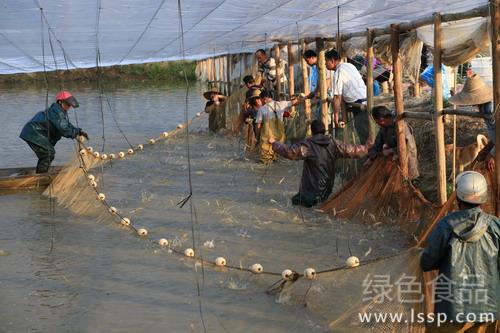
Artificial breeding methods for freshwater shrimp: water quality cultivation is key
Artificial breeding methods for freshwater shrimp: water quality cultivation is key
-
Key Technical Points for Feeding and Management of Does During the Breeding Period
The purpose of raising female sika deer is to require does to have high fertility, a healthy constitution, and to produce superior offspring. Whether does can produce superior offspring is not only related to the breed of the doe, but also extremely closely related to feeding and management. Only good feeding and management can enable does to give full play to their superior production performance. According to the nutritional needs and feeding and management characteristics of does at different stages, doe feeding and management can be divided into three periods, described as follows: I. Feeding and Management of Does During the Mating Period Every year
-
Which dog breeds are not suitable for home breeding
Among the many pet dogs, some breeds are very prone to dystocia (difficult birth) when breeding. The more purebred the dog, the greater the chance of dystocia; small breeds such as the Poodle, Dachshund, Shih Tzu, Spanish Spaniel, and Chihuahua are especially prone to dystocia. Because these dogs have been artificially modified, their bones have become smaller and their pelvic cavity narrower, so dystocia is relatively easy to occur. In addition, some dogs such as the English Bulldog and the Italian Mastiff (Neapolitan Mastiff) also frequently experience dystocia because their heads are relatively large. Home-kept dogs are prone to dystocia
-
Breeding and Cultivation Points of the High-Starch Potato Variety Qingshu No. 2
The new high-starch potato variety Qingshu No. 2 was bred by the Crop Institute of the Qinghai Academy of Agriculture and Forestry Sciences. This variety is a late-maturing variety with a growth period of about 120 days, good agronomic traits, strong growth vigor, strong disease resistance, and excellent quality; its starch content is 22.86%-25.83%, which is 7-10 percentage points higher than the average value of the 77 nationally approved varieties (15.05%), and its Vc content is 20.92mg/100g; it tastes good and has a high yield level, with an average yield of 3000kg per mu and a maximum yield of 4192kg per mu; it has wide adaptability
-
Guangxi Takes the Lead in Breeding an Aromatic Red Rice CMS Line
Recently, the Science and Technology Department of Guangxi Autonomous Region organized relevant experts to conduct a field technical appraisal of the wild-abortive type CMS line Betel Nut Red A, bred by the Xiangzhou Huang Family Rice Research Institute. After rigorous field investigation and indoor microscopic examination, and after hearing the breeder's technical report and questions and answers, the expert group determined that Betel Nut Red A meets the standards for a rice CMS line. It is the first aromatic red rice CMS line bred in China, with strong innovation. Betel Nut Red A has stable agronomic traits, stable male sterility, good flowering habits, relatively good grain quality, and a resistance level of highly susceptible.
-
Clownfish Breeding Techniques and Methods Explained in Detail
Turban snails, five-claw scallops and the like, just like the abalone (jiukong shellfish) we commonly eat, can be artificially bred: when the gonads are mature, a simple method of raising or lowering the temperature can be applied to stimulate them to release eggs and sperm. First take out the mature broodstock, with a male-to-female ratio of about 1:3, use a heater or ice cubes to slowly raise or lower the water temperature by about 4°C, then rapidly lower or raise it by 2°C, then place them back in the original tank to return to room temperature, and a large amount of white smoke-like sperm and egg granules can be seen being released. In most shellfish, females slightly outnumber males. Taking the abalone as an example,
-
Chinese Box Turtle (Yellow-margined Box Turtle) Breeding Methods and Key Points of Daily Feeding Management
The yellow-margined box turtle (Cistoclemmys flavomarginata), also known as the broken-plate turtle, snake-eating turtle, clamp-plate turtle, and yellow-plate turtle. Its taxonomic position is the family Geoemydidae, genus Cuora, species Cistoclemmys flavomarginata. Within China it is distributed in Anhui, Henan, Macao, China, Hong Kong, China, Taiwan, China, Fujian, Hunan, Jiangsu, Zhejiang, Guangdong, Guangxi, and elsewhere. Outside China it is distributed in Japan. [Morphological characteristics] The head is smooth, the front of the snout is flat, and the upper beak has a distinct hook-like curve. The top of the head is olive-colored, with a yellow "U"-shaped arc stripe behind the eyes. The carapace is dark reddish-brown and rather
-
The peak summer breeding season for scorpions has arrived
The scorpion (Mesobuthus martensii) is a traditional Chinese medicinal material. Currently in the medicinal herb market in Guangxi, the price of salt-processed scorpions is 350-380 yuan/kg, and the price of clean-water scorpions is 400-450 yuan/kg, with prices remaining consistently high. Summer is the period of vigorous growth and development for scorpions, and it is also their breeding season. High temperatures with high air humidity, or high-temperature dry weather, all have a great impact on scorpions, making it especially important to strengthen summer breeding management of scorpions. The main management measures are as follows. 1. Scientific feeding of feed. Summer is the period of most vigorous growth for scorpions. When the temperature has just risen
-
Detailed Explanation of Key Points of Artificial Selective Breeding Techniques for Snakes
Strengthening artificial selective breeding of snakes is of great significance for improving snake reproduction survival rates, growth and development speed, product quality and economic benefits. It is work that snake farms cannot afford to neglect, and it must be carried out year-round with unremitting effort. In selective breeding, the following three points should be well handled: 1. Selection of breeding eggs. Breeding eggs placed for incubation must be fresh and of high quality. Eggs stored for a long time have a low hatch rate and a high mortality rate; the hatchlings are weak and grow slowly. Therefore, female snakes should be checked frequently before laying eggs. When eggs are found to be approaching the cloaca, they should be promptly
条件筛选