-

The snakehead Channa asiatica is a prized tonic fish in South China.
Channa asiatica belongs to the order Perciformes, suborder Anabantoidei, family Channidae, genus Channa. Common names: in Guangdong it is called qixing fish, shanhua fish, shanban fish, diancheng fish, chengxing fish, and xingguang fish; in Guangxi it is called xing fish and zhanggong fish; in Taiwan, China it is called youdai. English names: Snakehead, Chinafish. Its form resembles the spotted snakehead. The head is large, wide and flat, the snout short and bluntly rounded, the mouth large, and the nasal tubes thick, extending forward beyond the upper lip. The scales are relatively large, and the scales on top of the head are enlarged but irregular; the scales on the sides of the head are also relatively large. Dorsal fin and anal fin
-
What to do when Ranunculus asiaticus gets mosaic disease? Symptoms and control methods
Ranunculus asiaticus is a fairly common ornamental flower for flower beds, but improper cultivation can cause mosaic disease in Ranunculus asiaticus. The editor will introduce the symptoms and control methods of mosaic disease in Ranunculus asiaticus for you; flower lovers in need can learn about it.
-
How to Propagate Alocasia (Dumb Cane)? A Detailed Guide to Common Propagation Methods
Since the sap of Alocasia is toxic, you need to avoid direct skin contact with the sap when propagating it. It is best to wear gloves so that contact with the white sap does not cause itchy skin. So how should Alocasia be propagated?
-
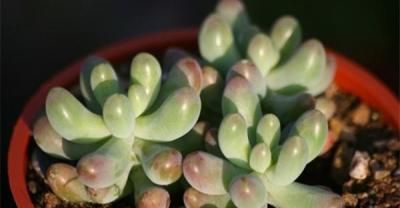
A detailed guide to growing Alocasia (Alocasia macrorrhizos), also known as the giant taro
Alocasia can only grow well in an environment no lower than 18°C. If the temperature drops below 18°C, the Alocasia will enter a dormant state and stop growing. Alocasia is not very cold-hardy, ...
-
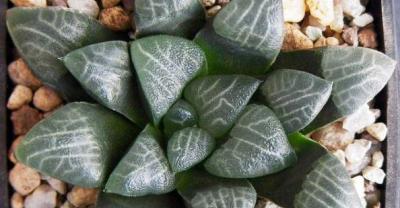
Alocasia amazonica care guide, plus yellowing, softening, rotting leaves, dropped leaves, and withered leaf tips
How do you care for Alocasia? Anyone who loves flowers and plants cares about this kind of question. People who like growing Alocasia are probably drawn to its lotus-like shape, ...
-
What kind of fish is the East Asian plateau loach? Characteristics and habits
Common name: Jiuerbang. Origin and season: Widely distributed in Qinghai, Tibet, Gansu, ** and western Sichuan. Description: Mouth inferior, relatively wide. Lips thick, upper lip wrinkled, lower lip with papillae and deep wrinkles, lower jaw spoon-shaped. Tips of pelvic fins extending backward to or beyond the anus. Caudal peduncle relatively high. Body surface smooth and scaleless. A bottom-dwelling fish, living in slow-flowing streams or shallow water with abundant gravel and aquatic plants, feeding on animal food. Individuals are relatively large; a specimen with a body length of 142 mm has been observed; numbers are abundant and can form regional
-

What protection level does the Eurasian badger have? Understanding its protection status in one article
What protection level does the Eurasian badger have?
-

Prevention and Treatment of Rabbit Ringworm with Hair Loss, Inflammation, and Crusting Hyperplasia
Prevention and Treatment of Rabbit Ringworm with Hair Loss, Inflammation, and Crusting Hyperplasia
-

How to Grow Alocasia 'Thousand-Hand Guanyin'? Detailed Guide to Growing Methods and Precautions
Alocasia 'Thousand-Hand Guanyin', of the Araceae family and Alocasia genus, has medicinal value. It belongs to the same family and genus as Alocasia macrorrhizos (giant taro), and compared with it, both drip water and are grown the same way. The difference...
-
Introduction to the Breeding Methods of the East Asian Scorpion "Shenlong No. 1"
The East Asian scorpion "Shenlong No. 1" is a new breed developed through hybrid vigor. Its advantages are large body size, high venom yield, short growth cycle, high litter rate, and high reproduction rate, and it has improved immunity to the original diseases and pests and adaptability to the growth environment, which facilitates feeding management. I. Characteristics: The features of this breed are similar to other East Asian scorpions. The trunk (from the anterior abdomen to the cephalothorax) is flat and elongated oval, and the posterior abdomen is tail-shaped. The entire body resembles a pipa shape, and the whole body surface is a highly chitinized hard skin. The body is
条件筛选