How to Grow Alocasia 'Thousand-Hand Guanyin'? Detailed Guide to Growing Methods and Precautions
Alocasia 'Thousand-Hand Guanyin', of the Araceae family and Alocasia genus, has medicinal value. It belongs to the same family and genus as Alocasia macrorrhizos (giant taro), and compared with it, both drip water and are grown the same way. The difference is that its leaves are much smaller than those of Alocasia macrorrhizos, and its form is more upright. It has stronger ornamental value, and its market price is a bit higher. Many flower enthusiasts do not know how to grow Alocasia 'Thousand-Hand Guanyin'. Below is an introduction to its growing methods and precautions.
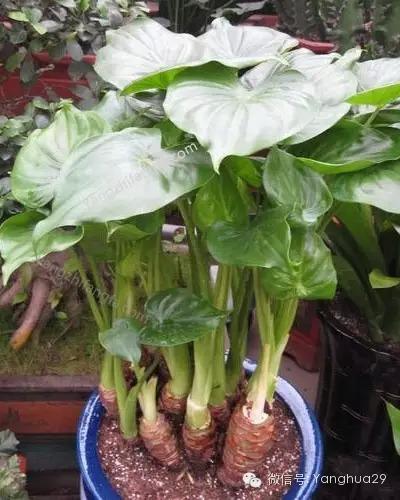
Growing Methods for Alocasia 'Thousand-Hand Guanyin'
1. The growing temperature is 20-30 degrees, and it can tolerate a low of 8 degrees. In summer, when temperatures are high, it can still grow normally as long as the soil is kept moist, water is sprayed frequently, and it is shaded. In winter, room temperature must not be below 5 degrees. Alocasia macrorrhizos is an understory plant of tropical rainforests, so its growth requires high humidity, and diffused light is best.
2. As a shade-tolerant plant, it likes a semi-shaded environment. It should be placed in an environment that is both shaded and ventilated. Do not expose it to blazing sun, to avoid large areas of scorching on the plant.
3. It especially likes moisture. During the growing season, not only must the potting soil be moist, but the air humidity must also be no lower than 60%. In summer, when temperatures are high, spraying water should be increased to create a relatively cool and moist environment for it. If it is placed in an indoor air-conditioned hall, the potting soil must be kept moist and the leaves should also be sprayed with water from time to time. If the winter room temperature cannot reach 15 degrees, watering should be controlled, otherwise it easily causes root rot in the plant. Under normal circumstances, spraying warm water once a week is enough to keep its leaves dark green.
4. It can be grown in nutrient soil mixed from leaf mold, peat soil, river sand and a small amount of thoroughly rotted cake fertilizer. It can also be hydroponically grown, but care should be taken to prevent root rot and to add nutrient solution. Usually, repot once every spring, and loosen the soil once a month to keep the potting soil in a well-aerated state.
5. It relatively likes fertilizer. From March to October, apply liquid fertilizer once every half month, and the proportion of nitrogen can be appropriately increased. If a little ferrous sulfate can be added, so much the better, as the leaves will then grow as large as lotus leaves and become smooth and pleasing. When the temperature is below 15 degrees, fertilization should be stopped.
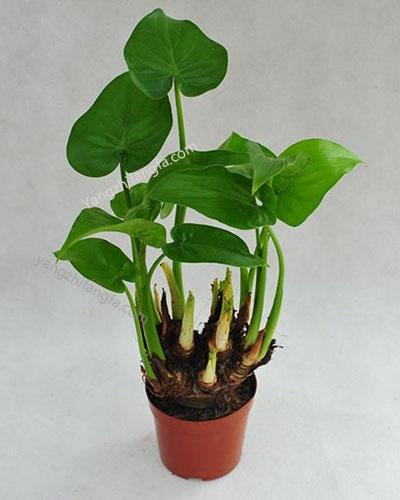
The Guttation Phenomenon of Alocasia 'Thousand-Hand Guanyin'
Under warm, humid conditions with sufficient soil moisture, water will drip downward from the leaf tips or leaf edges; moreover, its flowers resemble Guanyin, so it is called Alocasia macrorrhizos (dripping Guanyin). If the air humidity is too low, the water that emerges will immediately evaporate, so generally there are more water droplets in the morning. This is called the "guttation" phenomenon.
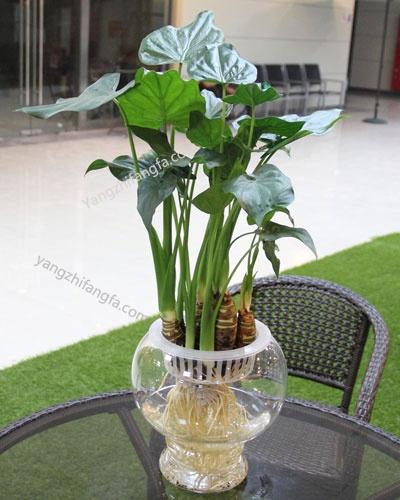
The growing methods and precautions for Alocasia 'Thousand-Hand Guanyin' are introduced here. We hope this is helpful to everyone.
---------------------------------------
Flower-Growing Knowledge
WeChat: yanghua29
Flower-growing knowledge, with questions and answers, to solve your flower-growing problems!