-

How to Grow Chuanxiong? A Detailed Guide to Planting Techniques and Management Methods
Planting Techniques for Chuanxiong
-

Ligusticum chuanxiong Price Trends and Detailed Planting Methods
Ligusticum chuanxiong Price and Planting Methods
-

How to Grow Chuanxiong for High Yield? Detailed Explanation of Key Cultivation Techniques
High-Yield Cultivation Techniques for Chuanxiong
-

Key Technical Points for Summer Management of Gastrodia elata in Northern Shaanxi
Gastrodia elata prefers to grow in warm, moist sandy (or leaf-mold) soil and has relatively strict requirements for temperature and humidity. However, the area along the Great Wall in northern Shaanxi lies in the mid-temperate zone, where summers are hot and dry with little rain, which is unfavorable for the growth and development of Gastrodia elata. To achieve a good harvest of Gastrodia elata, the measures that should be taken in summer management are: (1) Build a shed for shade. In summer, especially at noon during the hot dog days, due to direct sunlight, the ground temperature at 20 cm below the surface (already close to the Gastrodia elata layer) reaches as high as 30-37°C. To keep the ground temperature at 20-28°C
-
What other names does the Chinese herbal medicine Banxia have? A list of common names
[Aliases] Diwen, Dixing, Shuiyu, Shoutian, Shigu, Yangyan Banxia, Hegu, Xiezi Cao, Yanzai Wei, Dizhu Banxia, Mayu Guo, Mayu Guo, Sanbu Tiao, Sanye Lao, Sanye Banxia, Fanshizi, Di Zhegu, Di Cigu, Lao Huangzui, Lao Heshang Tou, Ye Yutou, Lao Guatou, Lao Guayan, Lao Yayan, Zhuozui Douzi, Di Badou, Wuxin Cai Gen, Tianluo Xing, Mayu Zi, Mayu Gen, Dilei Gong, Lao Guasuan, Gou Yutou, Zhu Banxia, Liedao Cai, Macao Zi, Yao Gou Dan. [Trade name] Banxia. Those that are large, round in shape, white in color, clean-skinned
-
Overwintering management of Panax notoginseng, Coptis chinensis, Morinda officinalis, and Ligusticum chuanxiong
Panax notoginseng: In winter, when the leaves turn yellow and wither, cut off the above-ground stems and leaves about 3 cm above the ground, collect the dead stems and leaves, remove weeds and diseased plant residues from inside and outside the garden, and burn them all outside the garden to clean the field. Then spray the bed surface with 1:1:200 Bordeaux mixture or 0.2-0.3 degrees Baume lime-sulfur mixture to fully disinfect the soil. If exposed roots are found, add appropriate soil covering. In addition, after cleaning the garden in November, apply 2000 kg of decomposed mixed fertilizer per mu at the plant roots to protect the buds through the winter safely. Before the seedlings emerge
-
Detailed Explanation of the Key Points of Standardized Cultivation Techniques for Su Banxia
Su Banxia is a unique authentic Chinese medicinal herb of Huaibei City. According to the "Suzhou Prefecture Gazetteer" from the Guangxu period of the Qing Dynasty: "Su Banxia is best only in Sipu and Sunding (now within the territory of Huaibei City). Su Banxia is full of powder and white in color, and Beijing Tongrentang specifically requested Banxia from this place." Due to the influence of chemical herbicides, chemical fertilizers, pesticides and techniques and other factors, the resources of Su Banxia find it difficult to meet market demand. In order to revive the glory of our city's traditional Chinese medicinal materials, cultivate a pillar industry of medicinal materials, and realize the standardized cultivation of Su Banxia, it has become even more urgent and particularly important. 1. Land selection and land preparation for Banxia
-
How to grow water banxia (Pinellia pedatisecta)? Detailed explanation of cultivation techniques and management key points
Water banxia, also known as jiye banxia (Pinellia pedatisecta), uses its tubers as medicine and has the effects of detoxifying, reducing swelling and stopping bleeding. According to pharmacological tests, its efficacy is the same as that of banxia (Pinellia ternata), but its toxicity is even lower than that of banxia. It is mainly produced in Guangxi, especially most abundant in Pingnan and Guiping. For planting, deep and fertile sandy loam soil is best. Cultivation methods. 1. Land selection and land preparation. Choose water-retentive paddy fields with sufficient sunlight, fertile soil and convenient drainage and irrigation for planting. The land preparation method for paddy fields is the same as that for rice seedling fields. Dryland cultivation uses raised-bed planting. Whether planted in paddy fields or dryland, fully decomposed organic fertilizer must be applied in sufficient quantity, such as human excrement and urine,
-
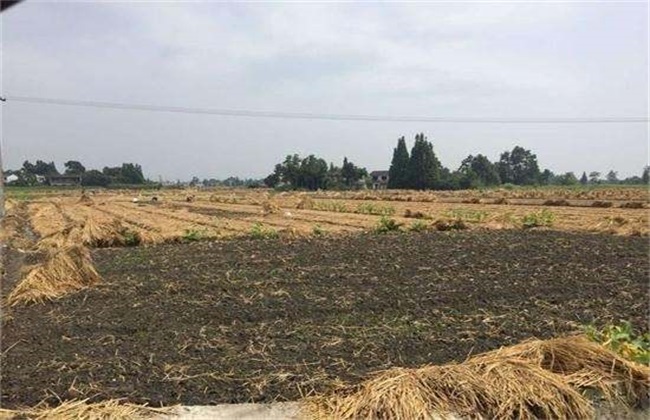
Detailed Explanation of Chuanxiong Cultivation Techniques and Management Key Points
Chuanxiong Cultivation Techniques
条件筛选