-

What Flower Is the Snowdrop? An Introduction to the Flower Gifted by Angels and Its Cultural Background
The Flower Gifted by Angels: An Introduction to the Snowdrop and Its Cultural Background
-
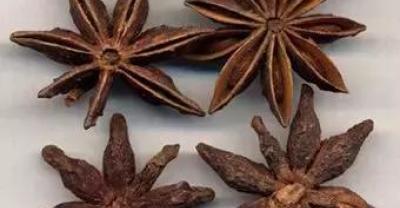
What kind of medicinal herb is Angelica sinensis? A guide to understanding it
Herb name: Angelica sinensis Harvesting and processing: Angelica sinensis is generally cultivated until late autumn of the second year, when it is dug up, the stems, leaves, fibrous roots and soil are removed, and it is left to stand until the moisture evaporates slightly and the roots become...
-

A Victoria's Secret Angel's daily diet is the first step to transforming yourself
Want to become a Victoria's Secret Angel? Start with your daily diet
-

Angelica sinensis with shade net coverage: high yield increase and quality improvement benefits
The shade cultivation technique for Angelica sinensis starts from the three-leaf stage of its growth (that is, from mid-May to early August after summer begins, when temperatures are high and light is intense). A shade net with a 50% shading rate is timely placed over Angelica sinensis, providing a suitable micro-environment of moderate temperature, weak light, and moisture that mimics its original ecological growing conditions. By lowering temperature, increasing humidity, and reducing light, it reduces the early bolting rate of Angelica sinensis in dry flatland cultivation to about 30%; moreover, shade cultivation of Angelica sinensis also helps prevent and reduce pest and disease damage, thus improving the quality of Angelica sinensis.
-
Identification and Control of the Angelica Swallowtail Caterpillar Pest
The angelica swallowtail, also known as the fennel swallowtail, belongs to the order Lepidoptera, family Papilionidae. 1. Damage situation: The larvae cause damage, feeding on leaves at night, creating notches, and in severe cases eating all the leaves so that only the petioles and veins remain; they also feed on flowers and fruits. This insect has a large appetite, seriously affecting the growth of angelica and reducing yield. 2. Morphological characteristics. Adult: A large butterfly, with spring and summer forms. The summer form has a body length of about 25 mm and a wingspan of 90 mm; the spring form is slightly smaller. The body is yellow, with black stripes running longitudinally along the back. Both forewings and hindwings are yellow,
-
How should cutworms be controlled in Angelica sinensis
Cutworms, also known as "ground silkworms" and "black ground silkworms." They belong to the order Lepidoptera, family Noctuidae. The cutworms affecting Angelica sinensis are mainly the black cutworm and the yellow cutworm, and their damage and control measures are the same. 1. Damage: The larvae damage Angelica sinensis seedlings, hiding by day and emerging at night; at the young instar stage they mostly damage tender leaves and tender growing tips, biting through the root crown and causing missing plants and broken rows. 2. Morphological characteristics: The adult black cutworm has a body length of 16-23 mm and a wingspan of 42-54 mm. The female moth's antennae are filiform, and the male moth's are bipectinate. The forewing is dark brown between the costal margin and the outer transverse line. Between the inner transverse line and the outer transverse line there are distinct kidney-shaped markings, ring-shaped markings and rod-shaped markings. The hindwing is grayish white, with the veins and margins dark brown. The abdomen is gray. The egg is hemispherical, initially milky white, later turning yellow, and grayish purple just before hatching. Mature larva: body length 37-47 mm. The head is yellowish brown, the body is yellowish brown to dark brown, with pale longitudinal bands on the back. The body surface is rough, covered with small round black granules. The anal plate is yellowish brown, with two dark brown longitudinal bands. Pupa: body length 18-24 mm. Reddish brown and glossy.
-
Key Points of Angelica sinensis Propagation Techniques and Detailed Explanation of Seedling Methods
Angelica sinensis is propagated by seed, generally using the method of raising seedlings and transplanting, though direct sowing can also be used. 1. Seedling raising and transplanting (1) Seed selection: After seed selection, Angelica sinensis yields about 14.6 kg more per mu than unselected seeds. The main selection method is ear selection. At harvest time, when the seed coat turns sky blue or pink and the flowering stem droops, select fruit ears that have the characteristics of this variety, grow well and vigorously, are free of pests and diseases, and are highly mature; cut them off together with the flowering stem, dry them in a ventilated and dry place, thresh, and store for later use. Because Angelica sinensis seeds do not mature uniformly, har
-
Detailed Explanation of the Biological Characteristics of Angelica sinensis (Part One)
Angelica sinensis seeds lose their germination rate after being stored at room temperature for 1 year, but can be stored for more than 3 years under low-temperature dry conditions. Mature seeds can germinate and grow under suitable conditions of moisture, temperature, oxygen, etc. Seed germination goes through three processes: (1) The water absorption and swelling process. The components that make up Angelica sinensis seeds, such as starch, fat, protein, and cellulose, are all hydrophilic colloids, which exist in a gel state under dry conditions. When the seeds absorb water, water penetrates into the colloidal network structure inside the seeds, causing the gel state to become a sol state, and the volume increases accordingly. This process is a physicochemical phenomenon called the seed water absorption and swelling process.
-
Methods for Site Selection and Land Preparation for Angelica sinensis Cultivation
1. Seedbed site: According to the growth habits of Angelica sinensis seedlings, choose a plot surrounded by mountains on all sides, with loose, fertile soil, high humus content, sheltered from the wind, with short sunlight duration, and cool and moist conditions for raising seedlings. Angelica sinensis seeds are small, and the young sprouts have weak soil-breaking strength, so fine land preparation is required to ensure normal emergence. Plow the land in the previous year to allow the soil to fully weather, or plow in April to May of the current year, preferably three times. The first and second plowing should be 24-30 cm deep, and the third shallow plowing 9-15 cm. Dry and burn the weeds, spread them out and plow them into the soil, pick out all stones and unburned weeds, break up clods, level the ground, and then apply 5000 kg of farmyard manure per mu as base fertilizer. Then level and make beds along the mountain contour, with a bed width of 100-120 cm and a bed height of about 25 cm. Dig drainage ditches around the perimeter to facilitate drainage, with a ditch width of 18-24 cm and a depth of 15 cm. Raising seedlings under such conditions results in dense plant growth, mutual shading, leaves growing upward, less sugar accumulated through photosynthesis, more nitrogen absorbed from the soil, and a low bolting and flowering rate. If a site with abundant sunlight and dry, barren soil is chosen for seedling raising, even with sufficient manure and fine land preparation, the strong sunlight and dry soil will result in fewer seedlings emerging, leaves spreading flat, a large nutritional area for plants, high sugar accumulation through photosynthesis, drier soil, less nitrogen absorbed from the soil, and consequently a higher bolting and flowering rate. This should be given serious attention.
-

How much is Angelica sinensis seed per jin? Detailed planting methods
Angelica sinensis seed prices and planting methods
条件筛选