What Flower Is the Snowdrop? An Introduction to the Flower Gifted by Angels and Its Cultural Background
The snowdrop's flowers are pure white, with a delicate and elegant flower shape, like a shy and lovely maiden. The snowdrop has many moving legends, so let us take a look together now.
I. Introduction to the Snowdrop
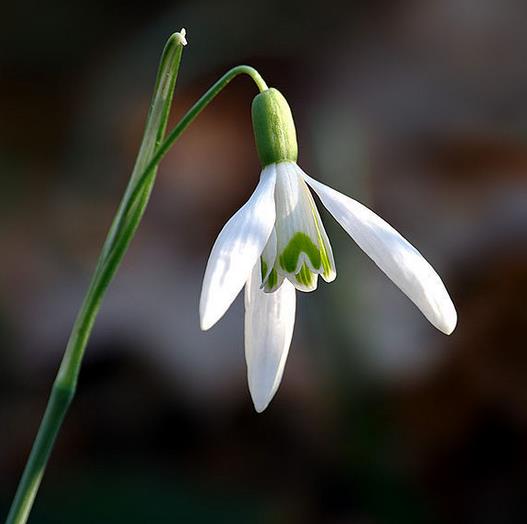
The snowdrop is a bulbous herbaceous plant that bears drooping white flowers. The snowdrop has a bulb. The leaves are linear. The flower stem is upright, and a single flower is borne at the top of the stem; the flower droops and is bell-shaped; the flower is white with six petals, and the petals are divided into inner and outer layers, with three petals in each of the inner and outer layers. The outer petals are longer and more convex than the inner petals. There are six anthers, with the anthers opening by pores or short longitudinal slits. The ovary has three chambers, and the fruit is a capsule. The snowdrops make up the genus Galanthus (snowdrop), which belongs to the family Amaryllidaceae (amaryllis family). The Latin scientific name of the common snowdrop is G. nivalis.

II. Cultural Background of the Snowdrop
Legend
The holy snowdrop has long been a symbol of purity and hope. In the biblical story, when Adam and Eve were expelled from the Garden of Eden, Eve gazed tearfully at the land around her: it was freezing cold, there were no flowers, and snow covered the earth. Then an angel floated down, seized a snowflake, breathed gently on it, and it turned into a snowdrop. The angel handed it to Eve and told her to hold on to hope, for summer would soon come. The angel floated away, leaving behind a wreath of snowdrops. Thus the first snowdrop was born. This poem of the snowdrop depicts how, in the icy and snowy month of January, the tiny snowdrop adorns the earth where all things await awakening; it symbolizes hope and the beginning of new life.
III. Morphological Characteristics of the Snowdrop
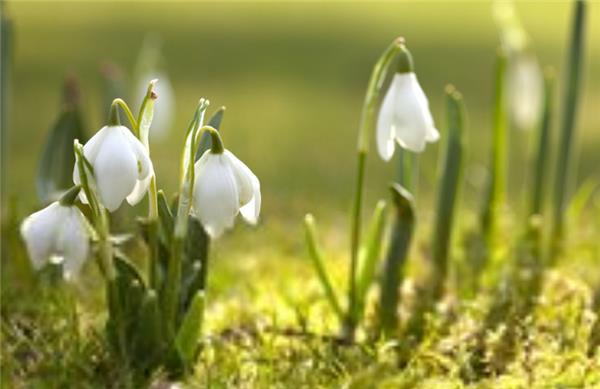
Plant height 5-15 cm. The genus Galanthus has a bulb. The leaves are linear. The flower stem is upright, and a single flower is borne at the top of the stem; the flower droops and is bell-shaped; the flower is white with six petals, and the petals are divided into inner and outer layers, with three petals in each of the inner and outer layers. The outer petals are longer and more convex than the inner petals. There are six anthers, with the anthers opening by pores or short longitudinal slits. The ovary has three chambers, and the fruit is a capsule.
Snowdrop, the common name for a type of bulbous plant, includes about 20 species. The snowdrop is native to Eurasia, but it is grown in the United States as a garden plant, flowering in late winter. Snowdrops are already blooming as early as February, when the ground is usually still covered with snow. These tough plants have long, narrow leaves, and a drooping white flower grows at the tip of each slender flower stalk. The leaves of the common snowdrop are about 6 to 9 inches (15 to 23 cm) long, and its flower stalks may reach 12 inches (30 cm) high. The outer petals of its small, fragrant flowers are white, while the inner petals are white with pale green markings. The genus Galanthus is a genus in the order Asparagales, family Amaryllidaceae, with about 20 species. Plants in this genus are the earliest spring-flowering bulbous flowers. The collective name for plants of the genus Galanthus in the family Amaryllidaceae, about 12 species and many varieties, native to Eurasia. They have bulbs and bloom white flowers in spring. They include several species such as the common snowdrop (G. nivalis) and the giant snowdrop (G. elwesii), and are cultivated as ornamental plants because of their drooping, sometimes fragrant flowers. They are the earliest spring-flowering garden flowers. A kind with a similar name but quite different characteristics, namely the snowdrop tree (also called silver bell, Halesia carolina) of the family Styracaceae, is a tall tree native to the southern United States, with bell-shaped flowers borne in clusters. The snowdrop bush (Styrax officinalis) is native to eastern Europe and Asia Minor, grows about 6 m tall, and is also unrelated to this species.
IV. Flower Language of the Snowdrop
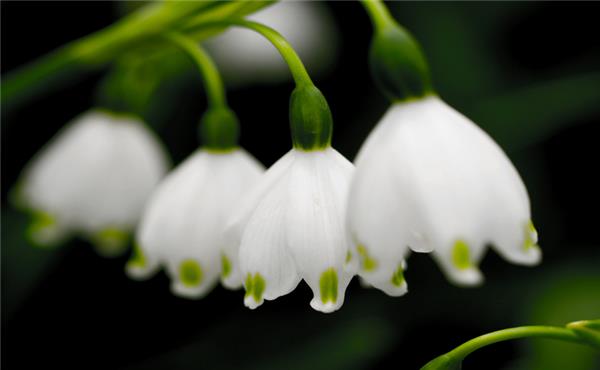
Birthday Flower: Snowdrop
Flower of Saint Francis of Paola, a 16th-century Spanish nobleman
Since ancient times, Christianity has had the custom of linking saints with specific flowers, which arose because the church, when commemorating saints, often decorated the altar with blooming flowers! In the Catholic monasteries of the Middle Ages, all kinds of flowers were planted almost like a gardening center, and over time the church paired the 366 saints with different flowers, forming the so-called flower calendar. At that time, most monasteries were located in southern Europe, and southern Europe has a Mediterranean climate, which is extremely suitable for growing flowers and plants. The snowdrop, which belongs to the family Amaryllidaceae, was chosen as the flower to honor Saint Francis of Paola. He was a 16th-century Spanish nobleman who is widely known for giving up his title in order to become a Christian missionary.
The above is an introduction to the snowdrop. I hope it can help you.
The above is an introduction to the snowdrop. I hope it can help you.