-

What to Do When Tea Plants Bloom? These Response Methods You Should Know
Yu Huaijiong from Guihua Village, Yuping Town, Hongya County wrote in saying: At present, local tea plants are blooming and fruiting heavily, consuming the tea plants' nutrients and affecting next year's tea yield. He asked what pollution-free pesticide could be used to remove the flowers and fruits produced by the tea plants, to ensure a bumper tea harvest next year. Liao Changli, a tea cultivation expert from Pujiang County, answered: This year's climate featured high temperatures and drought in the early period, increased rainfall in the later period, which caused waterlogging in some low-lying areas with poor drainage, as well as the recent warm winter - these three factors have led to tea plants blooming and fruiting in some areas of our province. This phenomenon will inevitably affect next year's tea yield.
-
When is the best time to harvest jujubes?
The ripening period of jujube fruit can be divided into 3 stages: the white-ripe stage, the crisp-ripe stage and the fully ripe stage. When to harvest the fruit should be determined by the intended use of the jujubes. (1) White-ripe stage: at this stage the green color of the peel fades, turning greenish-white or milky white. The flesh is soft and loose, the juice is scant, and the sugar content is low. For processing candied jujubes, harvesting should be done at the white-ripe stage. (2) Crisp-ripe stage: from the time the stem cavity and shoulders turn red until the fruit is fully red, the texture becomes crisp, the juice increases, and the sugar content rises sharply. For fresh eating and for processing wine-soaked jujubes, harvesting should be done at this stage. (3) Fully ripe stage: the peel
-
What are the points to note when raising young dogs?
The young period is the main stage of growth and development, and the body grows rapidly, so sufficient nutrition must be supplied. Generally, in the first three months after birth, the main growth is of the body and weight; from 4-6 months, the main increase is in body length; after 7 months, the main growth is in height. Therefore, different nutrients should be supplemented according to different developmental stages. Puppies under 3 months old should be fed at least 4 times a day. Feeding small amounts frequently can keep the dog always feeling a little hungry, so it will not become bored or picky. For puppies aged 4-6 months, the appetite increases and weight rises quickly, and the amount of feed needed each day also increases accordingly.
-
What to Do When the Surface of Oyster Mushroom Substrate Turns Black? Cause Analysis and Control Methods
The main causes of blackening on the substrate surface and the control methods are: (1) Oyster mushroom mycelium soaked in water for a long time causes rot and blackening. In this case, the condensation water on the substrate surface should be absorbed and dried promptly. If it is grown on beds, excess water at the bottom should also be absorbed and dried promptly. (2) Contamination by foreign microorganisms and breeding of insect pests cause blackening. When blackening occurs, pests must be controlled or the affected part dug out promptly to prevent it from spreading.
-
What technical points should be noted when introducing tea plants?
Tea plant introduction is simple and easy to achieve results. Since the 1950s, the area planted with improved varieties has been expanded. For example, the Yunnan large-leaf variety was introduced to Guangdong, Guangxi, Sichuan, Guizhou and other provinces and autonomous regions, and the area has reached more than 1 million mu. Fujian, Zhejiang and other provinces used introduced and acclimatized Yunnan large-leaf varieties as original material to breed a group of excellent high-yield new varieties. New progress has been made in introducing tea from the south to the north. The northernmost boundary of tea plant distribution in China has shifted from about 34°40'N to near 37°49'N, advancing northward by more than 350 km. Tea varieties have also been introduced successively from the former Soviet Union, Ja
-
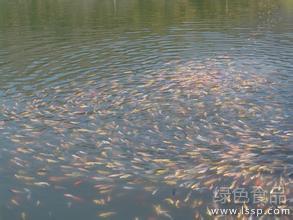
What should be noted when cultivating fish fingerlings in summer? Good-quality fingerlings are the foundation of successful fish farming
Good-quality fingerlings are the foundation of successful fish farming: precautions for cultivating fish fingerlings in summer
-
Take mosquito repellent measures in pig pens when raising pigs in summer.
1. Chinaberry (Melia azedarach) branches and leaves for mosquito repellent. Tie chinaberry branches and leaves into bundles, soak them in diesel oil, and hang them above the pig pens with galvanized wire. Soak them in diesel oil once every three days, then keep replacing the chinaberry branches, and the mosquitoes can be repelled. 2. Tomato branches and leaves for mosquito repellent. Gather fresh tomato branches and leaves, mash them and extract the juice, and rub it over the pig's whole body, generally once every 2-3 days; it can also be sprayed with a sprayer. At the same time, some tomato branches and leaves can also be placed in the pig pens, 1-2 times per week. 3. Use fresh mint leaves for mosquito repellent. Gather fresh
-
What are the common mistakes made when medicating chickens?
(1) Blindly increasing the dose: most farmers believe that the larger the dose, the better the treatment effect, and blindly use large doses when using antibiotics. With large doses, some may have a certain effect at the time, but hidden dangers are left behind. ① It causes poisoning death in broilers or chronic drug accumulation toxicity, damaging liver and kidney function. When liver and kidney function are impaired, the detoxification function of the broiler's body declines, making medication difficult during treatment and disease prevention. ② It kills the beneficial bacteria in the intestine, destroys the balance of normal intestinal flora, and causes metabolic disorders in broilers,
-
What key points should be noted for late-planted rice when transplanting into fields prepared with stored water?
The general requirement for transplanting late-planted rice into fields prepared with stored water is to seize the water, prepare the field, and transplant the seedlings, increasing the number of hills, seedlings, and panicles. For rice fields transplanted with stored water, as soon as rainfall occurs or another water source becomes available, measures such as blocking, diverting, and pumping water should be taken immediately to seize the water, prepare the field, and transplant the seedlings. For late-planted fields, planting density should be increased. For seedlings aged 60-70 days, transplant more than 13,000 hills per mu (8 x 6 cun), with two seedlings per hill (2 grains of rice); for seedlings aged over 70 days, transplant more than 15,000 hills per mu (8 x 5 cun), with about 10 seedlings per hill, so that the number of seedlings planted per mu reaches 150,000
-
Cotton seed: never harvest prematurely opened bolls; pay attention when saving and selecting seed
According to data from seed management department testing, in recent years the germination rate of some cotton seed has been only around 60%, still far from the national standard of 80% germination rate. From extensive surveys, the reasons for low cotton seed germination rates are: first, harvesting immature prematurely opened bolls; second, purchasing "favor bolls" with high moisture content; third, mixing in diseased seed from rotten cotton bolls; fourth, storing cotton seed in the warehouse before it is fully sun-dried; fifth, containing some cotton seed broken during processing; sixth, relatively high residual acid content in coated cotton seed; seventh, not strictly
条件筛选