-

What to do when silkworms are poisoned? Prevention and control measures for silkworm poisoning
First, ensure safe feeding: do not feed "four-side mulberry" (mulberry from the edges of fields), test mulberry leaves before feeding, and only use large quantities of leaves after confirming they are non-toxic. Mulberry trees with pesticide residues should be sprayed 1 to 2 days in advance with 0.5% edible alkaline water or 1% fresh limewater, or mulberry leaves can be soaked for 1 hour in 1% edible alkaline water or 1% fresh lime slurry. Note that the sprayer must be thoroughly cleaned, and the edible alkaline water or fresh limewater must be applied generously (about 6-8 buckets per mu). If silkworms are found to have been poisoned, promptly take detoxification measures: immediately scatter burnt ash or lime powder so the silkworms stop
-
When is the best time to plant lilies?
In the Central Plains region, mid to late September is suitable; in high-altitude cold regions it can be moved up appropriately. Too late, and there will be too little rooting before winter, so growth will not be vigorous in early spring and emergence will be poor; too early, and the soil temperature is too high, making the bulbs prone to disease and rot, causing missing plants and weak seedlings. The general principle is to plant earlier rather than later. The best planting time is when the daily average temperature is around 20°C, with no high temperatures above 32°C, and on a sunny day after rain.
-
What to do when oyster mushrooms grow contaminant fungi? Covering with mud and sand can prevent and control it
Contaminant fungal infections often occur during oyster mushroom cultivation, and are especially severe in hot seasons, causing reduced yields in mild cases and total crop loss in severe cases. Most of these contaminant fungi are aerobic and tolerant of high temperatures and high humidity. Covering with mud and sand can prevent and control them. The specific techniques are introduced below: 1. Prevention and control of contaminant fungi in bed-cultivated oyster mushrooms. When contaminant fungal contamination appears in large-bed oyster mushroom cultivation, the cause of contamination should first be identified. Common causes include sudden high temperatures, water entering the substrate, unclean surrounding environment, insect pests, etc. Based on the specific situation, remove the source of contamination, then treat the contaminated oyster mushrooms as follows: if contaminant fungi appear sporadically on the substrate surface, smear or cover the affected area with thick lime slurry. When a large amount of contaminant fungi appears, dig up mud and sand from more than 30 cm below the ground surface, crush it, add 2% lime powder and mix thoroughly, remove the plastic film, and cover the contaminated part of the substrate surface with the lime-mixed mud and sand to a thickness of 2-3 cm. The covered area should be slightly larger than the contaminated area, and the mud and sand should be patted slightly firm. When the substrate surface is severely contaminated, the entire bed surface should be covered with mud and sand, then covered with a plastic film that has been washed clean with disinfectant solution, and routine management should be resumed. After a few days, the mycelium will resume growth.
-
How to prevent deformed mushrooms when growing oyster mushrooms in winter?
When cultivating oyster mushrooms in winter, poor management can easily lead to various deformed mushrooms, reducing their commercial value and thus lowering economic returns. 1. Big-foot mushroom: after the primordia form, the differentiation and development speed of the cap is inconsistent, showing only growth of the stem, thick at the bottom and thin at the top, with no mushroom umbrella forming; the diameter of the cap is smaller than the diameter of the stem, forming a big-foot deformity. The stem of this kind of mushroom is relatively hard, and its commercial value is relatively low. Preventive measures: pay attention to ventilation and reasonable watering. Even during continuous low-temperature weather, during the fruiting period you should still take advantage of the warmer time of day to carry out short periods of ventilation.
-
Three things to note when cultivating oyster mushrooms in winter
Mushroom yard selection The ideal site suitable for winter cultivation is a mushroom yard with warming and insulation conditions, such as an indoor mushroom house equipped with warming conditions, a warmer underground mushroom yard, and a raised-bed mushroom yard using plastic greenhouse cultivation, etc. The temperature of this type of mushroom yard can be controlled above normal temperature, which is beneficial to mycelial growth and can also promote earlier fruiting. Usually, for early winter cultivation, an outdoor mushroom yard can be chosen; for late winter cultivation, an indoor mushroom house should be chosen. Strain selection Winter-cultivated oyster mushrooms can be divided into two types according to the fruiting period arrangement: winter cultivation with winter fruiting and winter cultivation with spring fruiting. For the former, low-temperature type varieties
-
When is the best time to harvest Gastrodia elata capsules
After the flowers of Gastrodia elata are pollinated, the ovary gradually enlarges, and the capsule is light brown or pink, elongated ovoid, with 6 longitudinal ridges. Each capsule contains 10,000 to 50,000 seeds, with a maximum of 80,000 seeds. The seeds are tiny. They are powder-like, and their size and shape are difficult to distinguish with the naked eye. Observed under a microscope, mature seeds are spindle-shaped, 0.6 to 1 mm long and 0.14 to 0.2 mm wide. The embryo is 170 to 180 micrometers long. The seed coat is white and semi-transparent, wing-like, composed of parenchyma cells, with no endosperm inside; the embryo is light brown or dark brown. Those without dark brown color are immature seeds, called blighted seeds. The transverse and longitudinal sections of mature Gastrodia elata seeds appear elliptical and circular, respectively, under a microscope.
-
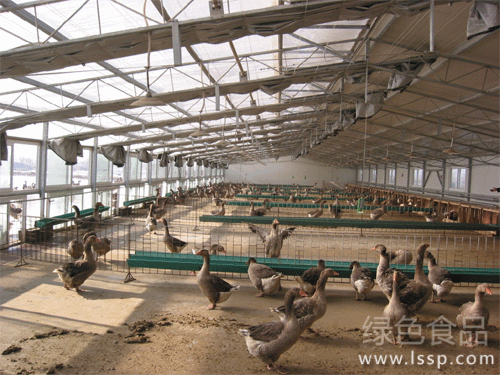
How to feed geese more economically and practically when fattening them in confinement
How to feed confined geese economically and practically for fattening
-
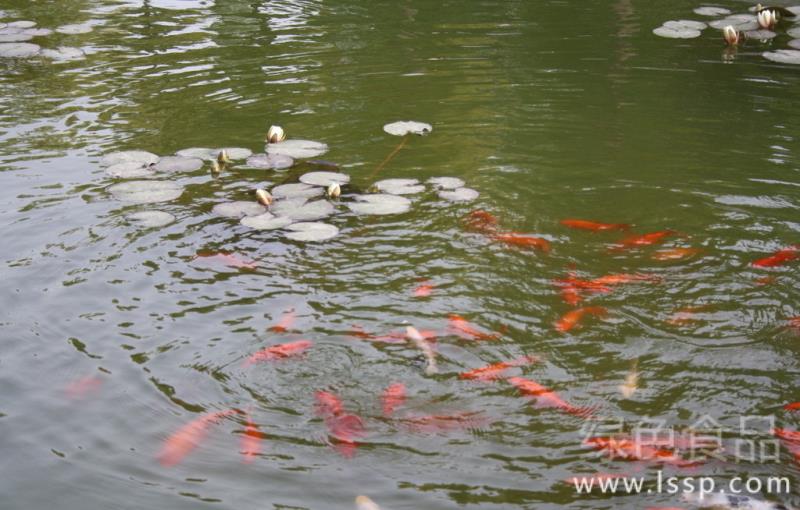
How to scientifically manage fish ponds when diseases break out frequently under high summer temperatures
How to manage fish ponds well in summer when diseases break out frequently under high temperatures
-
How to Prevent Cold-Induced Diarrhea in Pigs When the Weather Turns Cold? A Detailed Explanation of Prevention and Treatment Points
Every year during the sanjiu cold period, because temperatures are low in rural outdoor pig pens, the pigs' bodies are hit by strong cold air, and on top of that they eat and drink cold water and cold feed, so cold pathogens strike straight into the stomach and intestines. This often causes some pigs to move weakly, with cold-dampness sinking downward and clear and turbid not being separated, resulting in cold intestinal diarrhea. This disease occurs most often during the sijiu to wujiu cold periods. The reasons are, first, that this is the coldest weather of the year; second, that the Spring Festival has arrived, and every household often feeds pigs the meat broth water left from washing and rinsing, which leads to more cases of cold-induced diarrhea in pigs. The folk treatment method is: first strengthen cold protection and warmth retention in the pig pen, then fry white wheat flour until it turns yellow-brown, add warm water and mix into a thin paste
-
What to do when a pig gets rheumatism? Master the prevention and treatment methods
I. Causes Rheumatism is a disease caused by triggers such as dampness, cold, insufficient exercise, and sudden feed changes, and is generally believed to be related to hemolytic streptococcus infection. II. Key points of diagnosis Muscle and joint rheumatism often occurs. It often comes on suddenly, with pain in the affected muscles or joints, lameness when walking, an arched back and short steps, and the lameness may lessen after moving for a while. Sick pigs prefer to lie down and are unwilling to move. Body temperature 38-39.5°C, respiration and pulse slightly increased, appetite reduced. III. Prevention and treatment 1,
条件筛选