-
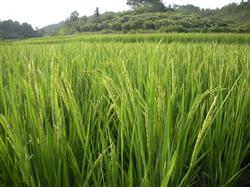
What precautions should be taken when spraying pesticides at the rice heading stage?
What should be noted when spraying pesticides at the rice heading stage? Please give a detailed introduction. Around the heading stage of rice, it is generally a period when various diseases and insect pests occur and cause damage, requiring the use of chemical pesticides for control, but applying pesticides during this growth stage can easily cause pesticide damage with some pesticides, resulting in losses that should not occur, and attention should be paid to this. 1. Triazole...
-
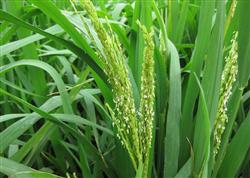
What to Do When Rice Has Difficulty Heading? Causes and Solutions
What to Do When Rice Has Difficulty Heading? What Medicine Can Solve It? When rice has difficulty heading, or shows the phenomenon of neck enclosure, the rice grains wrapped inside the leaf sheath cannot emerge in time for pollination and fertilization, and generally become empty and blighted grains, greatly affecting yield. There are many reasons for this phenomenon; in some cases the variety itself has a relatively severe tendency toward neck enclosure...
-
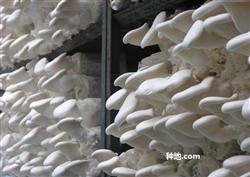
What should be noted when cultivating white king oyster mushrooms? Detailed explanation of key cultivation techniques
What should be noted during the cultivation of white king oyster mushrooms? White king oyster mushrooms, due to their unique edible and medicinal value, have seen a year-on-year increase in spawn input in northern China in recent years, and have shown a promising prospect of both good production and sales. They are one of the preferred mushroom types for novice mushroom growers to develop edible fungus production. At present, in white king oyster mushroom production there exist...
-
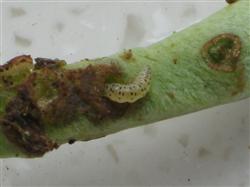
How to control the bean pod borer when growing yardlong beans?
How to best control the bean pod borer when growing yardlong beans? Please explain the methods. The yardlong bean pod borer, also called the yardlong bean moth, is one of the main pests of yardlong beans. The adult yardlong bean moths are scattered and concealed, fly over a wide range to lay eggs, and lay many eggs, so they are not easy to kill by spraying or trap. The adults lay eggs on the tender leaf parts of the plant, and after hatching in about 5--7 days the larvae bore into...
-
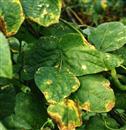
How do you prevent and control blight when growing yardlong beans?
How do you prevent and control blight when growing yardlong beans? Please explain the methods. For yardlong bean blight, the following methods can be used for prevention and control: 1. Symptoms mainly affect stems, leaves and pods, mostly occurring at or near stem nodes, especially near the ground. The diseased part is initially water-soaked, then becomes wet-rotted and constricted around the stem, and the leaves and vines above the diseased part die. ...
-
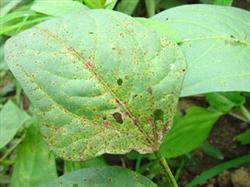
How to prevent and control rust disease when growing beans?
How to prevent and control rust disease when growing beans? Please give an introduction. Rust disease is very prone to occur in the middle and late stages of kidney bean growth, and can harm leaves, stems and vines, and pods. When it harms leaves, the diseased leaves have yellow-green raised spots, which quickly turn yellow. After the epidermis ruptures, pinkish substances are released, and black scab-like spots may also appear later. Some leaves have...
-
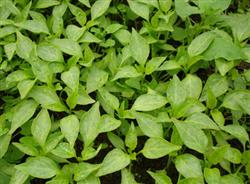
What should be noted when growing pepper seedlings in summer and autumn?
What should be noted when growing pepper seedlings in summer and autumn? An introduction is given here. Pepper seedling raising in summer and autumn is easily affected by high temperatures, heavy rain, drought and other weather conditions, and seedling diseases and pests occur severely. To ensure normal growth of the seedlings, the following measures should be taken: 1. Prevent high temperature damage. Choose a well-ventilated plot as the seedbed, build a shade shed,...
-
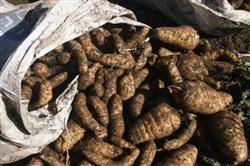
What are the key points to note when harvesting Gastrodia elata? Master these for a smoother harvest
(1) Be careful not to damage the tubers. When digging, carefully scrape away the surface growing medium, remove the fungal wood, and gently take out the Gastrodia elata. Take great care not to bruise the tubers, especially the white tubers and small tubers used for seed. (2) Harvest carefully. Search all around and do not overlook or miss any Gastrodia elata. Because the Armillaria mellea around them grows and develops better...
-
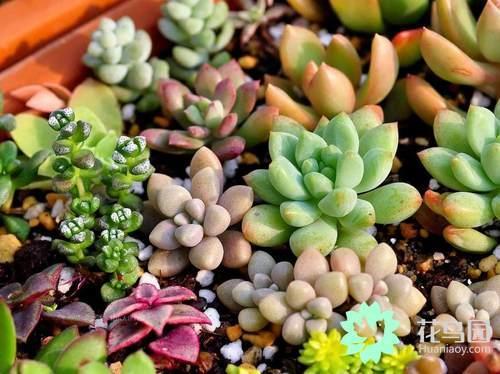
What to do when succulents lose their color in summer? These 5 kinds keep their color even with shade
When the dog days of summer arrive, the temperature gets higher and higher, and many flower lovers don't dare put their succulents out in the sun, so they slowly fade to green! Today, I'll introduce a few kinds of succulents that won't fade into cabbages even in summer! Graptosedum 'Bronze' Graptosedum 'Bronze'...
-

When is the best time to take cuttings of osmanthus?
1. Choosing the cutting time and managing temperature. For osmanthus cuttings, May and June are best. The suitable rooting temperature for osmanthus is 25°C to 28°C. If the temperature is too low, cover with plastic film, increase light, and raise the seedbed temperature. If the temperature is too high, pay attention to shading, and lift a corner of the plastic film to ventilate and cool it down or use misting to lower the temperature....
条件筛选