-
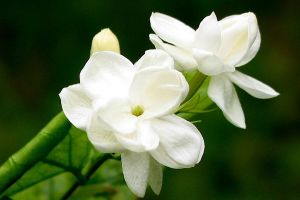
What to do when gardenia gets scale insects? A few prevention and control methods for you
This plant can be affected by many pests, and "scale insects" are one of them. There are mainly two methods to deal with them. The first is the manual method, using a brush to brush them off, which is for when there are few insects. If there are many, then you have to use medication. Specifically, four kinds can mainly be sprayed. First, use baijiu mixed with water to pour. Second, use rice vinegar to wipe. Third, repeatedly wipe with alcohol. Fourth, which is more troublesome, is to use a mixture of diesel, laundry detergent and water.
-
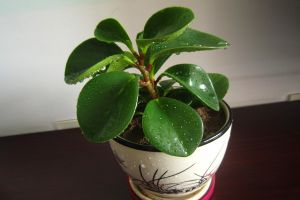
What to Do When Peperomia obtusifolia Drops Its Leaves? Here Are the Causes and Solutions
Once the problem mentioned above appears, we need to carefully analyze the cause and then take corresponding measures to solve it: if there is too much water, control the watering; if the temperature is too low, raise it above 10°C; if the soil is compacted, loosen it in time.
-

What to Do When Tillandsia Leaves Dry Out? Cause Analysis and Solutions
There are three main reasons why Tillandsia leaves dry out. First, the light is too strong; after being exposed to strong sunlight, it easily dries out, so we need to move it to a shady place. Second, the temperature is too low, so we need to raise it above 16°C. Third, there is too little water, so we need to replenish it in time. In addition, if there is too much fertilizer or pest infestation, it may also cause its leaves to dry out, and then we need to address its pot and pest prevention.
-

What to Do When a Kalanchoe's Roots Turn Black? Causes and Solutions
While growing kalanchoe, we may notice that it is not growing well, and when we take it out we may find that its roots have all turned black. Don't panic at this point; we need to remove all the blackened roots, then disinfect them, and finally replant it in soil or water.
-
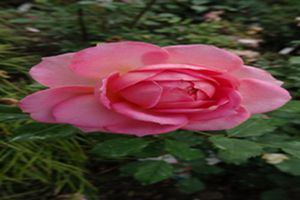
What to do when rose leaves wilt? Find the cause and treat it accordingly
If its leaves have wilted, you can cut off the wilted leaves, then water it thoroughly and let it recover. You can also dig it out and replant it in a new pot, preferably a clay pot with good drainage. You can also cut back the branches after its flowers have bloomed, leaving just two heads per pot.
-
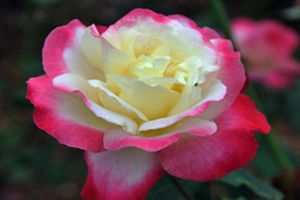
What to Do When Rose Leaves Develop Black Spots? Effective Control Methods to Teach You
It develops black spots because it has contracted black spot disease, which generally occurs mostly on plants in the Rosaceae family. Spots first appear on the edges of the leaves, then spread to the upper surface of the leaves, and finally the lesions join together, causing the branches and leaves to drop. It spreads mainly by means of spores, and it is most likely to occur in hot, especially rainy seasons. If it is in the early stage of the disease, remove the diseased branches and leaves and burn them in a centralized manner; if the situation is serious, chemical treatment is needed.
-
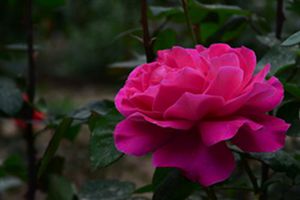
What to Do When Rose Leaves Curl? Cause Analysis and Solutions
If its leaves are curling, it may be infected with powdery mildew. In that case, remove the diseased branches and leaves, place it in a ventilated area, or use a chemical treatment directly. If it is caused by pests and diseases, remove both the insects on the leaves and those in the soil. If it is caused by too much water, dig it out and repot it in a new pot. If it lacks fertilizer, apply some fertilizer to its leaves.
-
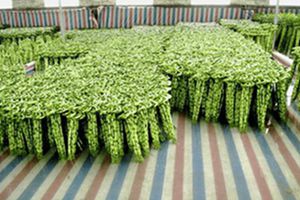
What to Do When Lucky Bamboo Leaves Dry Out? Causes and Solutions
Its leaves may dry out due to overwatering, and if the situation is serious, you need to repot it in a new pot. It may also be caused by a lack of water; first give it a little water, and once it has adapted, water it thoroughly. If there is too much fertilizer, dilute it with clean water. If there is too little fertilizer, fertilize it several more times, but in small amounts.
-
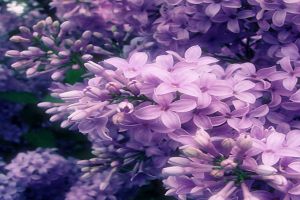
What to Do When Lilac Leaves Turn Black? Causes and Solutions
Its leaves turning black is actually related to bacteria. For prevention and control, there are still two approaches. The first is the horticultural one: we cannot plant it in relatively low-lying spots, we need to drain rainwater promptly when it rains, and we must not let infected plants mix in. The second is the chemical one: generally we use Bordeaux mixture, spraying initially at a concentration of 0.1% to 1.0%; of course, fungicides such as Xiaojunling also work.
-
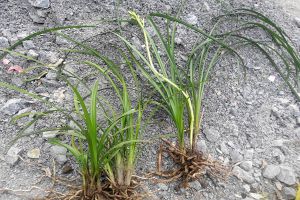
When Does Cymbidium faberi Bloom? A Full Analysis of Its Blooming Period
Cymbidium faberi is a very beautiful flower. Its blooms stay open for a relatively long time, and the flower colors are lovely too. You may not be clear on exactly when it blooms. In fact, it flowers at the turn of spring and summer, over a period of about two months. Let us look at the details below.
条件筛选