What to Do When Strawberries Get Anthracnose? A Detailed Guide to Prevention and Control
What should you do when your strawberry gets sick? Just take it to see a doctor, free of charge! The Miaoli District Agricultural Research and Extension Station has pioneered anthracnose molecular detection technology, and farmers can submit samples at no cost. Take a quick look.
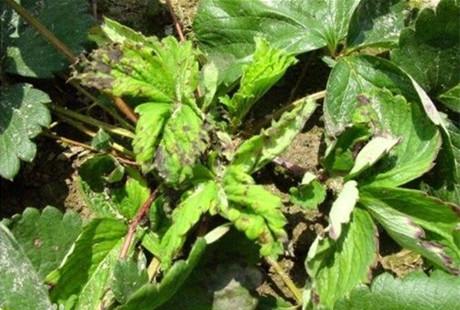
Once strawberry seedlings are infected with anthracnose, they easily die, and it is difficult to judge whether they are healthy just by their appearance. Farmers often only discover a large-scale anthracnose infection after transplanting them into the field, suffering heavy losses. The total annual demand for strawberry seedlings nationwide reaches 25 million plants, of which 20% are lost to anthracnose infection. After infected seedlings are planted, they will continue to develop the disease and die, and the missing-plant rate in strawberry fields can reach more than 30% in severe cases. Lu Xiuying, director of the Miaoli District Agricultural Research and Extension Station, further explained that once anthracnose breaks out, seedlings must be constantly replanted, and through rain and irrigation, anthracnose spreads with the water, infecting the fruit and the entire growing area. Sometimes, because replanting cannot keep up, the strawberry production season is missed, and all these costs add to the farmers' burden.
The Miaoli District Agricultural Research and Extension Station spent three years developing the "anthracnose molecular detection technology - nested polymerase chain reaction primer pair." Farmers only need to send in strawberry seedling samples, and through molecular detection technology, a segment of gene primer is obtained to determine whether anthracnose infection is present. This technology requires only two days for testing, and farmers do not need to bear any cost, as it is entirely absorbed by the Miaoli District Agricultural Research and Extension Station.
Zhong Peizhe, associate researcher in the Crop Environment Division of the Miaoli District Agricultural Research and Extension Station, who actually developed the technology, stated that most farmers grow strawberry seedlings themselves in the field, keeping strawberry runners as mother plants each December. Depending on whether the mother plants are healthy, they can be multiplied 20-50 times to become strawberry seedlings. It is hoped that when there are the initial 50 mother plants, farmers can bring them all in for testing. Zhong explained that even healthy seedlings, once planted, will not necessarily remain free of anthracnose infection. Strawberries are prone to anthracnose infection in high-temperature and humid environments; healthy seedlings in the early stage can only reduce the probability of infection.