How to Grow Straw Mushrooms? A Hangzhou Farmer's Method of Turning Waste into Gold
Hu Qing Yu Tang is a well-known traditional Chinese medicine family in Zhejiang, producing a large amount of herbal residue every day.
On nights when it rains a little, Chen Chunlin keeps watch over his mushroom shed, getting up once every hour at night to check the temperature and humidity of the mushroom beds.
Chen Chunlin is the general manager of Hangzhou Gelyuying Agricultural Technology Co., Ltd. This is an enterprise specializing in agricultural technology development and achievement transformation, with products including organic fertilizer, fruits and vegetables, flowers, edible fungi, and more. The mushroom shed located in Shuangpu Town, Xihu District, is one of Chen Chunlin's new projects, part of which has already been put into production.
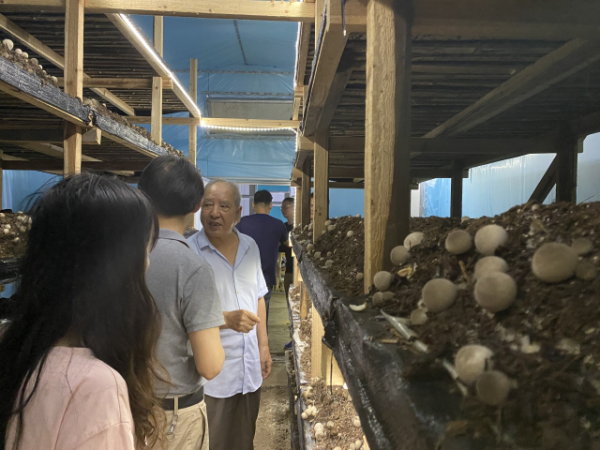
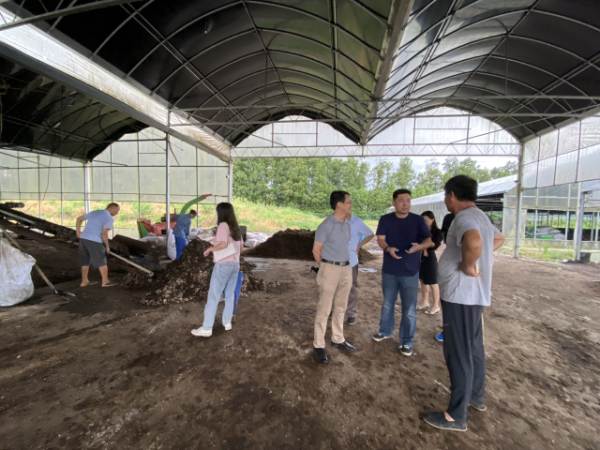
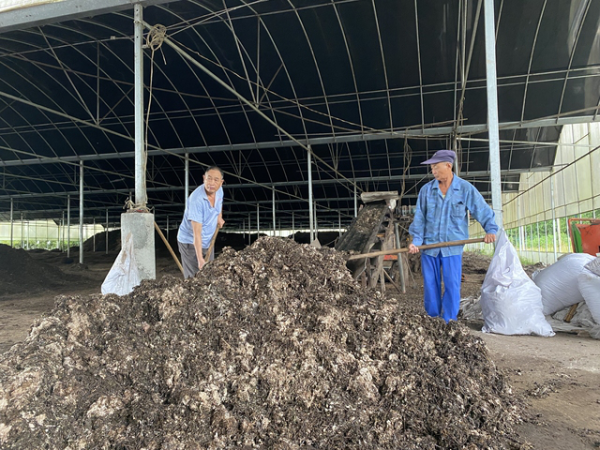
When the reporter arrived, the workers were busy with substrate pretreatment. Next to the substrate storage yard is a mushroom shed covering more than 1500 sq m, with 22 rooms in total, 11 of which have been planted with straw mushrooms, while the rest are still having mushroom beds built.
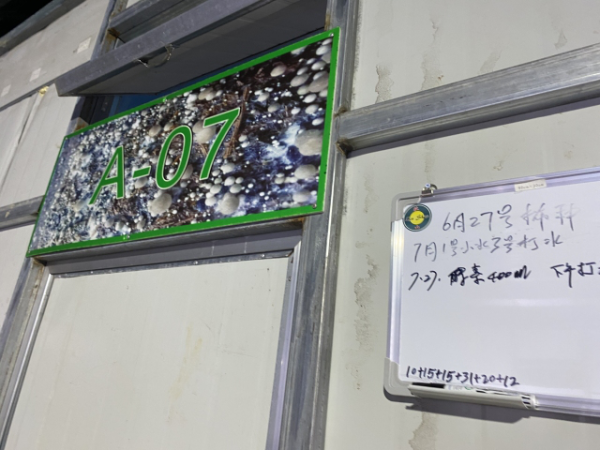
In mushroom shed No. 9, the air temperature is 30 degrees, and the mushroom bed temperature is 36 degrees. The mushroom beds piled from traditional Chinese medicine residue are covered with mycelium, and straw mushrooms of all sizes have already poked out their “little heads.”
“They can be picked in two more days, and dozens of jin can be harvested at a time. Straw mushrooms have a very short shelf life and cannot be refrigerated, so we send them directly to the Gouzhuang Agricultural Products Wholesale Market. The wholesale price is 10 yuan/jin, and by the time they reach consumers, it becomes 25-30 yuan/jin.”
Unlike ordinary mushroom cultivation, straw mushroom cultivation does not use substrate in bags, but is directly cultivated in piled soil, looking as if it grew from the ground. The substrate Chen Chunlin uses to grow straw mushrooms is not sawdust, straw, and wheat bran, but traditional Chinese medicine residue from Hu Qing Yu Tang.
No wonder the mushroom shed is filled with a faint traditional Chinese medicine fragrance.
It turns out that Chen Chunlin previously mainly made garden organic fertilizer, and a large part of the raw material was traditional Chinese medicine residue from Hu Qing Yu Tang. After processes such as pre-stacking, turning, fermentation, and microbial treatment, the residue became organic fertilizer. “Hu Qing Yu Tang sends 30 tons of traditional Chinese medicine residue every day, and pays me a processing fee of 120 yuan per ton.”
How did someone who makes compost start growing straw mushrooms? This story begins with He Chuanjun, an expert from the Hangzhou Edible Fungi Association.
In May 2018, after attending an academic conference in Zhuantang, He Chuanjun passed by Chen Chunlin's company. At that time, Chen Chunlin was squatting on a pile of medicine residue observing a few grayish “little lumps.” Even though he came from the mountains of Quzhou, he had never seen such a thing, and it gave off a strong mushroom fragrance.
He Chuanjun recognized it at a glance: “This is the straw mushroom, also called orchid hemp mushroom. Its nutritional value is very high!”
After hearing what He Chuanjun said, a bold idea popped into Chen Chunlin's mind: use traditional Chinese medicine residue to grow straw mushrooms. “Teacher He told me that straw mushroom cultivation technology is mature and only needs to be introduced, so I went to Shanghai to buy mushroom spawn and began trial planting on the medicine residue pile.”
After more than ten trial plantings in a small mushroom room, the yield reached 3 jin/sq m. Such a yield had already reached the standard for mass production. Therefore, Chen Chunlin began building greenhouses, and under He Chuanjun's guidance began the industrialization of straw mushrooms.
“A greenhouse has a different environment from a small mushroom room, and the technical requirements are also different. Time, temperature, and humidity need to be strictly controlled. If the temperature is too high, it is easy to burn the mycelium to death. During the few days when mycelium emerges, I have to run to the mushroom room once every hour.” Chen Chunlin said.
He also did a calculation for the reporter: a single mushroom shed room covers 80 sq m, and the mushroom bed area is 64 sq m. Each square meter produces about 30 yuan, and mushrooms generally emerge in 20 days and can be harvested 8 seasons in 50 days, so the output per square meter is 240 yuan.
“Straw mushrooms can be grown all year round, equivalent to an increase of 1 yuan in income per jin of medicine residue, and the medicine residue fermented on the mushroom beds can also be made into organic fertilizer with higher fertility.”
With 30 tons of medicine residue from Hu Qing Yu Tang arriving continuously every day, the current production capacity of 11 mushroom sheds cannot consume so much residue at all. At present, although fresh mushrooms can be guaranteed to go on the market every day, the scale is still relatively small, and it relies too much on experience, making it difficult to form economies of scale.
The considerable economic benefits made Chen Chunlin feel there was great potential.
For the next step, Chen Chunlin also has his own “small goal”: double the mushroom sheds next year, collect data such as the temperature, humidity, substrate pH, and soil carbon-nitrogen ratio for straw mushroom growth, and build a smart straw mushroom cultivation base.
Smart straw mushroom production is easier said than done. Where will the technical support come from? How to collect straw mushroom cultivation data? He Chuanjun gave him reassurance.
“The Hangzhou Edible Fungi Association has posted an ‘Innovation-Driven Development Experimental Base’ here. Whenever I have difficulties, I call Teacher He, and he can help me solve them immediately. He also often comes to my greenhouse to guide me in person.” Chen Chunlin said.
At the same time, the person in charge of the Academic Department of the Municipal Association for Science and Technology said that both the Automation Association and the Mechanical Engineering Association under the Municipal Association for Science and Technology have very strong technical strength, are willing to give full support in building the smart straw mushroom base, and will provide expert think-tank and technical support for the enterprise's scaling-up and industrialization.
“Agricultural projects last a long time and show results relatively slowly. The Municipal Association for Science and Technology's ‘Double Thousand’ action is precisely to help enterprises develop and grow, not only by giving subsidies, but also by sending experts, providing manpower, and teaching technology.”