Key Techniques for High-Yield Open-Field Cultivation of Spring Spinach
Sowing spring spinach in early spring gives relatively good returns. Moreover, after the spinach is harvested, other over-summering vegetables or grain and oil crops such as corn and peanuts can be sown, raising the multiple cropping index and increasing the per-mu benefit. Below, the editor introduces the key points for high-yield cultivation of spring spinach.
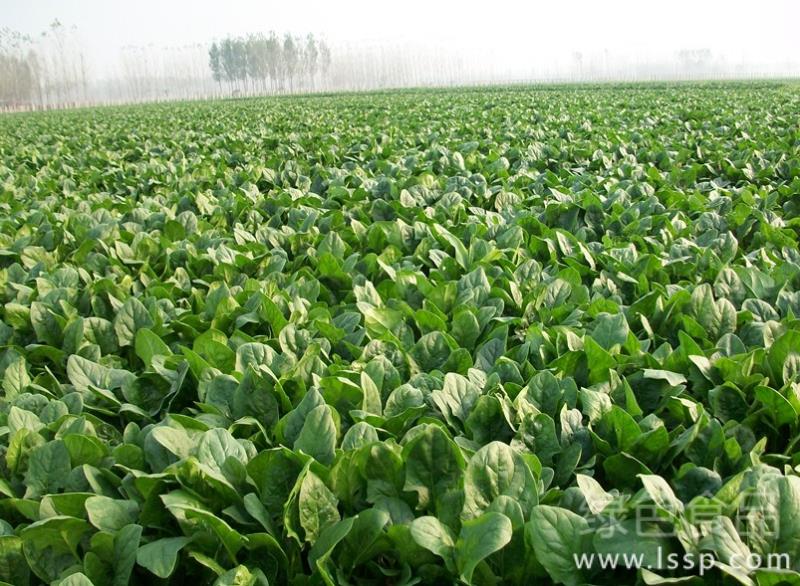
Spinach
I. Selecting superior varieties:Round-leaf spring spinach varieties that bolt late, have strong cold resistance, strong disease resistance and outstanding yield performance should be selected.
II. Land preparation and fertilization:Plots where cruciferous vegetables were not previously grown, or plots of other field crops, should be selected for growing spring spinach. When the early-spring soil thaws and crumbles at a touch, spread 2000 kg of decomposed barnyard manure, 25 kg of urea and 10 kg of potash fertilizer per mu as base fertilizer, then shallow-plow, level the ground, make flat beds, and prepare to sow.
III. Seed treatment
When sowing spring spinach, the temperature is still relatively low, so the method of soaking seeds to promote germination should be used. First soak the spinach seeds in warm water for 5-6 hours, then take the spinach seeds out and place them in an environment of 15°C-20°C to promote germination. Wash the seeds once a day with warm water; they will sprout in 3-4 days, ready for sowing.
IV. Timely sowing
When the frozen soil in the top 4-6 cm of the soil surface has thawed, sowing should be done as early as possible, preferably by "sowing on the ice." When the daily average temperature rises to 4°C-5°C, spinach can be sown. Broadcast sowing is mostly used for spinach, with a seeding rate of 5-6 kg per mu. For early-spring sowing, it is best to sow in water: first irrigate enough bottom water, wait until the water in the field has infiltrated, then broadcast the spinach seeds, and then cover with about 1 cm of soil. Because a layer of loose soil covers the bed surface, it helps reduce water evaporation from the soil and conserve heat. Spinach seeds in a relatively warm, moist environment with good aeration can emerge earlier.
V. Field management
For spring spinach sown by this method, soil moisture is sufficient. Generally the first watering is done when the spinach seedlings have grown 2-3 true leaves. From the second watering onward, apply 15 kg of urea or 20 kg of nitrogen-potassium fertilizer per mu with the water. After that, water according to climate and soil moisture conditions, with the principle of keeping the spinach field soil moist at all times. The growing period of spring spinach is relatively short; under conditions of water shortage and fertilizer shortage, it is more prone to bolting prematurely, reducing the yield and quality of the spinach.
VI. Timely harvest
After sowing, spinach can generally be harvested in about 40 days. Harvesting too early gives lower spinach yield, while harvesting too late easily causes bolting, reducing the marketability of the spinach and affecting returns, so timely harvesting should be carried out.