-

Cotton narrow row spacing should be widened: The second in a series of recommendations from rural advisory services in 2008
Before sowing, the author visited and investigated some cotton regions in Hebei, Shandong, Shanxi and Shaanxi. In most areas the cotton narrow row spacing is too narrow, seriously hindering the normal growth and development of cotton plants, and a planting reform of the population structure is essential. The pressing task is to widen the narrow row spacing. In order to carry out plastic film mulching of cotton, cotton farmers mostly adopt wide-and-narrow row sowing, sowing two rows at once. Most areas use 90 cm wide plastic film, with the narrow row spacing about 45 cm wide. This is not conducive to the normal extension of fruiting branches and flowering and boll setting, and also causes unbalanced growth on both sides of the cotton root system. Very
-
Why should fertilizer be applied promptly after cotton topping?
After cotton topping, it is the time when the various organs compete most intensely for nutrients. The development of young bolls after flowering requires nutrients, the enlargement of buds and flowering require nutrients, and the elongation of the upper fruiting branches and the growth of new leaves and flower buds require nutrients. If the nutrient supply is insufficient, either the boll set in the middle and lower parts decreases, or there are no bolls in the upper part, or after boll setting the plant prematurely ages, leaves drop, and boll weight decreases, none of which can achieve the goal of high yield. Therefore, supplementation should be carried out promptly by combining root-zone fertilization with foliar spraying, mainly with nitrogen and potassium fertilizers, and appropriately applying phosphorus fertilizer on phosphorus-deficient soil.
-
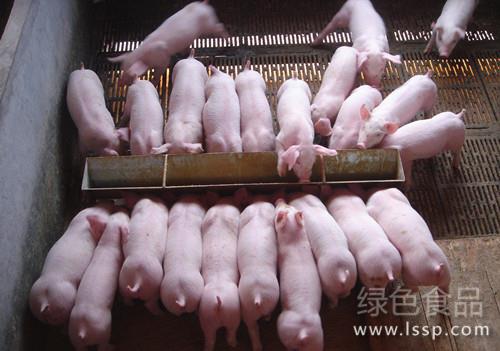
A pig's rectum has prolapsed from the anus and cannot be pushed back in; how should prolapse of the anus be prevented and treated?
How to prevent and treat prolapse of the anus in pigs when the rectum has prolapsed from the anus and cannot be pushed back
-
Autumn Fattening of Geese Is in Season, Goose Farmers Should Not Miss the Good Timing
Autumn weather is cool, green grass is abundant, and there is plenty of by-product after the autumn harvest, making it the best season for fattening meat geese. During this period, after 20 to 25 days of fattening, geese can generally gain 1.5 kg to 2.2 kg. For breed selection, choose meat-type hybrid breeds such as Lion Head geese and Xupu geese that are over 70 days old, lively, with glossy feathers, good at foraging, healthy and disease-free. Fattening methods: 1) Grazing fattening. During the day, drive the flock of geese to harvested fields to let them eat leftover grain heads, grass seeds, etc., and after returning to the shed at night, feed them 1 to 2 more times with concentrated feed and provide clean drinking water. 2) Shed fattening. Build a rack with bamboo or wooden sticks, with the rack 0.6 m to 0.7 m above the ground to make manure cleaning easier. Put 5 geese per square meter, make a small pen around them, place the feed trough and water trough outside the pen, and let the geese stretch their heads through the gaps to eat and drink. 3) Pen fattening. Use bamboo or reed stalks to enclose small pens, with 3 to 5 geese per pen. The height of the enclosure should be such that the geese can stand but not raise their heads. Place the feed trough outside the pen and let the geese eat and drink through the gaps. During pen raising, the shed should be quiet, grazing should not be done, activity should be restricted, and energy consumption should be reduced. For shed fattening and pen fattening, the feed should be diversified and combine concentrated and green feed. It can mainly consist of rice bran, broken rice, corn, blighted grain, vegetable leaves, etc., plus about 6% cake-type feed, 0.3% table salt, and concentrated feed ground fine, mixed into a wet feed for feeding, 5 to 7 times a day, with 1 to 2 additional feedings at night. In addition, adding 19 g manganese sulfate, 17 g zinc sulfate, 12 g ferrous sulfate, 2 g copper sulfate, 0.7 g potassium iodide, and 0.1 g cobalt chloride to every 100 kg of concentrated feed can increase weight gain by about 20%. However, when mixing the feed, it must be mixed evenly to prevent individual geese from being poisoned by eating too much. 4) Forced fattening. Mix powdered feeds such as corn, sweet potato, rice bran, and soybean cake with an appropriate amount of table salt and trace elements, add water and mix well, make strips 1 cm to 1.5 cm thick and 6 cm long, and after drying in the shade, manually stuff them into the goose's esophagus. When force-feeding, clamp the goose's body between your knees, grasp the goose's head with your left hand, open the goose's beak, dip a feed strip in water with your right hand, and use your index finger to stuff the feed into the esophagus. After each strip is inserted, gently push along the goose's neck with your hand to help it swallow. Feed 4 to 6 times a day, with 1 feeding at night. The amount of forced feeding depends on the goose's weight and digestive capacity. One hour before feeding, if a groove appears at the swollen part of the esophagus, digestion is normal; if it appears earlier than 1 hour before feeding, more feed is needed; if it appears later than 1 hour before feeding, reduce the feed or delay the feeding time. When force-feeding, also be careful to prevent the feed strip from being inserted into the trachea. In addition, attention should be paid to supplying sufficient clean drinking water.
-
How should the optimal vaccination program for chickens be arranged?
1. Before chicks start eating; use streptomycin spray or nasal drops, 2000-4000 units per bird, to prevent respiratory diseases. 2. At 1 day of age, vaccinate with turkey herpesvirus vaccine, inject 0.2 ml of solution subcutaneously per bird, to prevent Marek's disease. 3. At 3 days of age, use 0.01% potassium permanganate in drinking water to prevent digestive tract diseases. 4. At 5 days of age, chop garlic and mix it into the feed to feed the chickens, or add half a tablet of crushed oxytetracycline per kilogram of feed, feeding continuously for 7 days, to prevent pullorum disease in chicks.
-
What are the benefits of feeding cattle distillers' grains? Cattle farmers should learn about this
Distillers' grains are a direct by-product of the brewing process. They not only contain a certain proportion of grain (which can save on concentrated feed for cattle), but are also rich in crude protein, about 2-3 times higher than the content in corn, while also containing various trace elements, vitamins, yeast, etc. Among these, the content of lysine, methionine and tryptophan is also very high, which crop straw cannot provide. Compared with crop straw, distillers' grains also have a higher crude feed component. Because distillers' grains are all formed after fermentation and high-temperature steaming, their crude
-
The previous batch of pigs had blue ear disease (porcine reproductive and respiratory syndrome). How should the pen be disinfected?
1. Cleaning and washing. Remove all contaminants and bedding from the pen, and sweep down the dust from the ceiling as well. Then pile it all together to ferment. Then rinse thoroughly with clean water. 2. Disinfection of the floor and walls. For the floor, use caustic soda or sodium hydroxide. For the walls, spray with iodine-based or chlorine-based preparations. 3. For metal equipment that is not afraid of heat but is afraid of corrosion: use a blowtorch (alcohol blowtorch, kerosene blowtorch). 4. For enclosed pens: fumigation. Peracetic acid, formaldehyde, or potassium permanganate can all be used. After sealing for 2 hours, ventilate for 7-10 days. Basically it takes half a month.
-
What control measures should be taken when pathological changes occur in garlic scapes during storage?
Abnormal changes of the scape tip 1. Browning of the scape tip (1) Symptoms The scape tip changes from yellow-green to yellow-brown or dark brown, dehydrates and shrinks into a thin flake-like form, is prone to decay, and is easily infected by mold, losing its toughness; dry-affected ones break easily, and wet-affected ones rot easily and are infected by mold. (2) Causes The tissues of the scape tip undergo physiological aging and death, and lose water and shrink. High temperature and high oxygen promote browning, and high humidity aggravates the degree of browning. (3) Control Harvest at the proper time, and strictly prevent high temperature, air-drying, or smothering during harvest and transport.
-
How should the row orientation for jujube tree planting be determined to be reasonable?
The row orientation for jujube tree planting not only directly affects the growth and development of the jujube trees themselves, but also affects the growth conditions of intercropped plants. Jujube trees planted in north-south rows have a greater amount of accumulated light under their canopy than those planted in east-west rows. At the same time, jujube trees planted in north-south rows show little difference in light exposure time between the north and south sides, while jujube trees planted in east-west rows show a large difference in light exposure time between the north and south sides. Different row orientations not only affect light exposure time, but also cause differences in the amount of light received. From the perspective of the planting needs of the jujube trees themselves, north-south row orientation is the best. In addition, jujube
-
How should potted oleander be pruned and shaped
Oleander leaves are borne in whorls of three and it has typical three-forked branching: each time it is pruned, 3 new shoots grow from the stem nodes. People often use this branching trait to shape and prune it, so that each plant keeps 3 main branches on the trunk, and each main branch keeps 3 more branches, the tree form commonly known as "three forks and nine tops". After a potted oleander has established, the first pruning can generally be done according to the plant's height and personal preference, choosing and keeping a trunk of 30-40 cm and pinching it to encourage side branches. When the new shoots grow to 4-6 cm long, choose 3 appropriately positioned thick branches and remove the rest
条件筛选