-

Licorice should not be stored for too long; the storage time of medicinal materials must be reasonably controlled
Licorice is generally stored as compressed bales wrapped in burlap, each weighing 50 kg, kept in a dry, ventilated place, with a safe moisture content of 12%-14% for the commodity. There are more than ten kinds of warehouse pests of licorice, including the coffee bean weevil, the brown mulberry borer, and the four-spotted chestnut borer. Fumigation with nitrogen or carbon dioxide for 514 hours can kill all adults and larvae, with no obvious change in the inner quality of licorice. Licorice is prone to mildew. If the air humidity is too high, mold spots or white and green mycelium easily appear on the surface of licorice. The following measures can be taken for prevention and control
-
How should cotton be managed after suffering a hail disaster?
Timely drainage to prevent waterlogging. Hail is often accompanied by violent wind and rain, which frequently causes water to accumulate in the fields; when soil moisture is too high, it easily damages cotton roots and affects the normal growth of cotton. After a hail disaster, trenches should be cleared and drainage carried out immediately to reduce humidity. Intertillage and loosening the soil. After a hail disaster, the cotton field soil becomes compacted, with low ground temperature and high humidity. All types of hail-affected cotton fields should be intertilled and loosened in a timely manner to break up compaction, raise ground temperature, promote root physiological activity, and help the cotton plants return to normal growth as quickly as possible. For severely damaged cotton fields where more than 80% of the cotton plants have bare stalks after the hail disaster, it is recommended to pull up the cotton plants and replant other crops, so as to minimize
-
How should the water layer be regulated at different growth stages of shallow-water lotus root?
The suitable water level for shallow-water lotus root is 10-20 cm, and the maximum water depth it can tolerate is 50 cm. In cultivation, the water layer must be well regulated according to the different growth stages of shallow-water lotus root. The general principle of water layer management for shallow-water lotus root is shallow at the front, deep in the middle, and shallow at the back. After planting the lotus root, when the standing leaves appear, maintain a shallow water layer of 4-7 cm to increase soil temperature and promote sprouting. As the stems and leaves grow vigorously, gradually deepen the water layer to 12-15 cm. After the terminal leaves appear, the plant begins to form lotus root, and the water layer is gradually lowered to a depth of 4-7 cm to promote lotus root formation.
-
How should peaches be stored to extend their fresh, crisp period?
Prompt pre-cooling to prevent softening. Because the temperature is relatively high when peaches are harvested, especially for mid- and late-season varieties, if they are not pre-cooled promptly, the peaches will quickly soften, age, rot, and deteriorate. Therefore, after harvest, peaches should be pre-cooled to below 4°C as soon as possible. Generally, two pre-cooling methods are used: forced-air cooling and water cooling. Water cooling is fast: a peach with a diameter of 7.6 cm cooled in 1.6°C water for 30 minutes can have its temperature lowered from 32°C to 4°C. After water cooling, let the fruit dry before packing. Air cooling is slower and generally requires 8-12 hours or longer. Storage
-
What Should You Do If a Snake Gets Stomatitis? A Detailed Guide to Prevention and Treatment
After snakes first wake from hibernation, their bodies are weak and thin, and certain harmful bacteria invade the snake's neck, causing swollen stomatitis. The sick snake's mouth stays open and cannot close, it cannot swallow food, and ultimately it starves to death from not eating or drinking. The treatment method is: rinse the sick snake's mouth with normal saline, then wipe both jaws with gentian violet solution, rinsing and applying once each per day, and continue until the inflammation subsides and the swelling goes down.
-
What should be noted when cultivating shiitake mushrooms off-season?
Shiitake mushrooms cultivated off-season can usually fruit in spring; such shiitake mushrooms are of good quality, fetch a high price, and have a good market. To develop shiitake cultivation in the future, the number of off-season crops must be increased, so that supplies are available to the market year-round and economic returns can also be raised. The principles and methods of off-season cultivation are basically the same as those of spring cultivation, but the following four points should be noted: 1. Inoculation season: inoculation should be carried out when the local average temperature is steadily below 10°C. 2. During the spawn-running process, the temperature requirement of 7-13°C should be met as much as possible; spawn running can be carried out in a greenhouse or a single-board machine room (referring to a room with a temperature of 0-13°C).
-
Foliar feeding of cotton at the late stage is highly effective, and growers should pay attention to it
In the late growth stage of cotton, the root system's ability to absorb nutrients declines markedly. At this time, spraying foliar fertilizer to supplement nutrition has the effects of preventing premature senescence, preventing diseases, promoting large bolls, promoting early maturity and pursuing high quality, with remarkable effects in increasing yield and income. 1. Spray nitrogen fertilizer to prevent premature senescence: In the late stage of cotton, foliar spraying of nitrogen nutrition can keep cotton leaves green, enhance photosynthesis, and prevent nitrogen-loss premature senescence. Mixing nitrogen fertilizer with "regulator 802" makes the effect of enhancing cotton's late growth vigor more obvious and the yield-increasing effect better. From late August to early September
-
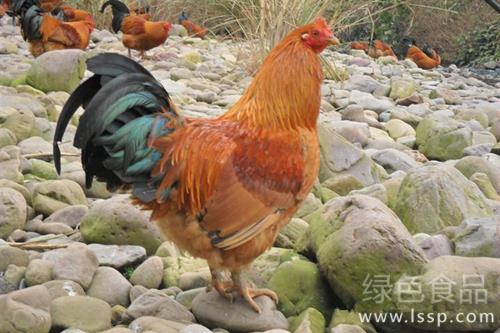
The meat of feedlot chickens is poor because of a monotonous diet; how should they be fed to improve chicken meat quality?
Feedlot chickens on a monotonous diet have poor meat quality; how should they be fed to improve chicken meat quality?
-
What comprehensive health care measures should be taken for pigs and chickens in June?
In the past, we controlled diseases mainly by relying on vaccines and drugs. A large amount of practice has proven that this is wrong. Effective disease prevention and control must be a sound biosecurity system. In June, the comprehensive health care measures taken for pigs and chickens mainly include: 1. Heat prevention and cooling (1) Insulation. Pig and chicken farms should be built in ventilated open areas, facing south. In southern regions, open or semi-open types are suitable. Traditional open pens with shade sheds or shade nets can effectively block sunlight and reduce the harm of heat stress to pigs and chickens. In northern regions, build
-
After the fish gut water has been fermented, at what ratio should it be diluted with tap water to water flowers?
For topdressing, follow the principle of "apply thin fertilizer frequently, and determine the amount based on the growth condition." Human feces and urine should be diluted 20 to 30 times, while soybean cake water, urine water, and fish gut water should be diluted 10 to 20 times. For more questions, it is recommended that you contact Hu Yimin, who grows nursery stock and flowers, for consultation directly. Contact phone number: 0551-5326013. This way the results will be greater.
条件筛选