-
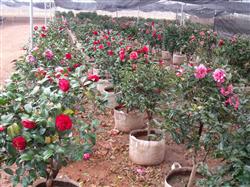
How should potted camellias be fertilized to grow well?
How should potted camellias be fertilized? Please give a detailed introduction to the method. Fertilizing potted camellias should be done selectively according to the different growth stages of the camellia. During the growth period, camellias need topdressing, and it is best to apply quick-acting liquid fertilizer and chemical fertilizer. During the stage of sprouting branches and leaves, nitrogen fertilizer or a mixed fertilizer mainly based on nitrogen should be applied. During flower bud differentiation and flower bud formation...
-
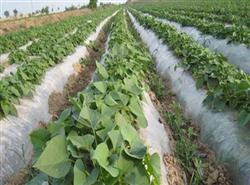
How should sweet potatoes be fertilized to achieve high yields?
How should sweet potatoes be fertilized for high yields? Fellow gardeners, please share your advice. Proper fertilization in sweet potato cultivation can prevent premature aging of the plants, maintain the leaves' assimilation capacity, promote the transport of nutrients to the storage roots, and thereby increase yields. Zhongdi Network has compiled fertilization methods for sweet potatoes, listed below for fellow gardeners' reference. Method 1, ...
-
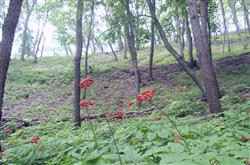
How should ginseng damping-off disease be prevented and controlled?
How is ginseng damping-off disease prevented and controlled? Ginseng damping-off disease occurs at the base of the stems of seedlings, mostly underground at the transition zone between dry and moist soil 3-5 cm below the surface. Control methods: 1. Disinfection of "transplanting stock": use 25% fludioxonil suspension seed coating at 5-20 times dilution to mix with seeds, or 50-100 times dilution to dip the "transplanting stock" to kill the pathogens carried by the seeds...
-
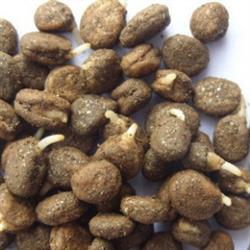
How should ginseng seeds be treated before flat-ground planting?
How should ginseng seeds be treated for flat-ground planting? Please explain the method. Before planting ginseng, you can refer to the following methods for treatment: after the water seeds are dried until the skin turns white, spread them in sunlight at a temperature of around 25°C and turn them for 30 minutes; this uses ultraviolet light to kill bacteria on the seed coat. Mix weathered sand (river sand also works, but it has a high bacterial content...) with ginseng seeds at a ratio of 5:1, keeping moisture between 15% and 18%, that is, it forms a ball when squeezed in the hand and breaks apart when released. Store the mixed ginseng seeds with moderate moisture in a jar or wooden box, or dig a pit in ground that does not accumulate water, wrap it with mesh netting, and build a rainproof and sun-shading shelter above. Before the seeds crack, control the temperature at 18°C-20°C. After the cracking rate reaches 80%, lower the temperature of the seed storage container to 13°C-15°C. Too high a temperature and too much moisture easily cause seed rot. Ginseng seeds stored in sand should be turned once every 10-15 days to ensure consistent moisture in the container. When moisture is low, supplement with a warm water spray; when moisture is high, dry them in the air promptly.
-
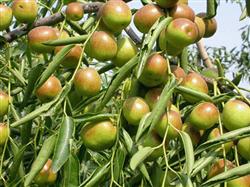
How should winter jujube trees be managed in the early stage?
How to manage winter jujube before harvest? Please give guidance. For the management of winter jujube before harvest, you can refer to the following methods: 1. Loosen the soil and preserve moisture: promptly hoe and loosen the soil, spray 800-fold diluted Xin Gao Zhi Mo solution, so that the soil in the jujube orchard maintains suitable moisture, preventing fruit cracking and improving the yield and quality of winter jujube in the later stage. 2. Prevent damage from wind and rain: winter...
-
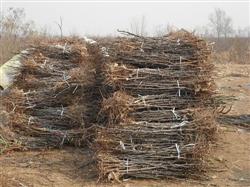
What should be noted when planting jujube trees in autumn?
What should be noted when planting jujube trees in autumn? Please advise. The main points to note when planting jujube trees in autumn are as follows for reference: Key points for lifting seedlings: Try to avoid damaging the root system when lifting seedlings. To make planting easier, the main root can be trimmed slightly after lifting the seedlings, which helps the seedlings absorb water and can increase the survival rate. When lifting and transporting seedlings, ...
-
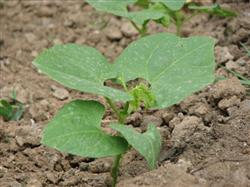
How should you normally manage the cultivation of yardlong beans?
How do you normally manage yardlong beans? Please give an introduction to the daily management methods. Daily management for growing yardlong beans mainly includes the following for reference: 1. Check seedlings, fill in gaps, and thin to a final stand: when the primary leaves appear, check the seedlings and replant gaps promptly to ensure a full and strong stand. After emergence, thin the seedlings 1 to 2 times. When one compound leaf appears, thin to the final stand, leaving 2 plants per hill for climbing beans and 2 to 3 plants per hill for bush beans.
-
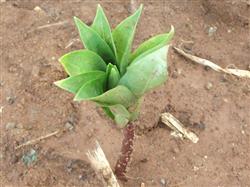
How should pests and diseases of Paris polyotphylla var. yunnanensis seedlings be controlled?
How should pests and diseases of Paris polyphylla var. yunnanensis seedlings be controlled? Please provide an introduction to the methods. For pests and diseases at the seedling stage of Paris polyphylla var. yunnanensis, the following methods can be used for control: 1. Pest control. The main pests at the seedling stage are cutworms, white grubs, and others. For cutworms and white grubs, use 180-200 g of 90% trichlorfon crystals per mu, mix with 8-10 kg of roasted rice bran to make a poisonous...
-
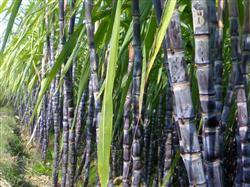
What should be noted when planting black-skinned sugarcane in continuous cropping?
What should be noted for continuous cropping of black-skinned sugarcane? Please give guidance. One of the main reasons for the low yield and poor quality of black-skinned fruit sugarcane under continuous cropping is that the soil lacks medium and trace elements such as magnesium, silicon, calcium, zinc, boron, iron, molybdenum and manganese, resulting in an insufficient supply of medium and trace elements, which causes poor growth of the fruit sugarcane, not only...
-
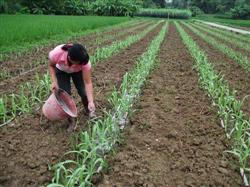
How should black-skinned sugarcane be managed for good cultivation?
How do you manage black-skinned sugarcane well? Please introduce good management methods for growing fruit sugarcane. After years of trial and cultivation, the following fruit sugarcane cultivation and management methods have been summarized for reference: timely fertilization. After emergence, fertilize together with the first weeding; during the second field growth period, apply diluted fertilizer together with each hilling; the third time, apply foliar fertilizer and balanced fertilizer at the appropriate time. Each time you fertilize, add New High-Lipid Film, which can greatly increase the availability rate of the fertilizer's limited nutrients.
条件筛选