-
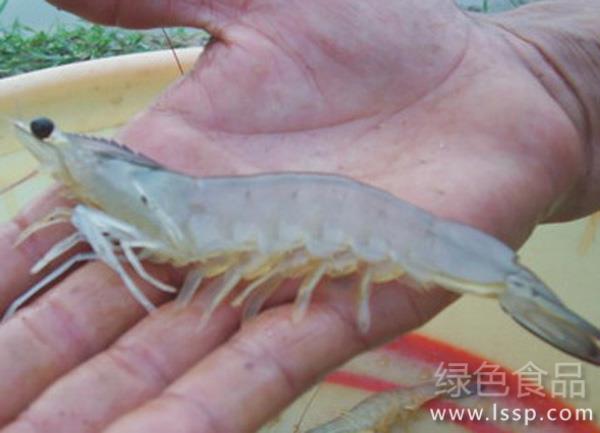
Soft-shell syndrome in prawns occurs at a high rate; how can it be prevented and treated in farming?
Prevention and treatment of soft-shell syndrome, which prawn farming is prone to
-

Crystal Prawn Balls Recipe and Cooking Techniques
Cooking category: Stir-fry | Cuisine: Cantonese | Ingredient category: Shrimp and crab | Taste: Salty and fresh | Appearance, aroma and flavor: Snow-white and translucent, crisp to the bite, best in summer | Main ingredient: Prawns (10) | Secondary ingredients: MSG (12.5 g), refined salt (a pinch), water chestnut flour (a pinch), sesame oil (a pinch), pepper (a pinch) | Preparation: 1) Shell the prawns and remove the heads and tails, then use a knife to shave off the dark membrane on the surface. Slice each prawn into 3 pieces and soak in alkaline water (for every 500 g
-
Preliminary Processing Methods and Key Technical Points for Raw Rabbit Hides
After tanning, rabbit hides can be made into collars, hats, children's coats and clothing, etc. They are both lightweight and attractive, and are very popular. Below are some commonly used preliminary processing methods for raw rabbit hides. When selecting rabbit hides, the first step in deciding whether to keep the hide of a slaughtered rabbit is to look and then to feel. First, look at the size of the rabbit and whether the fur is glossy. Hides from malnourished or diseased rabbits should not be used; hides with sparse, messy fur should not be used; hides from rabbits that are too small should not be used. Choose hides whose coat hair is glossy. Second, feel whether the hair sheds and whether the hide is thick and feels good. If the hair sheds,
-
Technical Analysis of Adjustments to Beam Trawl Fishing Gear and Methods
At present, beam trawl shrimp trawling has become one of the important operating methods of marine fishing in coastal fishing areas, and its output value as a proportion of the total marine fishery output value has risen year after year. Since this operating method belongs to single-boat bottom beam trawl operation, its gear design, rigging, operational adjustment, and fishing ground selection and other stages are all fairly highly technical, so even a slight oversight can affect shrimp trawling production. In particular, the adjustment techniques in beam trawl operation are the key to fishing production technology. For example, in production practice everyone often encounters this phenomenon: the same
-
Key Technical Points for Autumn Potato Cultivation with Rice Straw Mulching (Part 2)
4. Timely early sowing. Potatoes prefer a cool climate, and the sowing period should be when the daily average temperature steadily drops below 25°C. In plain and hilly areas below 500 m in altitude, the suitable sowing period is from late August to early September; in low mountainous areas at 500-800 m in altitude, the suitable sowing period is in late August. 5. Reasonable close planting and sufficient base fertilizer. For fields with rice stubble potatoes intercropped with rapeseed, both potatoes and rapeseed are planted in wide-narrow row patterns. For potatoes, the wide row is 0.6 m, the narrow row is 0.2 m, the hill spacing is 0.22 m, and about 700
-
Key Points of Straw Mulch Cultivation Techniques for Autumn Potatoes (Part 1)
The straw mulch cultivation technique for autumn potatoes is a new technique used in the stubble field after mid-season rice harvest, adopting no-till surface sowing with straw mulching after sowing to cultivate potatoes. It saves labor, effort and time, provides heat preservation, moisture retention, waterlogging prevention and weed control, returns straw to the field to build soil fertility, increases soil organic matter, improves soil structure, reduces soil erosion, improves the agricultural ecological environment, and promotes sustainable agricultural development. It is an important technique that saves labor and costs, increases yield and efficiency, and optimizes the structure of late-autumn grain and oil production. Its key cultivation techniques are as follows:
-
Key High-Yield Techniques for Cultivating Oyster Mushrooms on Rice Straw
High-Yield Techniques for Cultivating Oyster Mushrooms on Rice Straw 1. Selecting spawn: Experiments show that the relatively ideal strains include: the low-temperature type 792 and 118 oyster mushrooms; the medium-temperature type Xinnong No. 1, 9400 oyster mushroom, and Hypsizygus marmoreus; the high-temperature type Hainan No. 2, etc. (All of these spawns can be provided by the Binhai County Edible Fungi Research Institute.) 2. Seasonal scheduling: Along the middle and lower reaches of the Yangtze River, sowing can be done from early August to mid-February of the following year, with mid-September to mid-November being the best sowing period. 3. Rice straw selection: Choose fully dried, mold-free, golden-colored rice straw
-
Technical method for three-dimensional cultivation of edible fungi using pure crop straw
For a long time, the culture medium for edible fungus production in China has been mainly wood chips and cottonseed hulls. Excessive logging of timber has caused a shortage of forest resources; and cottonseed hulls, because of their wide range of uses and large consumption, have remained high in price. As a result, the prices of raw materials used for cultivating edible fungi have risen substantially, increasing costs. In this way, those who manage poorly often end up with poor returns, or even losses. In response to this situation, the vast number of edible fungus workers in China, after years of exploration, finally chose to use crop straw for edible fungus cultivation. At that time, the methods used were
-
Key Technical Points for Winter Potato Cultivation with No-Till or Minimum-Till Rice Straw Mulching
I. No-till or minimum-till field preparation. 1. Selection of no-till or minimum-till fields. No-till or minimum-till potato cultivation is best carried out in sandy loam fields with convenient drainage and irrigation, loose soil, a pH value of 5.5-6, and good water and fertilizer retention. It is especially suitable for planting in sandy loam paddy fields with good drainage and irrigation conditions during the winter fallow period in our city. Fields prone to drought and water shortage and shallow, poor fields, heavy clay fields, low-lying fields, mountain pit fields, cold waterlogged fields, and rotten
-
Detailed Explanation of Potato Cultivation Technology with Rice Straw Mulching
In 2000, Zhejiang Province carried out research on a new technique for no-till rice paddy cultivation of potatoes with full rice straw mulching, changing "planting seed potatoes" to "placing seed potatoes" and "digging potatoes" to "picking potatoes." The whole process can be vividly summarized as "place, cover, pick," eliminating many operations such as plowing and land preparation, digging holes for planting, intertillage weeding, and digging potatoes. The fresh potato yield per 667 sq m was over 1500 kg. A few years ago, our province introduced this technique and demonstrated it successfully. 1. Select good varieties. Varieties suitable for planting in our province include:
条件筛选