-
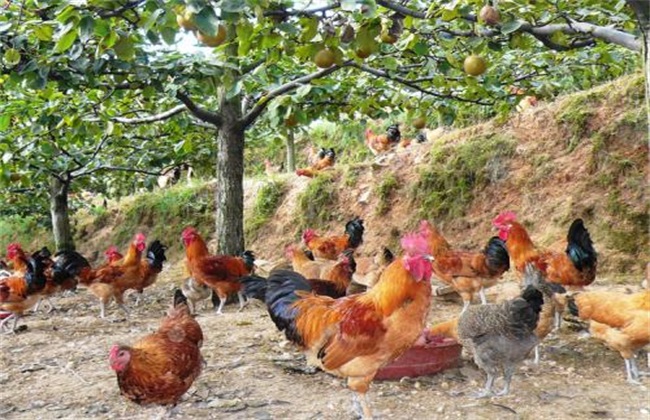
What are the common problems in ecological chicken farming?
Common problems in ecological chicken farming
-
-
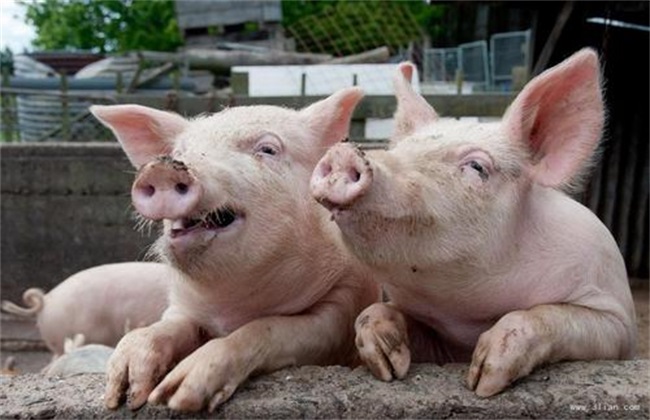
What are the common problems in raising pigs in summer? This article helps you answer
Common problems in raising pigs in summer
-

What are the common problems with raising chickens under trees?
Common problems with raising chickens under trees
-

Common problems and solutions for growing lucky bamboo in water
If you want hydroponic lucky bamboo to grow healthily and smoothly, choose the period from April to September. Especially in spring, when natural bacteria...
-
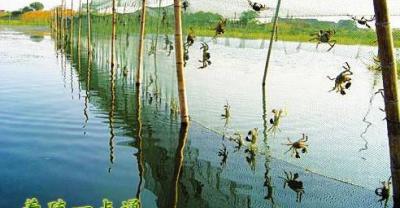
Crayfish farming is developing rapidly, but these problems need attention
At present, crayfish farming is developing rapidly, the farming area is constantly expanding, and the number of farmers is growing day by day. During the farming process, many unexpected problems will arise, ...
-

Analysis of the problems existing in the development of the eel industry and the countermeasures and suggestions
I. Seedlings and fingerlings The main species farmed for eel in China are the Japanese eel (Anguilla japonica) and the European eel (Anguilla anguilla). The resources of both the European eel... have already approached exhaustion, with annual production falling from 3,000 tons 30 years ago to 100-200 tons. From June 3 to 15, 2007, at the Conference of the Parties to the "Washington Convention" (CITES) held in the Netherlands, the European eel was listed in Appendix II of the Convention on Endangered Species of Wild Fauna and Flora, and this will be formally implemented starting in January 2009: China imports about 60 tons, or about 150 million individuals, of European eel seedlings and fingerlings annually, and farmed European eel accounts for more than 1/3 of eel production, while European eel accounts for about 40% of exported roasted eel. Japanese eel resources have also severely declined. In recent years, the seedling and fingerling resources of Japanese eel in Asia have remained at about 100 tons, and the annual catch in recent years has remained at 80-100 tons. In 2008, the output of European eel seedlings and fingerlings was about 90 tons, half of a normal year. The output of Japanese eel seedlings and fingerlings was about 35 tons, one third of a normal year. The severe shortage of seedling and fingerling resources has led to soaring prices. Moreover, artificial breeding of eel seedlings and fingerlings will not be able to form production capacity in the near future.
-
What are the easily overlooked problems in the process of selecting and retaining replacement gilts?
(1) The selection and retention procedure is unreasonable, and the selection process is simplified: In some pig farms, the selection and retention process for replacement gilts is very simple, with no fixed procedure. It is only after the breeding pigs finish testing that a simple evaluation is made and they are selected and retained. This can easily lead to an imbalance in the number of animals retained from each bloodline and a decline in the production performance of breeding pigs. Therefore, the selection and retention of replacement gilts must rely on a fixed procedure. Generally, the selection and retention of replacement gilts must go through three processes: primary selection, intermediate selection and final selection. Primary selection is when moving from the farrowing stage to the rearing stage, determining a candidate group 4 times the number to be retained for breeding; intermediate selection refers to the period from nursery to fattening
-
What problems exist in China's fox farming industry? A few suggestions for reference
Over the past 20 years, China's fox farming industry has made considerable progress, but through our 10 years of fairly systematic investigation into the current feeding conditions of fox farms and households, we have found some noteworthy problems that affect reproduction and fur quality. The specific situation is reported as follows. 1 Feeding and feed Currently, fox farms (households) across the country all use single-cage rearing in courtyards; they use complete feed supplemented with cornmeal, sea fish, freshwater fish, beef liver, various meat trimmings, and also add a small amount of other ingredients, boiled into a cooked porridge for feeding. Young foxes are fed 3 times a day, and adult foxes are fed 2 times a day.
-
Common Problems in Fish Ball Production and Sale and Their Solutions
I. The Significance of Fish Ball Production China ranks first in the world in total freshwater fish output and is also the world's largest freshwater fish farming country. China has uniquely advantageous resources for developing the deep-processing industry of surimi foods. In 2004, the national aquatic product output was 48.55 million tons, an increase of 3.2% over the same period in 2003. From January to November, freshwater product output was 16.69 million tons, up 5.9% year on year; marine capture product output was 12.87 million tons, up 2.1% year on year; and mariculture product output was 10.50 million
条件筛选