-

How to prevent and treat stem rot in potted orchids? A detailed explanation of the disease patterns
The disease patterns and control measures of stem rot in potted orchids
-
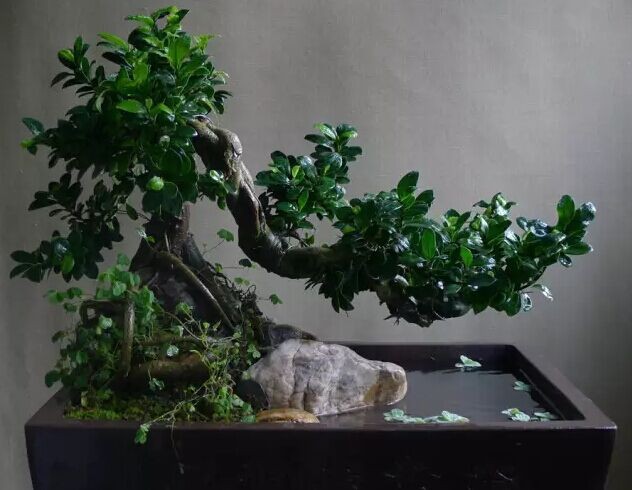
How to Find Patterns in the Creation of Water-and-Land Penjing
A few days ago, a good friend came to my home as a guest and saw a water-and-land penjing on the windowsill. They liked it very much, so I promised to make a few pots for my friend. The tree material was all banyan, including Taiwan small-leaf banyan and grafted banyan. My main effort went into the size of the water-and-land areas and the coordination among the trees, pots, and stones. After a few days, initial results began to show.
-
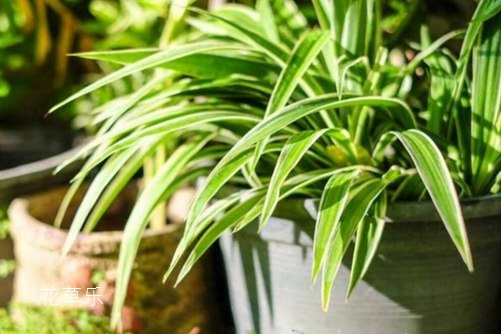
Disease and Pest Prevention Patterns, Causes, and Control Methods for Spider Plants
Spider plant, also known as ribbon plant, bracket plant, spider ivy, orchid grass, folding crane orchid, and air purifier, is native to Africa. It is a dominant presence among indoor green plants and has the reputation of being a green purifier. It is relatively easy to grow, but it cannot avoid the invasion of pests and diseases. If pests and diseases cannot be prevented and controlled, it will affect the growth of the spider plant.
-
Occurrence Patterns and Control Methods of Cherry Blossom Pests and Diseases
Cherry blossom belongs to the genus Prunus in the rose family (Rosaceae). It has both the subtle fragrance of plum and the gorgeous beauty of peach, with as many as several hundred cultivars. In recent years, with the demand for landscape gardening, cherry blossoms have been widely used in gardens, adding much beautiful scenery to urban landscapes. However, cherry blossoms suffer from many pests and diseases, mainly the following: 1. Cherry blossom witches' broom disease. The symptom is that many short, thin branches emerge from the affected parts, resembling a bird's nest. On these branches, either no flowers or only a few flowers are produced, and the leaves on the branches are numerous and small. Each year, deformed branches increase at the affected parts.
-
How to prevent and control soybean anthracnose? Detailed explanation of occurrence patterns and control techniques
1 Disease symptoms A considerable portion of infected seeds die in the soil before emergence. The disease can occur from the seedling stage to the maturity stage. The pathogen can invade young stems from the cotyledons, damaging stems and pods, and also damaging leaves or petioles. 1.1 Cotyledon disease symptoms The disease can occur from the seedling stage to the maturity stage. On the emerged cotyledons there are dark brown lesions with slightly lighter edges. After the lesions expand, cracking or sunken areas often appear. When the climate is humid, the cotyledons become water-soaked and quickly wilt and fall off. 1.2 Leaf disease symptoms When leaves are infected, the lesions are irregular in shape, with dark
-
How to prevent and control soybean phytophthora root rot? Detailed explanation of occurrence patterns and control methods
After soybean phytophthora root rot was introduced into our prefecture with the transfer of soybean seeds in July 2005, our station immediately established a soybean phytophthora root rot monitoring leading group and dispatched professional and technical personnel to carry out field monitoring work in Gongliu County. 1. Disease investigation In 2005, the affected area was 2239 hectares, and in 2006 the affected area was 2858 hectares. 1. Disease situation in Xinyuan County The soybean planting area was 0.67 million hectares, the investigated area was 0.3 million hectares, and the affected area was 0.23 million hectares, of which the sporadic occurrence area was 0.2
-
How to control the cupreous chafer? Master its occurrence patterns and key control points
The cupreous chafer beetle belongs to the order Coleoptera, family Scarabaeidae. It occurs in many apple orchards in our region, and its hosts include apple, hawthorn, crabapple, pear, apricot, peach, plum, Japanese apricot, persimmon, walnut, strawberry, and so on. I. Damage symptoms: Apple trees suffer the most severe damage from the cupreous chafer beetle; the adults feed on leaves, often causing large areas of young fruit trees to have incomplete leaves, and even entire trees stripped of all leaves. II. Occurrence patterns: (I) The cupreous chafer beetle has 1 generation per year, overwintering as mature
-
How to prevent and control jujube fruit shrinkage disease? Understanding the occurrence pattern is key
Jujube fruit shrinkage disease, also known as jujube iron skin disease, jujube black rot, jujube dry waist fruit shrinkage disease, jujube wilt fruit disease, wu chao, wu luo tou, wu chao, tie jiao, etc., was first officially reported in China in the late 1970s. It is found throughout all major jujube-growing regions nationwide, and its damage is becoming increasingly severe, having already become a devastating disease in jujube production. In recent years, the disease has become increasingly serious in jujube-producing areas of Shanxi Province, becoming an important factor affecting jujube yield and commercial quality. However, current reports on the pathogen and control patterns of this disease are inconsistent, and no effective control method has been found
-
Occurrence Patterns and Control Methods of Major Tea Plant Pests During the Summer Tea Season
Due to the low-temperature rain and snow weather last winter and this spring, the overwintering generation of tea pests this year had a low population base and a delayed occurrence period, and damage during the spring tea season was relatively light. However, summer weather is more suitable for the occurrence and damage of pests and diseases, so monitoring and control work must be carried out effectively. The occurrence level of the camellia spiny whitefly was lighter than last year, but pest numbers in some tea gardens still exceeded the control threshold. According to a survey by the Songyang County Plant Protection Station: the peak period of overwintering adult camellia spiny whiteflies was April 15, with an average of 17.4 insects per 100 leaves, later and fewer than last year (April 5).
-
Occurrence Patterns and Control Methods of Lily Leaf Blight
Lilies originate from the eastern and central regions of China. They are relatively cold-tolerant, prefer strong light, and do not tolerate shade. Insufficient light will affect growth and flowering. A well-drained sandy loam rich in organic matter is suitable. Their disease resistance is poor, and they are susceptible to disease under high temperature and high humidity conditions. Lily plants are upright and elegant, with large, brightly colored flowers and many varieties. They are suitable for planting in patches or clumps at the edges of lawns or for forming flower borders, creating a quiet and harmonious effect. Lilies are also treasures for potted flowers and cut flowers. Lily leaf blight, also known as lily gray mold, affects the plant's photosynthesis, hinders growth, and reduces ornamental value. When the disease occurs severely,
条件筛选