How to Find Patterns in the Creation of Water-and-Land Penjing
A few days ago, a good friend came to my home as a guest and saw a water-and-land penjing on the windowsill. They liked it very much, so I promised to make a few pots for my friend. The tree material was all banyan, including Taiwan small-leaf banyan and grafted banyan. My main effort went into the size of the water-and-land areas and the coordination among the trees, pots, and stones. After a few days, initial results began to show. The branch pruning was left for the penjing friends to gradually sort out themselves.
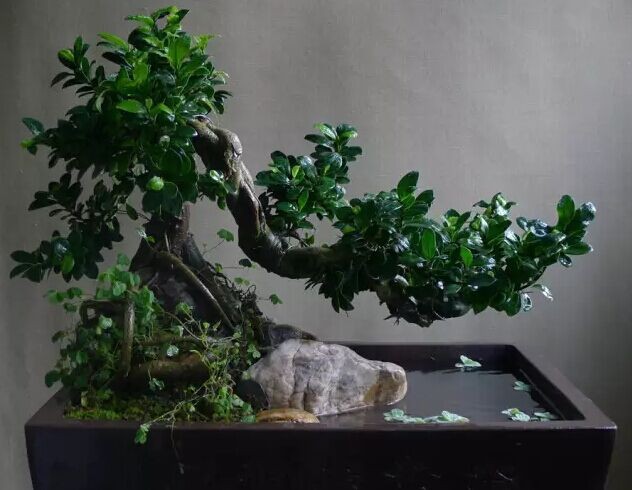
"The wonder lies between likeness and unlikeness," Qi Baishi's unique view of freehand brushwork.
Qi Baishi was a master of modern Chinese art, which we all recognize. Qi Baishi said, "The wonder of painting lies between likeness and unlikeness." With just one sentence, he resolved the creative problem that the art world had debated endlessly for so many years.
Artistic means are rich and varied; try to find patterns in penjing creation.
Just as President Liang asked: "What is penjing?" and "Why are there trees in the scene?" This is exactly what I want to seek. Here I especially thank President Liang for the great help with the layout!