-
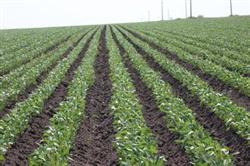
High-Yield and High-Efficiency Cultivation Model and Techniques for Spring Soybean Intercropped with Corn and Relay-Cropped with Sweet Potato
Right now is the sowing season for spring soybean and spring corn. Experts from the Provincial Department of Agriculture remind that the sowing window for spring soybean and spring corn spans a long period, the weather changes rapidly, and sowing conditions vary greatly, so it is not advisable to sow prematurely. The suitable sowing period is from late March to mid-May. Under conventional cultivation, our province...
-
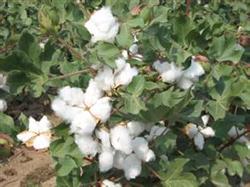
Detailed explanation of the high-density cotton cultivation model with five rows per film
Management of cotton during the boll-opening stage focuses on "four skillful practices" (skillfully managing fertilizer and water, skillfully pruning, skillfully picking rotten bolls, and skillfully promoting ripening). 1. Skillfully manage fertilizer and water to promote nutrient translocation. First, foliar topdressing. For cotton fields where leaves lose greenness too early and show fertilizer deficiency and premature aging, spray 50-60 kg per mu of 1%-2% urea solution on the leaves to extend leaf...
-
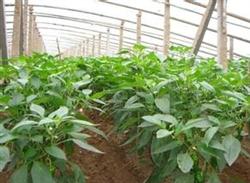
Four cultivation models based mainly on spring radish and chili pepper
Winter-spring chili pepper is currently the most important production season for chili pepper cultivation in solar greenhouses. Generally planted in mid-November, it can be harvested and marketed in early January of the following year, continuing until the next summer. The main cultivation techniques are explained as follows: 1. Build a greenhouse. For new energy-saving solar greenhouses, the structure and environment of the original solar greenhouse...
-
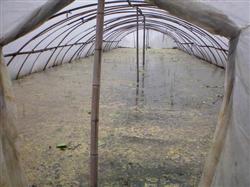
Key Cultivation Techniques for the New "Plant Once, Harvest Three Times" Lotus Root Model
Lotus root is a aquatic vegetable whose cultivation area in our province is second only to wild rice stem. In recent years, with the promotion and application of protected cultivation techniques, the harvest time of lotus root has been advanced to May-July, the market price has risen substantially, and two harvests per year have been achieved, with very significant benefits. 1. Building the shed. Before building the shed, apply sufficient base fertilizer, requiring the use of large and medium-sized...
-

Wheat-cotton-mung bean three-crop-per-year, three-harvest planting model
For the cotton variety, select a marker hybrid insect-resistant cotton with a loose plant type, chicken-claw-shaped leaves, good ventilation and light penetration, and strong boll-setting ability. For the wheat variety, select the high-yield, disease-resistant variety Han 4564. For the mung bean variety, select Zhonglu 1. Choose a plot with good water and fertility conditions for the planting pattern, harvest the autumn crops in time to clear the stubble, and sow while there is soil moisture; if there is no moisture, irrigate the land to create moisture. Apply more than 4 cubic meters of high-quality farmyard manure, 25 kg of diammonium phosphate, 20 kg of potash fertilizer, and 15 kg of urea per mu. Plow deeply to 25 cm and harrow 3-4 times. Make beds 200 cm wide, with a bed ridge width of 60 cm and a bed surface width of 1
-
Detailed Explanation of the No-Till Intercropping Model for Shallow-Water Lotus Root
Traditional one-crop-per-year cultivation of shallow-water lotus root fields has limited the improvement of economic returns because of the low utilization rates of land, temperature and light resources. In recent years, Suining County, Hunan Province, has vigorously promoted no-till three-dimensional planting models for shallow-water lotus root; generally each technique can increase returns by 300 yuan per mu, and the highest can reach 1,600 yuan. The 6 three-dimensional planting models are introduced below. Shallow-water lotus root - pak choi: after the shallow-water lotus root field has been drained for 3-5 days, evenly broadcast 0.5-0.6 kg per mu of cabbage seeds such as Siyue Man and Zao Shu No. 5; at the 3-leaf stage of the pak choi
-
Detailed Explanation of the Five Major Characteristics of the Rice-Rapeseed Combined Planting Model
Rapeseed is an important oil crop in the Yangtze River Basin. Traditional rapeseed cultivation involves raising seedlings and transplanting them. Because raising seedlings and transplanting rapeseed in paddy fields requires large inputs of labor and materials, with low yields and low returns, and crops are easily lost when unsuitable weather occurs, this affects farmers' enthusiasm for planting rapeseed. Changing traditional seedling transplanting to no-till broadcast direct seeding with rice straw mulching simplifies the production process and achieves the goal of cost saving and efficiency improvement. Compared with traditional seedling transplanting, the rice-rapeseed combined model has the following characteristics: First, no-till broadcast direct-seeded rapeseed, per
-
Detailed Explanation of Lotus Root Field Rotation and Crop Succession Cultivation Models
Lotus root is an important aquatic vegetable in China and also an important export-oriented cash vegetable. It is widely cultivated in areas south of the Huang-Huai region, especially in the Yangtze River Basin and areas further south. It not only plays an important role in increasing farmers' income and improving agricultural efficiency, but also has important value in improving and beautifying the environment, and in wetland protection and utilization. Centering on lotus root and implementing good rotation and crop succession is important for fully improving land utilization rate and economic benefits per unit area, reducing pest and disease damage, reducing pesticide use, improving soil, and enhancing soil fertility.
-
Research and Analysis of High-Efficiency Lotus Root Cultivation Models: A Case Study of Lotus Fields in Caidian District
Lotus root is one of the pillar agricultural industries of Caidian District, Wuhan City. In 2006, the planting area was 10,000 hectares, the total output was 200,000 t, and the total output value was 320 million yuan, accounting for 18.2% of the district's total agricultural output value. In order to improve the economic benefits of lotus fields, Caidian District promoted several high-efficiency lotus field cultivation models and achieved good results. In 2006, the promoted area of the models in the district reached 7,730 hectares, accounting for 77.3% of the district's lotus root planting area. The main models promoted and applied in recent years are introduced below.
-
Detailed Explanation of the Soft-shelled Turtle-Rice Rotation Ecological Farming Model
Generally, after 2 to 3 years of raising soft-shelled turtles, one season of rice is planted. In mid-May, juvenile soft-shelled turtles are stocked, with a size of about 180 g body weight and a stocking density of 500 to 1000 turtles per mu. They are fed soft-shelled turtle compound feed together with live fish, and are caught before the end of July the following year. After catching the turtles, late rice is planted from late July to early August. During the rearing process, aside from using quicklime and other drugs to clear and disinfect the pond, no antibiotics, chlorine preparations, or other chemical drugs are used. For disease prevention, Chinese herbal medicines such as Banlangen (Isatis root) are mostly used. Regarding rice cultivation techniques,
条件筛选