-
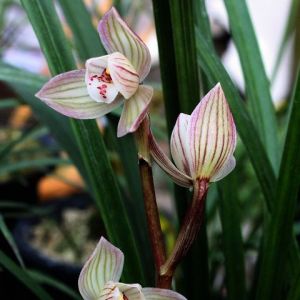
A concise explanation of the detailed appreciation criteria for Cymbidium kanran, to quickly master the key points of evaluation
Chunjian Dianhe won the gold award at the 19th China (Wenjiang) Orchid Expo. It is the only Cymbidium kanran lotus-petal variety from Sichuan that is not mixed with flaws like other Chunjian lotus-petal varieties, making it a rare and excellent cultivar. This plant has very obvious dragon-head features on the leaf surface. When the flower scape is tall, it can grow to over 50 cm high. The flower color is also very brilliant and gorgeous, with petals shaped like lotus petals....
-
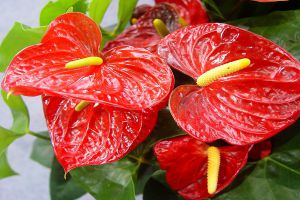
How to prune anthurium? Master the correct pruning method
This is a plant in the Araceae family, genus Anthurium. It also has many other names, such as "Anzu flower", "flamingo flower" and so on. If you look at pictures of it, you will find that its names are all very vivid and true to life. Of course, its flowers are not only red, but also pink, white and so on; this beautiful appearance has attracted many flower lovers to grow it. Pruning is an important aspect of its care process, so how exactly should it be done?
-

How can you make flower spikes grow taller? These care methods are essential to master
When admiring an orchid, you should look at whether the flowers are elegant and whether the leaf posture is graceful. Only when the tall flower scape and the leaves are well matched can it be a truly beautiful sight. For summer-blooming varieties such as Cymbidium ensifolium (four-season orchid), the time from bud formation to flower opening is very short, and the height of the flower spike is determined by the care given before the orchid blooms. Personally, I think these varieties...
-
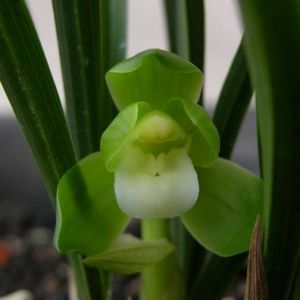
There is an art to selecting orchids, and these four key points must be mastered
In 1920 it was selected and bred by Yang Zuren of Ningbo. The leaves are obliquely erect, with blunt tips, and the leaf margins curl slightly inward. The leaves are emerald green and glossy. The bracts are light green. The outer three petals of the flower are short and round, with tight edges and narrowed bases, and a thick, glutinous texture. The shoulders are level, the petals are shell-shaped (Bang Ke Peng), and the lip is a pure white large round tongue that curls slightly backward. The flower color is emerald green.
-
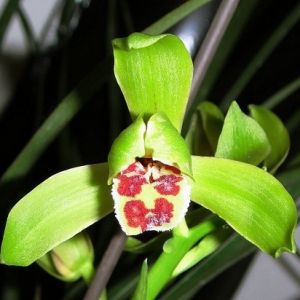
Loumei Huilan Orchid Variety Introduction: A Classic Huilan Meibian Masterpiece
Petal type: Green-shell lotus-form narcissus petal. History: Selected during the Guangxu period of the Qing Dynasty (1892) by the Lou family of Shaoxing, Zhejiang, hence the name "Loumei." Legend has it that after the host had finished entertaining guests and was seeing them to the door, this huilan happened to unfurl its petals and release its fragrance, so the host invited the guests back to admire the flowers, hence it is also called "Liumei." Characteristics: The three outer petals have large heads, fine root contractions, flat shoulders, light...
-
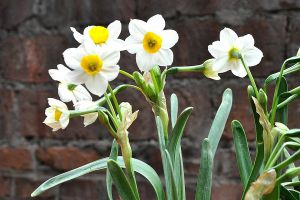
How to sprout narcissus? Master these methods for fast sprouting
Narcissus is also called Luoshen Xiangfei, Lingbo Xianzi and so on, and its flower posture and colors truly live up to descriptions like xian and Xiangfei. Overall it gives people a feeling of elegance, dignity and grandeur. No wonder it is deeply loved by flower lovers. When many people want to plant narcissus themselves, they are curious about how to sprout it. Let's take a look at exactly how to do it.
-
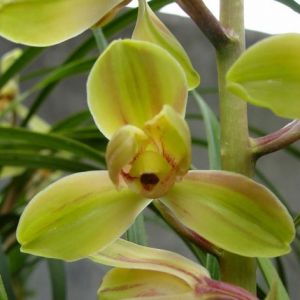
Why is the Cymbidium faberi 'Xianhe' called an exceptional masterpiece?
The Xianhe exceptional masterpiece is prized for its rush-pith stalk, multiple flowers on a single stalk, and whole plant of emerald green; its outer petals are of standard lotus form, upright and large, fleshy and thick with a waxy texture, while the inner segments are in the form of a narcissus; the flowers are neatly arranged and it even carries floral artistry. Most striking of all, the lip petals of each flower are all different - some with a fringe tongue, some with a square-notched tongue, some with a large round tongue, some with a small round tongue - giving people the feeling of "the Seven Fairies descending to earth," loved by all who see it and making them linger, truly a newly discovered treasure among green Cymbidium faberi lotus-form flowers.
-
To identify orchid varieties, master the three-look method
Variety identification is an appraisal of an orchid's overall qualities and the branch of knowledge that best demonstrates a grower's skill. For this reason, orchid masters through the ages have been especially cautious about it, never jumping to conclusions, and have always upheld the "three looks" principle. First, look at the leaf shape: "enjoy the flowers for a time, admire the leaves all year round." In the flowerless season, people identify famous orchid varieties...
-
How to Water Orchids? Master the Key Techniques of Water Management
Water management for orchids is very important and is one of the keys to success or failure in growing orchids. As stated in "Linghai Lanyan" (Orchid Talks from Lingnan), "There are living methods for growing orchids, but no rigid rules" - water management should be handled even more flexibly. 1. Newly potted orchids must never be immediately drenched with "settling-in water." Transplanted orchid plants inevitably suffer some damage to their roots and rhizomes, making them prone to bacterial infection...
-
How to grow orchids? Mastering the seasons is the key to growing orchids well
The sprouting, growth, flowering and fruiting of orchids are closely tied to the seasons. If you cultivate orchids according to the seasons, they will thrive. From January to March come the solar terms Minor Cold, Major Cold, Start of Spring, Rain Water, Awakening of Insects and Spring Equinox. During this period the flower buds of Chinese Cymbidium (Cymbidium goeringii) form. Orchids like warmth but fear dampness, and like dryness but fear aridity, so water a little around the rim of the pot. As the rain nourishes them...
条件筛选