-
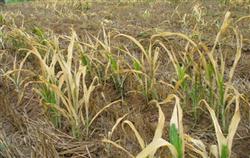
What to do when pesticide damage occurs? Master the correct remedial methods
What to do when pesticide damage occurs? What needs to be done after crops suffer pesticide damage? We also ask netizens for guidance. Generally speaking, using pesticides to control pests and diseases is safe, but for certain reasons, pesticide damage occurs every year. For pesticide producers, operators and users, none of them want to see pesticide damage occur...
-
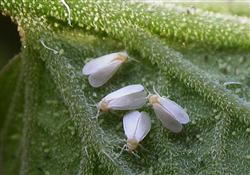
What are the control methods for whiteflies? Master these tips to effectively eliminate the pests
What harm do whiteflies cause? What control methods are there for whiteflies? We ask experienced netizens to help explain. Whiteflies, also called small white moths, are a worldwide pest that occurs everywhere in our country. Whiteflies harm cucumber, kidney bean, eggplant, tomato, chili pepper, winter melon, beans, lettuce, as well as Chinese cabbage, celery, large...
-
How to improve the efficacy of glyphosate? These methods you need to master
How to improve the efficacy of glyphosate? Which methods are simple and easy to use? We also ask knowledgeable netizens to help introduce them. Glyphosate is a common herbicide. During application, external factors affect how well it works, so Zhongdiwang has compiled methods for improving the efficacy of glyphosate, listed in detail below for...
-
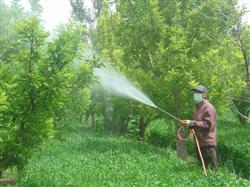
How to apply pesticides to kill insects effectively? Mastering the correct method is key
How can pesticide application be effective for killing insects? Please advise on methods. To get better results when spraying pesticides to kill insects, you can refer to the following two approaches: 1. Determine the control pesticide according to the type and size of the pest. Pests can be divided into aphids and planthoppers, snout moths, spiders, beetles, etc. Different types of pests require different pesticides...
-
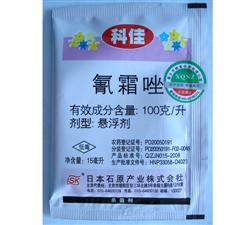
How to choose a fungicide? Master these key points for scientific disease control
How to choose a fungicide? Which fungicides are good? Please give an introduction. China's vegetable planting area has exceeded the planting area of oilseed crops, making vegetables a major crop in China. The biggest problem in vegetable production is the control of pests and diseases, especially disease control, which is a difficult problem in vegetable production. In vegetable disease control...
-
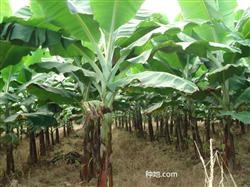
How to choose herbicides for banana plantations? Master these key methods
How to choose herbicides for banana plantations? Bananas generally grow in tropical and subtropical regions with good light and temperature conditions, and the planted area in Guangdong is relatively large. To improve production efficiency, most banana plantations in our province use chemical weed control technology. Banana growers should pay attention to the following points when choosing herbicides: 1. Banana roots are relatively shallow...
-
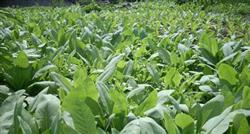
How to use herbicides in vegetable fields safely? Master these key application points
Weeds in vegetable fields are a major problem in vegetable production. Hand weeding is both labor-intensive and backbreaking, so the vast number of vegetable growers need to use herbicides in vegetable production. However, vegetables come in many varieties, have short growing periods, high multiple-cropping indexes, and complex crop rotations, and there are also many types of herbicides. If used improperly, they can easily cause herbicide damage, or even total crop loss...
-
Using specific insecticides requires particular care; mastering the method is key
Generally speaking, specific insecticides have different active ingredients, each with its own characteristics, and they also have different insecticidal mechanisms of action (that is, the principles by which pesticides kill pests). Varieties of this type often used in production today include: chlorfluazuron, buprofezin, flufenoxuron, diflubenzuron, bisultap, monosultap, imidacloprid, fipronil...
-
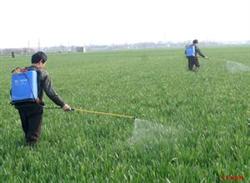
Two key points to master when spraying insecticides
First, choose the favorable time period for application according to climate characteristics and the pests' day-and-night activity patterns. The best application times are 9-10 a.m. and after 4 p.m. This is because at 9-10 a.m., the dew on crop leaves has already dried, and it is precisely when diurnal pests are most active. Applying the insecticide at this time will not...
-
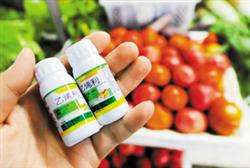
Bt insecticide application techniques matter; mastering the method is key
Ethephon is an organophosphorus broad-spectrum low-toxicity plant growth regulator that promotes ripening. It can enter the plant through leaves, bark, fruit, and seeds, then be transported to the sites where it acts, releasing ethylene. It can promote fruit ripening and coloring, promote the abscission of leaves and fruit, dwarf plants, and change the ratio of female to male flowers...
条件筛选