-
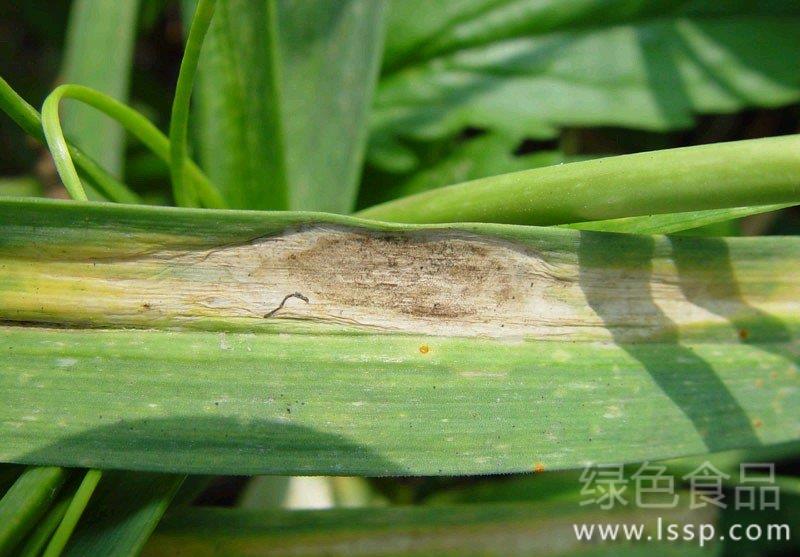
Garlic leaves turning from green to brown and yellow: master the control methods for garlic leaf blight
Garlic leaves turning from green to brown and yellow: control methods for garlic leaf blight
-

Emergency treatment for cattle bloating, farmers must master it in time
Causes of bloating There are three main causes of bloating in cattle: 1. Eating green plants containing too much water and soluble protein. 2. Overeating grain feed and forage, which accelerates the decomposition of fatty acids, lowers the alkalinity in the rumen, and leads to acid accumulation. 3. Mechanical obstruction of the esophagus, which hinders belching. Bloating in farm cattle is generally not difficult to diagnose; the difficulty lies in how sudden the onset is, and often there is no time to find a veterinarian for diagnosis and treatment before death occurs in 1 to 2 hours. Emergency measures 1. Pure ichthammol 150 to
-
How to prevent and treat goose flu? These methods must be mastered
Epidemiology Goose influenza, abbreviated as goose flu, is an acute systemic or respiratory infectious disease caused by certain pathogenic serotype strains of type A influenza virus, occurring mainly in goslings within 30 days of age. In recent years, the incidence of goose flu has gradually increased, mostly due to sudden climate changes, poor feeding and management, and goslings catching cold and becoming infected. The mortality rate is generally 50%-90%. Clinical symptoms are mostly seen in the acute type; affected geese suddenly fall ill, with depression, ruffled feathers, drooping wings, and elevated body temperature.
-
How to raise blue foxes? Master these four breeding techniques
This year, in Pulandian City, Liaoning Province, 10 specialized blue fox farming households averaged more than 8 cubs per litter, more than 40% higher than the local female foxes' litter size. In the survey, it was learned that skilled fox farmer Cai Yu achieved high results in mating rate, pregnancy rate, whelping rate, survival rate and economic benefit, with a cumulative average of 10.4 cubs per litter over 3 years. Because the blue foxes he raised were pure in breed and excellent in quality, his breeding foxes and fur sold well. His main experience consists of 4 techniques: introducing fine breeds. The breeding male and female foxes raised by Cai Yu were all purchased from the fur animal experimental breeding base of the Special Products Research Institute of the Chinese Academy of Agricultural Sciences in Zuojia, Jilin
-
How to care for azaleas during the bud stage? Master these key points
Azalea bud-stage care refers to the growth stage after buds appear, when most buds begin to enlarge, up to just before flowering, generally about 90-120 days. However, the length of this growth period is closely related to temperature: the lower the temperature, the longer the period, and vice versa. If you want the azalea to bloom on schedule, bud care is especially important. The main techniques of bud care are briefly introduced below: 1. Suitable temperature. Azaleas are especially sensitive to temperature during the bud-care period, so it is most suitable to place the pot in a moderate-temperature greenhouse for care.
-
How to manage azaleas during the bud stage? Master these key points
Azaleas prefer a cool and humid climate, and require acidic soil rich in humus, loose, moist, with a pH value between 5.5-5.6. They have certain requirements for light, are not tolerant of exposure to the sun, and are best cared for under semi-shade conditions. The bud stage refers to the period from the beginning of bud formation to the opening of most flowers, generally 90-120 days. The length of this period is greatly related to humidity and care. To make the flowers bloom well and for a long time, attention must be paid to bud stage management. The key points are as follows: 1. Light
-
How to master the dehydration step in shiitake mushroom processing
Dehydrated shiitake mushrooms with good commercial value have bright yellow gills, a plump shape, uniform size and a rich aroma. To process good shiitake mushrooms, mastering the "dehydration step" is crucial. 1. Timely harvesting: this is the basis for ensuring the finished mushrooms have bright color. The main reason shiitake mushrooms become discolored during drying is that the mushroom bodies are injured before drying. To overcome this shortcoming and enhance the mushroom bodies' resistance to external pressure, timely harvesting is very important. They should be harvested when the partial veil has fully split and the cap has curled upward like a gong. Do not spray water in the 4 hours before harvest; harvest using the "twist-harvest method",
-
How to safely overwinter shiitake mushrooms through summer? These management points must be mastered
The quality of summer management for shiitake mushrooms directly affects yield and profitability. Doing a good job of summer management is a key step in shiitake mushroom production, and two methods can be used: indoor and outdoor. I. Indoor spawn running for summer survival (1) Minimize the number of shiitake bags indoors and the number of bag layers. Stack two bags in a cross pattern, with no more than 5 layers at most, and keep the spacing between stacks at more than 20 cm to facilitate ventilation and heat dissipation. (2) Build a shade canopy outside the window so that sunlight does not shine directly onto the window or indoors. (3) In hot weather, close doors and windows at 7 a.m. to prevent outside hot air from entering indoors, and in the evening
-
How can the efficacy of fishery drugs be improved? Master these five methods
Improve the binder The binder must be highly sticky, otherwise the drug will easily disperse and be lost in the water. Standard wheat flour is a relatively good binder material. For swallowing fish, it is best to make pelleted medicated bait or ball-shaped medicated bait for feeding. Add a feeding attractant Fish have a keen sense of smell; even if 1 gram of alanine is dissolved in 1 million liters of water, fish can still detect it. For example, if strongly aromatic Chinese herbal medicines such as star anise and Angelica dahurica are ground into fine powder to make a feeding attractant, and mixed into fishery drugs at a ratio of 10%-20%, or added to roasted soybean powder, wheat flour, etc., all have obvious feeding-attractant effects
-
Stocking fish fingerlings in early spring requires care; mastering the method is key
Fingerling quality For fingerlings of the same species and age, the specifications should be uniform, with little difference in body length and body weight, thick back muscle, bright color, intact scales and fin rays, normal activity, and strong upstream-swimming ability. After being taken out of the water and placed in a basin, the gill cover should not open, the tail should not bend, and the fish should keep jumping, with no wounds or parasites on the body surface. Fingerling disinfection Some farmers do not disinfect fingerlings at all when stocking them, resulting in a high disease rate, and drug treatment is not ideal. In fact, as long as fingerling disinfection is done well, it often achieves twice the result with half the effort in preventing fish diseases. Fingerlings
条件筛选