-

Detailed Explanation of the Processing Technology for Fresh-Brined Red Drum Fish Fillets
The scientific name of the red drum (Sciaenops ocellatus) is the spotted weakfish, belonging to the genus Sciaenops, family Sciaenidae, order Perciformes. It is a eurythermal and euryhaline fish, with a suitable temperature of 10-30°C, optimally 18-25°C. It has been reported to tolerate low temperatures of 2°C. Its salinity tolerance range is very wide, and it can grow normally in freshwater, brackish water, and seawater. It is a carnivorous fish. In natural waters, it mainly feeds on shellfish, cephalopods, small fish, etc. In artificial rearing, compound feed can be used. The red drum has few diseases and grows quickly. According to reports,
-
How to treat piglet yellow scours? Here are a few practical treatment recipes
Take 60 grams of hawthorn leaves and 50 grams of ginger, add 3 kg of water, bring to a boil, then simmer over low heat for 10-15 minutes, then add 60 grams of brown sugar, and once the brown sugar has completely dissolved, remove from the heat. When warm, mix into the feed and feed to the sow, 2 times a day, and the piglets' yellow scours will be cured.
-
6 reasons piglets grow slowly, pig farmers should learn about them early
1. Improper weaning: Farmers often use the one-time weaning method, and the piglets are sold immediately after weaning, causing the piglets' original living conditions - centered on the mother and living together with littermates in a stable and comfortable environment - to suddenly change, making it difficult for them to adapt for a time and affecting weight gain. The number of sucklings given to piglets should be gradually reduced 5 to 6 days before weaning until weaning is complete. 2. Delayed supplementary feeding: If piglets are not given supplementary feed in time during the suckling stage, they cannot eat well after weaning, resulting in slow growth and stunted development. Generally, supplementary feeding should start when piglets are 10 days old
-
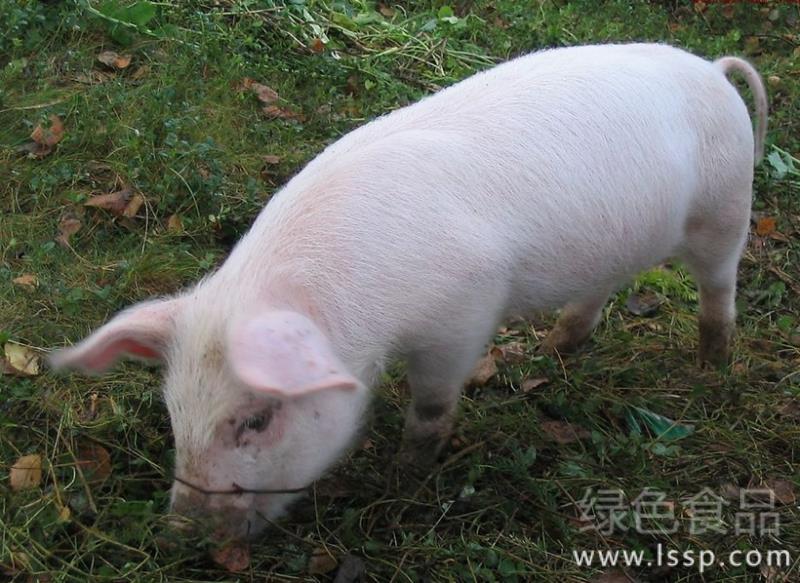
Piglet stubborn diarrhea has both high incidence and high mortality; how should it be treated?
Piglet diarrhea with high incidence and high mortality: how to treat piglet stubborn diarrhea
-
A Complete Analysis of Gastrodia Planting Methods and Technical Key Points
Gastrodia, also known as Chijian Dingfengcao, Mingtianma, etc., is the species Gastrodia elata of the orchid family. Its tuber is used as medicine, and it has the effect of calming wind and relieving spasms; it mainly treats rheumatic waist and knee pain, limb spasms, dizziness and headache, and infantile convulsions. Gastrodia is a perennial symbiotic herb; the mature plant has an underground tuber and an aboveground flower stem. It has no roots, the stem is single and upright, 100-100 cm tall, with no green leaves, only degenerated scale-like leaves that clasp the stem; the raceme is terminal, and the tuber is fleshy and enlarged, oblong. Living gastrodia prefers a cool and humid climate, with relative humidity between 70% and 90%.
-
What is ground bed cultivation of Gastrodia elata? Let us walk you through this cultivation method
In low-lying flat land with a high water table, relatively low temperatures, and damp, rainy conditions, or when cultivating Gastrodia elata on a small scale in a new area, this planting method can be used. Bed cultivation is also divided into two methods: single-layer planting and double-layer planting. ① Single-layer planting method: Level the ground and make a bed 60-70 cm wide; the bed length depends on the terrain and the amount of Gastrodia elata to be planted. On the leveled bed surface, first spread a 2-3 cm thick layer of base culture material, then lay the fungus logs horizontally with a spacing of 6 cm. On both sides of the fungus logs, first add culture material up to half the height of the logs,
-
A Complete Analysis of the New Machine-Bagging and Irrigation Technology for Oyster Mushroom Cultivation
Drawing on shiitake mushroom production techniques to grow oyster mushrooms, a new machine-bagging and bag-cultivation technology for oyster mushrooms has been summarized, and it is introduced as follows: 1. Preparation of spawn bags: according to the formula of 88% cottonseed hulls, 10% wheat bran, and 2% gypsum, add 1.1-1.2 kg of water per kg of dry material. Use the special bagging machine for shiitake production to fill the material into 55×15×0.004 cm low-pressure polyethylene plastic bags, with each bag holding 2.1-2.3 kg wet weight of material. Then, put the material bags into a sterilization stove for sterilization; after the temperature rises to 100°C, keep it for 10
-
What Flower Is the Primrose? A Complete Guide to Getting to Know It
Scientific name: Primula spp. Other names: yingcao (Japanese name), nianjinghua Family and genus: Primulaceae, Primula The plants of the genus Primula are widely cultivated around the world and have a fairly long history, and in recent years they have developed rapidly, becoming an important class of garden flowers today. Both the Chinese name baochun and the scientific name Primula contain the meaning of "early flowering." Blooming in early spring is an important characteristic of this genus. Cultivation history of the primrose: based on records in local gazetteers and the traditional custom in Yunnan of growing primroses in pots for appreciation during the Spring Festival. China's Tibetan primrose
-
What Is Osteochondrosis in Dogs? Let Us Walk You Through This Disease
Osteochondrosis is a disease characterized by bone necrosis and impaired bone development in young dogs that are still in the growth and development stage. Examples include osteochondritis dissecans of the shoulder joint, osteochondrosis of the elbow joint, ununited anconeal process, and osteochondritis dissecans of the knee joint. [Causes] The cause is not yet clear. It is generally believed that the direct causes are circulatory disturbances or excessive traction and compression trauma. Endocrine dysfunction, malnutrition, and genetic factors are also related to the occurrence of this disease. [Symptoms] Osteochondritis dissecans of the shoulder joint is more common in large
-
Detailed explanation of the processing technology for pear juice, the complete process at a glance
(1) Process flow: Feeding → Cleaning → Crushing → Pressing → Coarse filtration → Blending → Separation → Fine filtration → Filling → Sealing → Sterilization → Cooling → Bottle wiping → Quality inspection → Labeling → Finished product (2) Process specifications (1) Raw materials: Harvested pears must undergo after-ripening, and can only be processed when they emit fragrance and begin to soften. If refrigerated fruit is used, the core temperature must be below 15°C before it can be processed and utilized. The material must be cleaned and disinfected with potassium permanganate solution, then rinsed until colorless before processing.
条件筛选