-

How to make heat-clearing fish fillet soup? A simple and tasty home-style recipe
Main ingredients: 4 liang (about 160 g) grass carp meat, 1 century egg, 1 tablespoon shredded pickled cucumber, 3 sprigs cilantro, 2 teaspoons each oil and light soy sauce, 2 slices ginger, a pinch of salt. Method: 1. Slice the grass carp meat, shred the ginger, cut the cilantro into sections, and cut the century egg into 6 pieces. 2. Mix the grass carp slices with oil, shredded ginger and light soy sauce. 3. Pour water into a pot and bring to a boil, add the pickled cucumber and century egg, cover, and boil over high heat for 2 minutes. 4. Add the fish slices and cilantro, cook over high heat for 2 minutes, add salt to taste and it is ready. Note: 1
-
How to treat piglet yellow and white scour? Acupoint blocking treatment at the Shenzhong point
Acupoint location: the front end is adjacent to the last rib, and the rear end is about 0.5-1.3 cm from the lumbar angle (hip joint). It is 1.2-1.8 cm from the dorsal midline, which is the Shenzhong point. Use a No. 9 1-2 needle, with an injection depth of 0.3-0.5 cm; the needle insertion point must be accurate. According to the severity of the condition, inject 1-4 ml of 0.5%-1% procaine hydrochloride. Perform blocking injection 1-2 times daily, alternating between the left and right Shenzhong points. In observations of 168 cases of piglet yellow scour treated, 155 cases were cured, with a cure rate of 92.3%; treatment of
-
A Complete Guide to Management Key Points During the Cotton Yield Formation Period
This year, the light and heat conditions in the early stage were relatively favorable for cotton growth, but the recent low temperature, scant sunlight, and rainy weather have been extremely unfavorable to cotton growth, and boll shedding has increased noticeably. We are currently in the critical period for cotton yield formation. To secure a high cotton yield, the following management measures should be strengthened: 1. Supplemental application of top-covering fertilizer and foliar spraying. For cotton fields with many set bolls and fields showing premature senescence, apply 5-7.5 kg of urea per 667 sq m, or combine this with pest control for foliar spraying. 2. Reasonable pruning and chemical regulation. Due to the recent rain
-
What are the characteristics of the garden balsam? A complete guide to getting to know the garden balsam
Characteristics of the garden balsam: The garden balsam, also known as fingernail plant and spotted gold flower, belongs to the Balsaminaceae family. It is an annual herb. Plant height ranges from 30 to 80 cm, the stem is thick, multi-branched and smooth, with swollen nodes, green or dark brown, and the stem color is related to the flower color. The leaves are alternate and lanceolate. There are glands on both sides of the leaf stalk. Flowers are solitary or in clusters of several in the leaf axils, the corolla is butterfly-shaped, with single-petaled and double-petaled types, and flower colors include white, pink, red, purple, etc. The flowering period is from June to October. The seeds burst open on their own when mature.
-
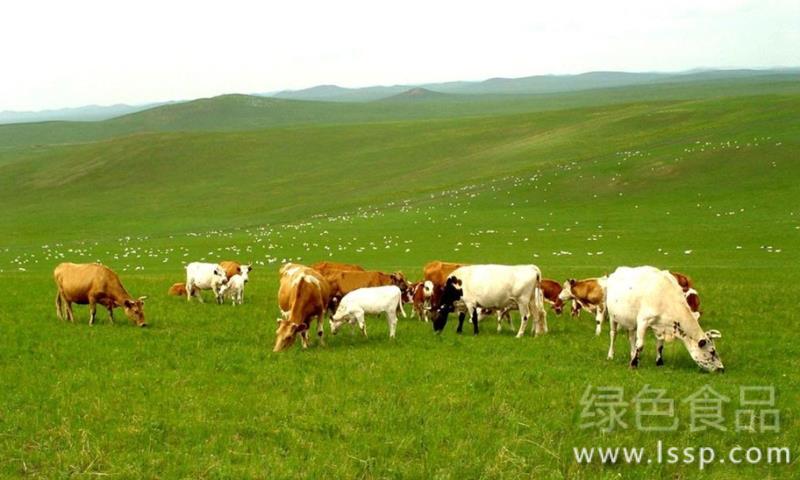
Autumn temperatures fluctuate greatly; when crops are harvested, do not let cattle and sheep eat five kinds of forage
Autumn temperatures fluctuate greatly; when crops are harvested, do not let cattle and sheep eat five kinds of forage
-
How to Grow Azaleas? A Complete Guide to Home Care Tips
Azaleas are perennial woody plants that prefer a cool, humid climate, partial shade rather than harsh sun, and fertilizer in light doses rather than heavy concentrations. They grow best in loose, well-draining, slightly acidic soil. Azaleas grow most vigorously at around 20°C; above 30°C they stop growing and enter a dormant state; at that point or below they will not freeze to death. However, they are vulnerable to sudden cold drafts. Therefore, when placed indoors, azaleas should be kept away from radiators and stoves. In winter they can receive plenty of sunlight, while in summer they need shade and can simply be placed on a well-ventilated north-facing balcony (or outside a north-facing window). Watering is the same as for other flowers: let the soil dry slightly between waterings. Frequent water shortages will affect their growth, while overwatering will rot the roots and cause death. In summer, water twice a day; at other times, once a day; in winter, once every few days, depending on the specific situation. Water used for plants should be left to stand for a few days before use, and every 10-15 days water with 0.2% ferrous sulfate solution, or add a few drops of edible vinegar to the water. Fertilize according to the principle of "light and frequent feeding." Use commercial flower fertilizer as directed, and for homemade compost, dilute it lightly in water and apply it together with watering. Do not fertilize during the flowering period. Mist the leaves 2-3 times a day to increase humidity. Use a special soil mix formulated with larch needles. Azaleas can bloom in all four seasons, and the flowering period is relatively long. As long as the growing conditions are suitable, from the first flower opening to the last one fading can last over three months. As needed, they are generally encouraged to bloom before the Spring Festival. At this time, when nature has lost its green and all the flowers have vanished, and a festive holiday arrives, buying a few pots of azaleas, whether for your own enjoyment or as a gift for relatives and friends, is nothing short of the best choice.
-
Complete Guide to Adult Dog Diet Management: A Detailed Explanation of Scientific Feeding Methods
You only need to feed it once a day, let it eat until it is eight-tenths full after a walk, and in less than a year, the puppy has already begun to step into the world of dogs. After 8 months of birth, the number of feedings can be reduced to 2 times a day. For dogs over 1 year old, the number of feedings should be changed to 1 time a day. At this point the dog's physique has grown to be about the same as an adult dog, and its stomach capacity has also increased, so the food it eats in one meal is enough to provide the energy needed for the whole day. In order to maintain the dog's health, the principle of feeding is to let it eat until it is eight-tenths full. The daily feeding time must be fixed. The feeding time can be chosen in the morning or in the evening.
-
A Complete Analysis of New Techniques for Scientific Silkworm Rearing
The silkworm is a completely metamorphosing silk-spinning insect among polyvoltine poikilothermic animals. Its larva, after 4 molts and 5 instars over 26-28 days, eats more than 20 grams of mulberry leaves in total, then matures, spins silk and cocoons. The cocoon is white, weighing about 1.8-2.3 grams, with a cocoon shell ratio of 20-23%, a silk length of 1000-1400 m and above; silk thickness 2.6-3.2 denier. Usually, rearing 1 sheet of silkworm eggs has 18,000-20,000 silkworms, requires 50-600 kg of mulberry leaves, and can produce 30-40 kg of silkworms. The currently more scientific new rearing techniques are the following five points
-
Introduction to the Bartlett pear variety: getting to know this type of pear
Declaring unit: Shandong Provincial Fruit and Tea Technology Guidance Station. Approval status: recognized by the Shandong Provincial Crop Variety Approval Committee in 1993, and recognized by the National Crop Variety Approval Committee in 1994. Variety registration number: GS14002-1993. Variety origin: The Bartlett pear is a West Jersey pear, introduced into China from abroad in the early years, and is widely distributed in China, with the most cultivation in Shandong Province. Characteristics: Young trees are vigorous, with strong budding ability and medium branching ability
-
Method for treating piglet white scours with garlic stalk infusion
Wash the garlic stalks clean, put them in water to soak, and when the water turns tea-colored, mix it into the feed to feed lactating sows, 4 times a day; at the same time, give each piglet 5-10 milliliters by drench daily, which can prevent or treat piglet white scours.
条件筛选