-

What are floating soup fish balls? Let us introduce you to this dish
Floating soup fish balls are a dish that suits all ages and is delicious and tasty. Choose silver carp, white fish, or common carp, remove the skin and bones, and use only the fine flesh; mince it into a paste, stir it for a long time in one direction while adding a little clear water until white foam forms, then blanch it in boiling water to shape. After that, soak the fish balls in clear water for a while, then use seasonings to make a good broth, take the balls out of the water and put them into the broth, bring the broth to a boil again, and serve. The fish balls are milky white, the size of ginkgo nuts; the white fish balls float in the broth, and a little garlic sprouts and cilantro are sprinkled on top, with color, aroma
-
What kind of fish is the Yellow River plateau loach? Let's get to know this plateau loach
Common name: pike. Origin and season: distributed in the main stream and tributaries of the upper Yellow River. Introduction: a relatively large-bodied fish of the loach family. The head and front part of the body are rather flat; the caudal peduncle is low and long. The mouth opening is large; the lips are narrow, with a smooth surface or shallow folds. The barbels are of medium length. The lower half of the last unbranched fin ray of the dorsal fin is hardened. The body has no scales, and the skin bears short rod-shaped cutaneous keels.
-
What kind of fish is the Achilles Tang? Let us introduce you to this marine ornamental fish
Scientific name: Acanthurus achilles Maximum body length: 20 cm Diet: herbivorous Feed supply: artificial dry pellet feed, natural seaweed, marine vegetables Territoriality: strong Suitable for reef tanks: caution Recommended minimum aquarium volume: over 400 liters Difficulty of care: difficult The Achilles Tang needs enough space to move around, and it is recommended to provide at least over 400 liters of water to keep it. The Achilles Tang is also quite territorial,
-
What are the prevention and treatment methods for mullet diseases?
Mullet belongs to the order Mugiliformes, genus Liza, and its external morphology is similar to that of the grey mullet, but its adipose eyelid is not well developed. It lives in coastal waters and estuaries and can also live in freshwater, being a eurythermal and euryhaline fish. Under natural conditions, it scrapes and feeds on diatoms and decaying organic matter, and also eats benthic organisms. In pond aquaculture, artificial compound feed can be used. Among cultured species, there is a saying of "grey mullet in the south, mullet in the north." In Jiangsu and areas to the north, mullet farming is mainly practiced. In recent years, the momentum of using freshwater ponds to culture mullet in coastal areas has developed rapidly, shifting from polyculture to
-
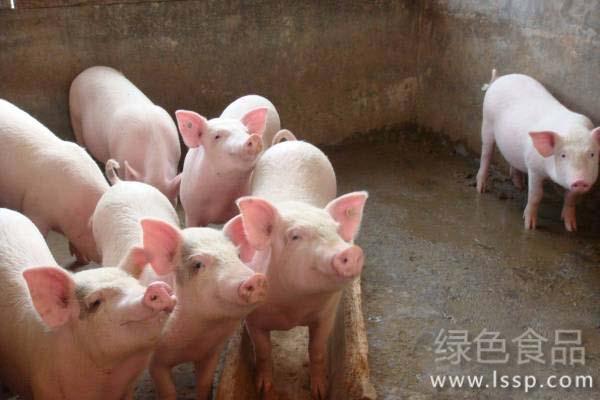
How to treat nutritional anemia in piglets? Detailed explanation of causes and treatment methods
Causes and treatment methods of nutritional anemia in piglets
-
Complete Guide to Porcine Circovirus Prevention and Treatment, a Must-Read for Pig Farmers
Porcine circovirus infection is an immunosuppressive infectious disease caused by PCV-II, characterized by post-weaning multisystemic wasting syndrome and dermatitis and nephropathy syndrome. Its main manifestations include physical decline, emaciation, pallor, diarrhea, and the formation of red-purple spots on the skin. The disease was first reported by Canadian scholars in 1991, and in recent years it has occurred in many countries and regions around the world. In China, the disease was first reported in 2000, and at present, in areas of China with @#@227@#@ high pig-raising density and on farms with poorer feeding management, the occurrence of this disease is becoming increasingly widespread, and the harm to the pig industry is becoming increasingly serious.
-
How to Identify Soybean Downy Mildew? A Complete Guide to Prevention and Control Techniques
Downy mildew is found in all major soybean-producing regions of China, occurring more frequently in the cold-climate areas of the Northeast and North China during the soybean growing season, with the disease worsening in rainy years, severely causing premature leaf drop or wilting, seed rot, and yield losses of 30%-50%. It mainly damages the leaves, pods, and seeds of seedlings or mature plants. Symptoms: The pathogen on infected seeds causes systemic infection leading to seedling disease, but the cotyledons show no symptoms. After the first pair of true leaves unfolds, chlorotic patches appear along both sides of the leaf veins, spreading along the main vein and lateral veins, causing the entire leaf to lose chlorophyll, with
-
How to Grow Honeysuckle? A Complete Guide to Methods and Techniques
I. Cultivation Methods (1) Seed propagation. Seeds collected in autumn can be sown immediately or stored until early April of the following year. Both broadcasting and drilling are acceptable. Apply 750-1000 kg of farmyard manure per mu as base fertilizer. Before sowing, soak the seeds in 25°C warm water for 24 hours to promote germination, and sow after the seeds show white sprouts. When the seedlings are about 6 cm tall, combine intertillage weeding and thinning with 1 topdressing of 10% urea solution. When the seedlings are 10 cm tall, spray 1 application of 200-fold Bordeaux mixture; they can be lifted from the nursery and transplanted in 30-36 days.
-
What plant is Dianthus plumarius? A complete guide
Dianthus plumarius is a perennial herbaceous plant in the family Caryophyllaceae, genus Dianthus. The plant grows 20 to 30 cm tall, clump-forming, with linear-lanceolate, blue-gray leaves. Flowers are solitary or in clusters of a few, pink or white, blooming from May to July. The fruit is a capsule, ripening from July to August. Dianthus plumarius is native to Europe and has recently been introduced and cultivated in China. It prefers sunlight but is also fairly shade-tolerant, and in North China it can overwinter in the open ground, remaining evergreen even after frost. Its suitable growing temperature is 15°C to 30°C, and it thrives in loose, fertile sandy loam. It is propagated by seeding, division, and cuttings. Seeding is generally done in September in open-ground seedbeds
-
What is the legend of jasmine? Let us introduce you to the folk story of jasmine
Originally called Moli flower, jasmine was introduced to China from southwestern Asia as early as the Han Dynasty, and has a history of more than 1,600 years so far. Its economic value is very high, mainly used for scenting (xun, same as "smoking") scented tea. But the formal production of scented tea has a history of only more than 100 years. Legend has it that in the late Ming and early Qing dynasties, a farmer surnamed Zhao lived in Huqiu, Suzhou, with his wife and 3 sons, living in poverty. Old Zhao went out to make a living and settled in a village in Guangdong, returning every two or three years to take a look. His wife and sons farmed at home. The children gradually grew up
条件筛选