-
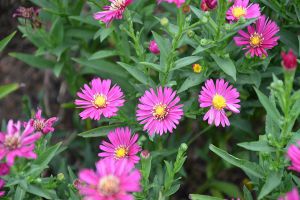
How to water Michaelmas daisies? Learn the correct watering method
For watering Michaelmas daisies, you need to follow the principle of "water when dry, keep dry between waterings." Specifically, water a bit more in spring and summer, less in autumn, and give one freezing-water watering before winter arrives; after that, no more watering is needed in winter.
-
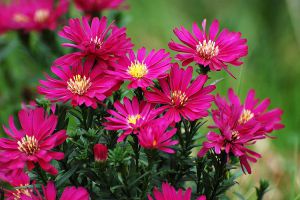
How to prune Aster novi-belgii? Detailed guide to the correct pruning method
Aster novi-belgii is extremely tolerant of pruning. It is best to prune it five times a year, mainly in June and July. The first two are heavy prunes, removing the terminal buds to help the lateral buds develop and grow; the next two prunes shape it; the last prune is done around National Day so that its flowering period is more concentrated.
-
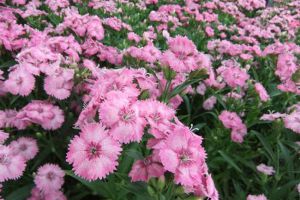
How to grow Dianthus (China pink) so it blooms more? Care tips shared
If you want it to produce more flowers, the soil must be fertile enough, water and fertilizer management must be constantly attended to, and the temperature should be adjusted in time according to the change of seasons, preferably between 13 and 22 degrees. After the flowers fade, prune promptly, as only then is there a chance of continuous blooming.
-
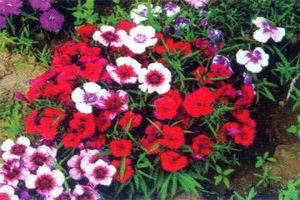
How to repot Dianthus? Detailed guide to the correct method and steps
First, score a circle around the edge of the pot with soil to make it easier to remove the whole plant. Then clean the old soil off the roots and remove the messy branches. After that, prepare the drainage for the new pot, plant it in the new pot, and finally water it thoroughly in one go.
-
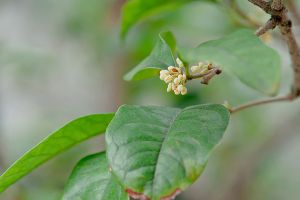
How Often to Water Osmanthus fragrans 'Semperflorens'? A Detailed Guide to Watering Frequency
Osmanthus fragrans 'Semperflorens' can be said to be a very good plant, but those who grow it still worry about watering it. In fact, watering differs in every season. Generally speaking, in spring and autumn you can water it once every two to three days, in summer it needs watering every day, and in winter it is usually watered once every seven to ten days. The above is only a general watering method; specifically, it still depends on how moist the potting soil is.
-
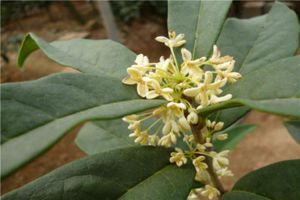
How to prune Osmanthus fragrans 'Rixiang Gui'? A detailed guide to the correct pruning method
It can be pruned at any time. Just go by its growth condition: you can cut off the upper branches to encourage the lower branches to grow. You can keep the thin, slender branches so that their thickness is more even, and pull the dense branches apart to make the crown larger.
-
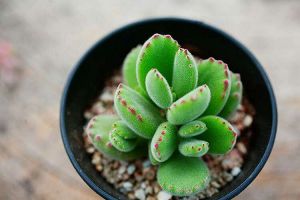
How to Grow Bear's Paw Succulent So Its Leaves Become Plump and Thick
The best cultivation technique is to shape the external environment according to its growth habits. First is temperature and light. Since it loves sunlight, it should receive ample light every day. The temperature suitable for its growth is around 20°C, and in summer care should be taken to avoid the scorching sun. Second is watering. Not making the soil overly moist is fundamental. When the climate is too hot, the amount of watering should be appropriately increased, and when it is cold, the potting soil should be kept slightly dry. Finally is fertilizer and soil. It does not particularly like fertilizer, so fertilizer is optional, but appropriately applying compound fertilizer or liquid fertilizer will speed up the thickening of the leaves. As for the soil, loose, fertile, sandy soil is preferable.
-
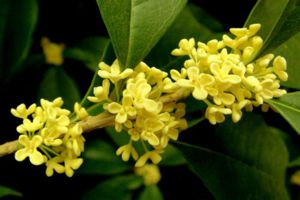
What is the difference between golden osmanthus and silver osmanthus? How to tell them apart
Most people find it hard to tell golden osmanthus from silver osmanthus, because they do not know how to distinguish the two. The main thing to look at is the leaves: by comparison, the former's leaves are longer, thicker and broader, and slightly curled, while the latter's leaves are shorter, thinner and narrower, with wavy leaf edges. Next, look at the tree shape: the former is taller and larger than the latter. Finally, look at the buds: the former's buds are purplish-red, while the latter's are copper-colored.
-
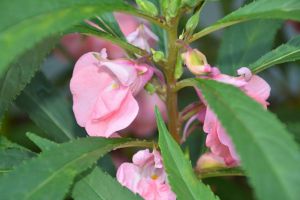
Why Impatiens Leaves Curl and How to Fix It
Impatiens need careful attention. Lack of water, lack of light, or pest infestation can all cause its leaves to curl. If it is lack of water, we should replenish the water promptly; if it is lack of light, we need to increase the light duration to at least 4 hours a day; if pests have appeared, we need to spray chemicals to control them.
-
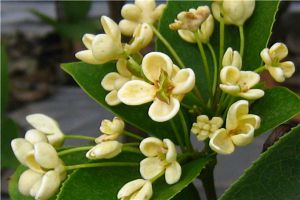
Reasons for Dry, Withered Leaves on Four-Season Osmanthus and How to Fix Them
Sometimes we notice that the leaves of a four-season osmanthus (Osmanthus fragrans) have dried out. The main causes of this are unsuitable environment, lack of nutrients, pest infestation, and leaf aging. Once we identify the cause, we can treat it accordingly: water it when it is dry, supplement it when it lacks nutrients, and use insecticide when pests are present.
条件筛选