-
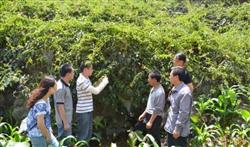
How to manage honeysuckle after harvesting? A full breakdown of the key technical points
How should honeysuckle be managed after harvest? What should be noted? We hope experienced readers can help explain. Post-harvest management of honeysuckle mainly includes pruning, garden clearing, fertilizer and water management, and pest and disease control. For detailed operations, refer to the following introduction. 1. Honeysuckle pruning: Pruning method one, thinning: Thin out severely...
-
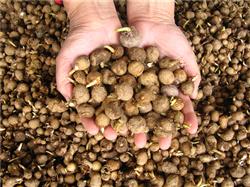
How is Pinellia ternata (dry-farmed Pinellia) cultivated artificially? A full analysis of the key cultivation techniques
How is Pinellia ternata cultivated artificially? Please give guidance. Pinellia ternata, also known as three-leaf Pinellia, Sanbutiao and Mayuguo, is a commonly used Chinese medicinal herb, and it grows wild in both northern and southern China. In recent years, because people have reclaimed and used barren hillsides and heavily used herbicides in farmland, its ecological environment has been damaged, resources have decreased year by year, and prices...
-

What Is the Price of Polygonatum Seeds? A Full Guide to Planting Methods
Polygonatum Seed Prices and Planting Methods
-

-
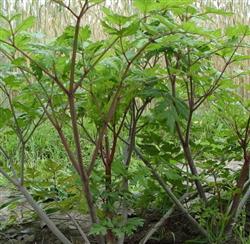
How to Cultivate Astragalus? A Full Breakdown of the Key Growing Techniques
How to cultivate Astragalus? Guidance and advice. Growing medicinal herbs is a path to prosperity for farmers. With the development of China's pharmaceutical and health care industry, more and more people will devote themselves to the production of traditional Chinese medicine. In order to achieve high yield, high quality and high returns from medicinal herbs, the following introduces the cultivation techniques for Astragalus. Astragalus is a leguminous perennial...
-

How to sow and raise seedlings of Atractylodes lancea? A full analysis of the key technical points
Sowing and seedling-raising techniques for Atractylodes lancea
-

A detailed guide to kapok grafting propagation techniques, with a full breakdown of methods and steps
Kapok grafting propagation techniques
-

Many Methods for Propagating Goji Berry: A Full Analysis of Commonly Used Propagation Techniques
1. Seed propagation: Spring sowing should be carried out from late March to mid-May, when temperatures rise noticeably. Soak the seeds in 30°C warm water for 24 hours, then rub them, pick out the flesh and skin, take out the sunken seeds, and dry them. Mix the seeds with wet sand at 1:3, then place them indoors at about 20°C to germinate, keeping them moist. When about 30% of the seeds have cracked and shown white, germination is complete. For the nursery site, loam or sandy loam near a water source can be chosen as the seedbed. It requires flat terrain, good drainage, and ample sunlight. Apply 5000 kg of decomposed barnyard manure per mu
-
Pruning Methods for Goji Trees in the Late Full-Bearing Stage
In the late full-bearing stage, the tree grows weakly, produces fewer shoots, and has short branches, with a marked decline in yield. At this time, the main task of pruning is to strengthen the tree's vigor. In addition to the general pruning carried out for trees in the full-bearing stage, the weakened scaffold branches or branch groups should also be renewed and rejuvenated. The specific method is to pinch off the growing tips of water sprouts in summer, and after side branches emerge, train them into new branch groups, while cutting back the scaffold branches above the water sprouts. If there are no water sprouts, cut back in spring pruning to the middle of 3-5 year old scaffold branches, or even a bit more severely, to stimulate the latent buds below the cut to sprout water sprouts,
-
How to grow licorice for high yield? A full breakdown of the technical key points
1. Soil selection. Choose deep soil layers, good drainage, high-lying terrain, and sandy soil and sandy loam soil with relatively high calcium content. Waste flats and waste slopes with slightly alkaline soil and a pH between 7 and 8.5 can all be cultivated. Plots with low-lying terrain and heavy clay soil must not be planted. 2. Variety selection. Choose the new "Wosheng licorice" variety suitable for artificial cultivation. This variety has the following characteristics: First, strong adaptability, drought resistance, cold resistance, salt-alkali resistance, heat tolerance, and tolerance to poor soil. Its temperature adaptation range is 43 to 45°C. In areas with severe water shortage or relatively dry conditions, no wilting or death has been found, and it can adapt to weakly alkaline calcareous soil. At the same time, it is suitable for intercropping with young forest and fruit trees; second, a short growth cycle. With seedling raising and transplanting, the seedlings grow for 3 to 4 months, and after planting they can be harvested after 8 to 10 months of growth; third, fast growth. Because of its prostrate growth habit, combined with artificial cultivation techniques, it grows horizontally at 30 cm on the soil surface, and its absorption rate of natural conditions such as light, water, and fertilizer is high, so its growth speed is fast. Thirty days after sowing, 3 to 4 true leaves appear. At 60 days, the plant height is 30 cm, the root length can reach 20 cm, and the diameter is 0.5 cm; fourth, harvesting and processing are simple. All operations can be mechanized, less labor is used, and it can be sold after being naturally dried to 80 percent; fifth, high yield and good quality. The yield of medium rough grass per mu is more than 500 kg, and high-yielding fields can reach 800 kg. The skin is red, there are few branches, and the strips are uniform. It meets the standards of the national pharmacopoeia and complies with the germplasm requirements for building a GAP production base.
条件筛选