-

China's rural e-commerce accelerates development driven by diversified competition
Diversified competition drives the development of rural e-commerce in China
-
Quality rice industry development requires rational planning and layout
The quality rice industry requires rational planning and layout
-
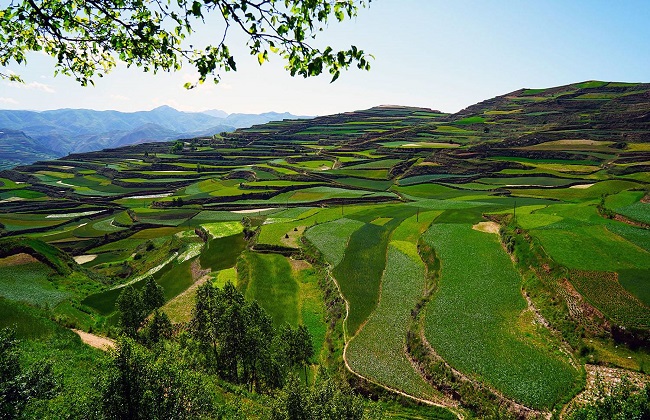
Analysis of the Development Prospects of the Planting Industry in 2018
Prospects Analysis of the Planting Industry in 2018
-
Notice of the Ministry of Agriculture on Promoting the Implementation of Policies and Measures for the Integrated Development of Primary, Secondary and Tertiary Industries in Rural Areas
Notice of the Ministry of Agriculture on Promoting the Implementation of Policies and Measures for the Integrated Development of Primary, Secondary and Tertiary Industries in Rural Areas
-
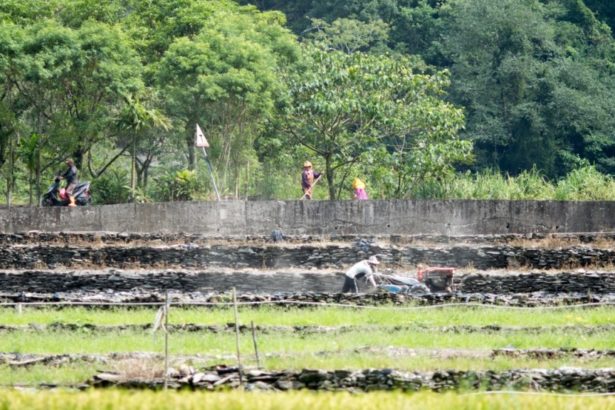
The National Development Council will prioritize promoting local revitalization in 134 townships, with mountain villages and indigenous homelands leading the way
Rural and Local Revitalization 09 / The National Development Council will prioritize promoting local revitalization in 134 townships, with mountain villages and indigenous homelands leading the way
-
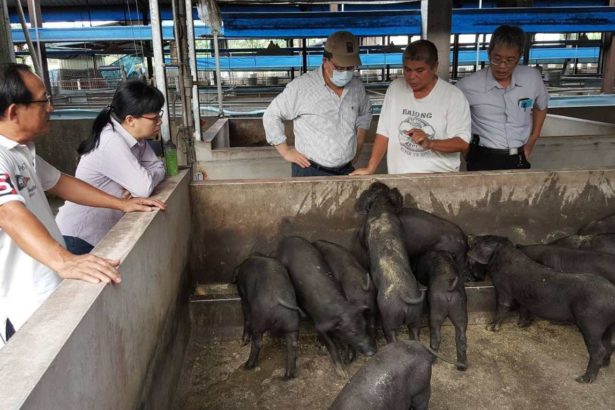
The Battle Over Epidemic Prevention and Food Waste 15"A More Scientific Era for Black Pigs! Livestock Research Institute Develops Specialized Feed, Pig Farmers: Looking Forward to More Research and Development, Moving Toward Transformational Development
The Battle Over Epidemic Prevention and Food Waste 15"A More Scientific Era for Black Pigs! Livestock Research Institute Develops Specialized Feed, Pig Farmers: Looking Forward to More Research and Development, Moving Toward Transformational Development
-
Virus-free Technology and Industrial Development of Superior Potato Varieties
Aiming at the main problems currently existing in potato production, this study seized the favorable opportunity of planting-structure adjustment and extensively introduced superior potato varieties from home and abroad. Through trials and market-demand surveys, "Luyin No. 1" was selected as the main cultivar for Qingdao, with Kexin No. 3, Kexin No. 4 and Huayuan 525 as companion cultivars. Through systematic research on virus-free technology, rapid propagation technology and the acclimatization and transplanting technology of virus-free test-tube plantlets, the optimal virus-free protocol for potato was determined: taking 0.1-0.2
-
How to manage greenhouse apricots in spring? Focus on management to promote development
For apricot trees in a winter-warm greenhouse, the fruit development period runs from mid-February to the end of April, and this period is divided into three main development stages. The first stage is the first rapid growth period of the apricot tree and the new shoot growth period, lasting 28-34 days; the second stage is the pit-hardening period, lasting 8-12 days; the third stage is the second rapid growth period of the apricot fruit and the new shoot growth period, lasting 20-30 days. Management work for the first stage: after flowering, apply 0.5 kg of nitrogen fertilizer and 1 kg of phosphorus fertilizer per tree, and within two weeks after flowering spray 0.3% urea once every 7 days. After leaf expansion, spray Yibianjing or Yashijing
-
Eight Major Disease Prevention and Control Measures for the Green Development of Mushrooms
Establish the "big prevention and control" concept of integrated management. The occurrence, and even the epidemic or outbreak, of edible mushroom diseases all follows certain developmental patterns. Patterns are science, and no carelessness is tolerated. On the surface, diseases appear only at a certain production stage, but the occurrence of disease requires quite a few conditions. If any one condition cannot be met, the occurrence of disease may be reduced, lowered, or even impossible, or even if it occurs, it cannot cause harm. Therefore, one should not only prevent or treat at the stage where the disease occurs, but should start from the source
-
What are the temperature requirements for soybean growth and development?
Soybean is a warmth-loving crop, and the accumulated temperature required by soybean varieties in Heilongjiang Province is about 1800-2700°C. (1) The optimum temperature for seed germination is 18-20°C, at which germination is fast and seedlings emerge evenly; the minimum temperature is 6-8°C, but germination is very slow; when the temperature reaches 33-36°C, germination is fastest, but the seedlings are weak. (2) The minimum temperature required for emergence is 8-10°C. (3) For flower bud differentiation, 21-23°C is more suitable. For flowering, 22-25°C is more suitable. If the temperature is too high or too low, there will be fewer flowers. (4) The suitable
条件筛选