-

What are the characteristics of each developmental stage of soybean?
(1) Germination stage: refers to the period from seed germination to seedling emergence, which takes 10-15 days for spring soybeans and 4-6 days for summer soybeans. The germination stage of soybean mainly requires appropriate temperature and suitable soil moisture. It is required to carry out seed treatment before sowing, improve the quality of land preparation, sow at the right time, ensure that the field soil is loose, and prevent excessive soil moisture and poor permeability, which can delay seedling emergence or even cause seed rot. (2) Seedling stage: refers to the stage from seedling emergence to flower bud differentiation. It requires an average daily temperature above 20°C and 19%-20% soil
-
What nutrients are essential for soybean growth and development?
Soybeans require large amounts of nutrients in many different forms. For the same yield, soybeans need 4-5 times more nitrogen than cereal crops. The main nutrients they require are the three major elements nitrogen, phosphorus and potassium, followed by 9 trace elements including calcium, magnesium, sulfur, magnesium, boron, molybdenum, manganese, zinc and copper.
-
What are the temperature requirements for soybean growth and development?
Soybean is a warmth-loving crop, and the accumulated temperature required by soybean varieties in Heilongjiang Province is about 1800-2700°C. (1) The optimum temperature for seed germination is 18-20°C, at which germination is fast and seedlings emerge evenly; the minimum temperature is 6-8°C, but germination is very slow; when the temperature reaches 33-36°C, germination is fastest, but the seedlings are weak. (2) The minimum temperature required for emergence is 8-10°C. (3) For flower bud differentiation, 21-23°C is more suitable. For flowering, 22-25°C is more suitable. If the temperature is too high or too low, there will be fewer flowers. (4) The suitable
-
What are the responses of soybean growth and development to light?
Soybean is a short-day crop, with a daylength range of 9-18 hours. The shorter the light, the more it promotes flower bud differentiation and advances flowering and maturity. When soybean grows its first compound leaf, it begins to respond to light. Generally, seedlings can complete the light stage after 5-12 days of short-day conditions. The appearance of flower calyx primordia on the plant marks the completion of the light stage. Due to long-term adaptation to light conditions in different regions, the short-day response of soybean varies considerably. Southern soybean varieties have a stronger short-day response, while northern soybean varieties are insensitive to daylength, so special attention should be paid when introducing varieties.
-

Huge development potential for medicinal herb cultivation in rural areas
Bletilla striata Bletilla striata is a plant of the genus Bletilla in the orchid family (Orchidaceae), also known as Lianjicao, Gangen, Baigei, Zhulan, Zilan, etc. It is a common...
-
Flower Cultivation Techniques: Special Water Requirements Affect Flower Growth and Development
Water is an important raw material for photosynthesis in flowers. Nutrients in the soil can only be absorbed and utilized by flowers when dissolved in water; flowers rely on transpiration from their leaf surfaces to regulate their own temperature, which is also mainly the effect of water. Therefore, without water, flowers cannot survive.
-
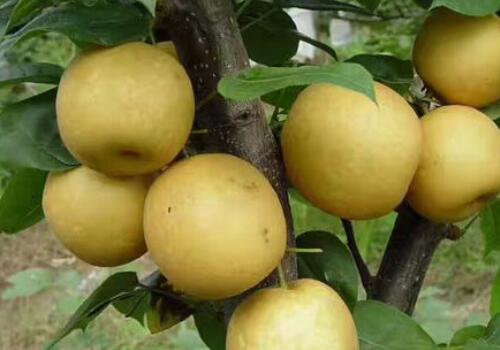
June Snow Cuiguan Pear Seedling Prices, Producing Areas, How Many Years Until Fruiting, and Development Prospects
Cuiguan pear is a honey pear, also known as June Snow. Its skin is thin and fine, its flesh crisp and juicy, its flavor rich, fresh and tender, with abundant juice and sweet taste. It reaches the market 2 to 3 months earlier than northern Ya pears and Dangshan crisp pears. So how much does a Cuiguan pear seedling cost? How many years until it bears fruit? What are its producing areas? What are its development prospects?
-

Clivia Seed Planting Methods, Leaf Spot Prevention and Treatment, and Development Prospects
Clivia, also known as sword-leaf clivia and large-leaf clivia, is an ornamental flower of the genus Clivia in the Amaryllidaceae family. Clivia has high ornamental value, and in China it is often grown in pots in greenhouses for viewing. It is propagated by division or by seed. Do you know what the methods for planting clivia seeds are? What should you do if the leaves develop spots? What are the prospects for its cultivation and development?
-
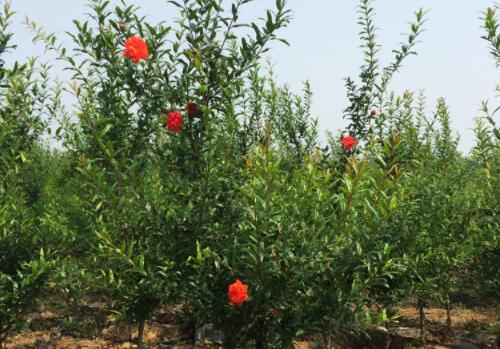
Small tree peony pomegranate seedlings price and flowering and fruiting cultivation bonsai development
Peony pomegranate, Punicaceae, Punica genus, a deciduous shrub or small tree, successfully developed and bred by the Academy of Agricultural Sciences over many years. This variety has large fruit and a sweet taste, suitable for large-scale orchard planting and cultivation; its flowers are beautiful, suitable for cultivation into fruit tree bonsai. So how much does a peony pomegranate seedling cost?
-
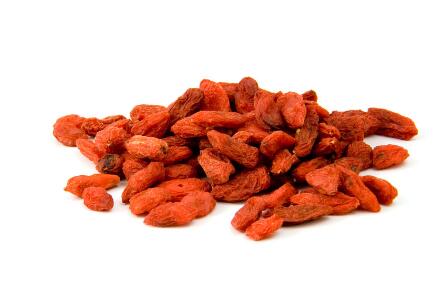
Analysis of the goji berry market next year, the cost of planting one mu, and development prospects
Goji berries are divided into Chinese wolfberry (Lycium chinense) and Ningxia wolfberry (Lycium barbarum). There are many folk names for them, such as gouqizi, goji red fruit, tiancaizi, xi gouqi, gounaizi, hongqingjiao, goutizi, gouqiguo, diguzi, gouqieqie, hongerzhui, xuegouzi, goudiyazi, gouqidou, xueqizi, and jin gouqi
条件筛选