-
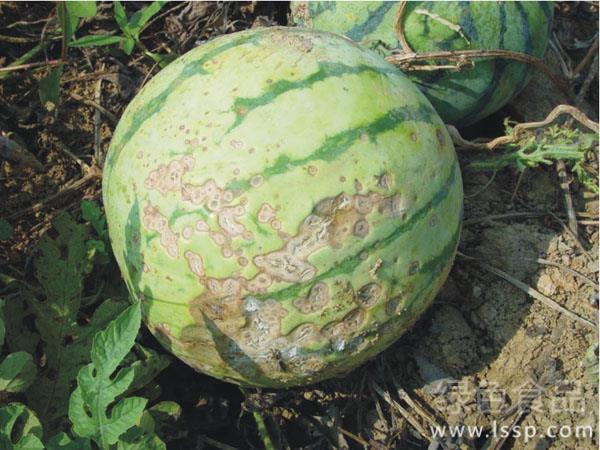
How to prevent and control watermelon anthracnose? Temperature and humidity affect disease development
Temperature and humidity affect the occurrence of anthracnose: how to prevent and control watermelon anthracnose
-
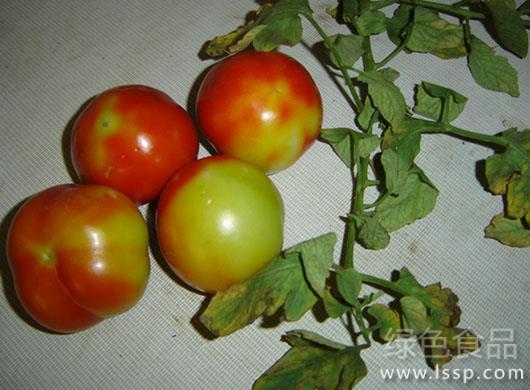
Causes of Poor Color Development and Yellowing in Tomatoes and Control Methods
How to prevent and control poor color development and yellowing in tomatoes caused by various factors
-

What Is a Native Bonsai? An Analysis of Its Characteristics and Development Potential
Bonsai is a high art, requiring exquisite pots and refined display stands, while the cultivation and shaping of trunk specimens is no work of a single day. This makes many people shy away. Though they love it sincerely, they dare not step in and hesitate outside the garden of bonsai creation, which hinders the development of the bonsai cause. How to remove these misgivings
-
Hydroponic flowers have broad market prospects and great development potential
Hydroponic flowers and their bright market prospects
-
Analysis of Yew Cultivation Methods and Development Prospects
Yew Cultivation Methods and Development Prospects
-

Analysis of the Cultivation Techniques and Development Prospects of the Chinese Medicinal Herb Agastache rugosa
Agastache rugosa is a medicinal and edible plant, also known as hexiang, canggao, mountain fennel, etc. It belongs to the order Lamiales, family Lamiaceae, and is a perennial herbaceous plant. It is widely distributed throughout China, mainly produced in Sichuan, Jiangsu, Zhejiang, Hunan, Guangdong and other places, as well as Russia, Korea, Japan and North America
-
A Detailed Explanation of the Origin and Development History of Black Tea ⟧2⟧Black tea originated in the Ming Dynasty in the 16th century. During the tea manufacturing process, it was discovered that sun-drying could replace the fixing (kill-green) step
Black tea originated in the Ming Dynasty in the 16th century. During tea manufacturing, it was discovered that sun-drying could replace fixation (kill-green), and after rolling the leaves turned red, thus producing black tea. The earliest black tea production began with Souchong black tea in Chong'an, Fujian. In the Qing Dynasty, Liu Jing's "Pian Ke Yu Xian Ji" records: "At the ninth bend of the mountain there is Xingcun town, where tea experts gather. Tea produced elsewhere in the province such as Shaowu and Jiangxi Guangxin, with black leaves and red soup, locally called Jiangxi Wu, is all privately sold to the various firms of Xingcun." After the appearance of Xingcun Souchong black tea, Congou black tea gradually evolved. In the 1920s, India crushed tea leaves during processing to make broken black tea, and in the 1950s our country also began trial production of broken black tea.
-
What are the causes of cotton abortive development and the remedial measures
Cotton abortive development occurs every year. So-called abortive development means that cotton has lost its normal reproductive function, that is, it only flowers but does not set bolls, or it flowers heavily but sets few bolls. The causes are first of all climatic factors, secondly the blind and indiscriminate introduction of cotton varieties, and thirdly cultivation methods that are incompatible with climate change. According to records, when the temperature exceeds 35°C, pollen development becomes deformed and normal pollination cannot occur; sustained drought then intensifies the shedding of squares and bolls. In addition, in mid-August some cotton areas experience a continuous week of rainy weather, which also makes it difficult for cotton to flower and pollinate normally.
-
A Complete Analysis of the Tea Plant's Total Development Cycle, Explained in One Article
The entire life period of a tea plant, from seed germination all the way to aging and death. According to the growth and development characteristics of the tea plant, it can be divided into four biological age stages, namely: seedling stage, young stage, mature stage, and aging stage. Seedling stage: from seed germination and the emergence of seedlings above ground to the end of the first growth when a resting bud forms, this is the seedling stage. Generally, it starts from seed germination in March of that year and ends in July, totaling about 4 to 5 months. During the seedling stage, attention should be paid to keeping the soil loose and moist so that seed germination can obtain sufficient air
-
What effects does waterlogging damage have on the growth and development of tea plants?
Tea plants require moist air conditions, but they are not tolerant of excessively wet soil. When there is too much soil moisture or even standing water on the ground, the respiration of the root system is impeded, and its ability to absorb water and nutrients is reduced, seriously affecting the growth of buds and leaves and lowering the yield and quality of fresh leaves. In severe cases, the roots suffocate, anaerobic microorganisms become active, and organic acids are produced that poison the tea plant roots, causing peeling, necrosis and rot. The manifestations of tea plants suffering from waterlogging damage are: few absorbing roots, short and small lateral roots, a shallow root layer, and some lateral roots extending horizontally rather than downward, or even growing upward. Severely affected
条件筛选