-

What effects does waterlogging damage have on the growth and development of tea plants?
Tea plants require moist air conditions, but they are not tolerant of excessively wet soil. When there is too much soil moisture or even standing water on the ground, the respiration of the root system is impeded, and its ability to absorb water and nutrients is reduced, seriously affecting the growth of buds and leaves and lowering the yield and quality of fresh leaves. In severe cases, the roots suffocate, anaerobic microorganisms become active, and organic acids are produced that poison the tea plant roots, causing peeling, necrosis and rot. The manifestations of tea plants suffering from waterlogging damage are: few absorbing roots, short and small lateral roots, a shallow root layer, and some lateral roots extending horizontally rather than downward, or even growing upward. Severely affected
-
What are the characteristics of each developmental stage of soybean?
(1) Germination stage: refers to the period from seed germination to seedling emergence, which takes 10-15 days for spring soybeans and 4-6 days for summer soybeans. The germination stage of soybean mainly requires appropriate temperature and suitable soil moisture. It is required to carry out seed treatment before sowing, improve the quality of land preparation, sow at the right time, ensure that the field soil is loose, and prevent excessive soil moisture and poor permeability, which can delay seedling emergence or even cause seed rot. (2) Seedling stage: refers to the stage from seedling emergence to flower bud differentiation. It requires an average daily temperature above 20°C and 19%-20% soil
-
What nutrients are essential for soybean growth and development?
Soybeans require large amounts of nutrients in many different forms. For the same yield, soybeans need 4-5 times more nitrogen than cereal crops. The main nutrients they require are the three major elements nitrogen, phosphorus and potassium, followed by 9 trace elements including calcium, magnesium, sulfur, magnesium, boron, molybdenum, manganese, zinc and copper.
-
What are the temperature requirements for soybean growth and development?
Soybean is a warmth-loving crop, and the accumulated temperature required by soybean varieties in Heilongjiang Province is about 1800-2700°C. (1) The optimum temperature for seed germination is 18-20°C, at which germination is fast and seedlings emerge evenly; the minimum temperature is 6-8°C, but germination is very slow; when the temperature reaches 33-36°C, germination is fastest, but the seedlings are weak. (2) The minimum temperature required for emergence is 8-10°C. (3) For flower bud differentiation, 21-23°C is more suitable. For flowering, 22-25°C is more suitable. If the temperature is too high or too low, there will be fewer flowers. (4) The suitable
-
What are the responses of soybean growth and development to light?
Soybean is a short-day crop, with a daylength range of 9-18 hours. The shorter the light, the more it promotes flower bud differentiation and advances flowering and maturity. When soybean grows its first compound leaf, it begins to respond to light. Generally, seedlings can complete the light stage after 5-12 days of short-day conditions. The appearance of flower calyx primordia on the plant marks the completion of the light stage. Due to long-term adaptation to light conditions in different regions, the short-day response of soybean varies considerably. Southern soybean varieties have a stronger short-day response, while northern soybean varieties are insensitive to daylength, so special attention should be paid when introducing varieties.
-
How can the new functional components of soybeans be developed and utilized?
China is the homeland of soybeans, and over the long course of history, "soybeans have nurtured the Chinese nation." Modern science has discovered that the functional components of soybeans that nurtured the Chinese nation are mainly found in soybean meal. High-temperature soybean meal is the highest-yield product of the soybean oil processing industry. Whether the effective components in high-temperature soybean meal can be extracted is key to revitalizing China's soybean oil processing industry. The National Soybean Deep Processing Technology Research and Promotion Center invented a process using high-temperature soybean meal as raw material to continuously extract high-purity soybean oligopeptides, soybean isoflavones,
-
Soybean molecular breeding technology successfully developed by South Korea
The Agricultural Biotechnology Research Institute of South Korea's Rural Development Administration recently successfully developed a soybean molecular breeding technology, which means that South Korea's mass production of organic soybeans containing anti-cancer components will become a reality. South Korea's regeneration technology for soybean plant bodies through tissue culture is not well developed, so trait-transformed soybeans are mainly imported from the United States. The Rural Development Administration revealed that molecular breeding technology is called third-generation genetic engineering technology. Using this technology, soybeans with higher added value can be produced, which is of great significance for increasing farmers' income.
-
Hangzhi No.1, a new sesame variety, is the only variety in China developed through spaceflight technology.
Variety origin: "Hangzhi No.1" originated from the key project "Ninth Five-Year Plan Crop Spaceflight Technology Breeding" supported by the Ministry of Agriculture. In 1996, parent sesame seeds provided by the Oil Crops Research Institute of the Chinese Academy of Agricultural Sciences were carried aboard China's 17th recoverable satellite, stayed in space for 15 days and then returned to Earth. Since 1997, continuous multi-year ground selection was carried out. Through comparative trials on genetic stability, yield, quality and resistance, it was significantly superior to the control. From 2001 to 2002, it was advanced to the national sesame
-
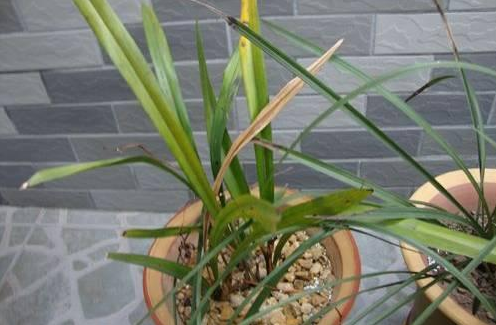
What to Do When Orchid Leaves Turn Yellow, Wither, Develop Disease Spots, and Roots Rot
When it comes to the orchid, this is a plant that many people absolutely adore. Just hearing the name conjures up elegance, but keeping an orchid thriving is no easy task. Let's take a look at why orchid leaves turn yellow, wither, and roots rot. What to do when orchid leaves develop spots: Why leaves turn yellow
-

What to Do When Clivia Leaves Turn Yellow, Develop Spots, and Grow Unevenly
Clivia is very common, but many people run into a lot of problems when growing it. During cultivation, the leaves can turn yellow, develop spots, look as unsightly as can be, and even grow unevenly. So what should be done?
条件筛选